
Blooming
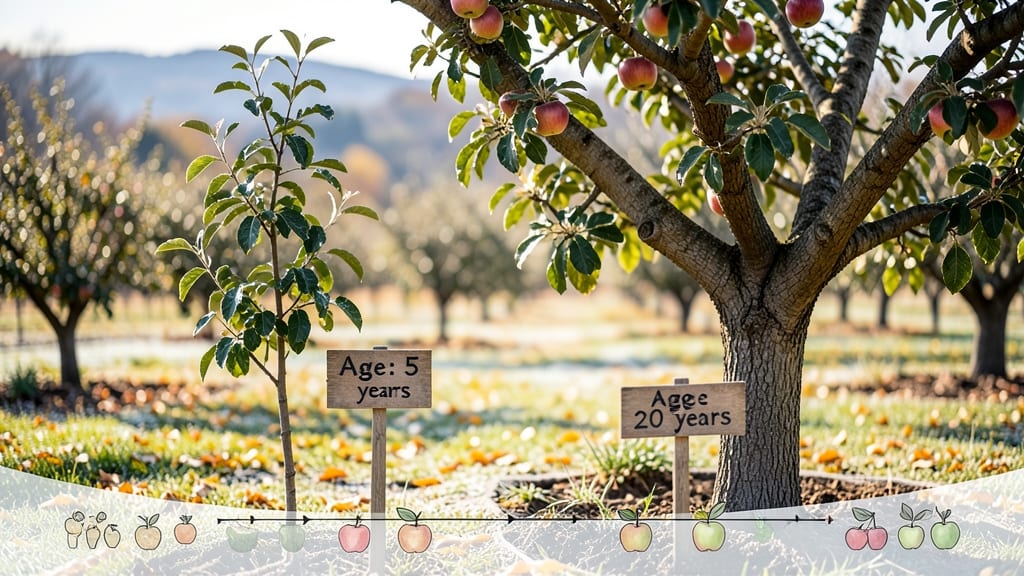
Apple trees produce fruit for 20 to 50 years, with peak bearing typically occurring between ages 5 and 15, though dwarf varieties may fruit earlier. Proper care and pruning extend productivity beyond maturity, while environmental factors can shorten or prolong the lifespan.
Understanding an apple tree's fruit-bearing timeline helps you plan for long-term harvests. 🌳 Young trees often take 3-5 years to establish roots and branches before producing their first apples, while standard varieties may reach full maturity around age 10.
Dwarf trees, however, can bear fruit as early as year 2 or 3 due to their accelerated growth cycles.
The key to extending a tree's productive years lies in consistent care—regular pruning to improve air circulation, proper watering during dry spells, and monitoring for pests or diseases that could prematurely weaken the tree.
What sets experienced growers apart is their attention to seasonal maintenance.
For instance, late-winter pruning removes dead wood while encouraging new growth, and summer thinning of fruit ensures larger, higher-quality apples. 🍏 Soil health plays a crucial role too—amending with organic matter every few years maintains nutrient levels that support prolonged fruit production.
Even in their later years, apple trees can remain productive with the right conditions, making them one of the most rewarding perennial crops for home orchards.
💡 In This Article
- Apple Tree Fruit Production Lifespan Stages Explained
- Maximizing Apple Tree Fruit Production: Pruning and Care Tips
Apple tree fruit production lifespan stages explained
Apple trees follow three distinct phases in their fruit-bearing lifecycle: juvenile, mature, and decline. The juvenile phase lasts 3-5 years for standard varieties, during which the tree focuses on root and branch development rather than fruiting.
This delay occurs because the tree prioritizes establishing a strong structural framework—think of it like building a house before moving in furniture.
Dwarf varieties, grafted onto smaller rootstocks like M.9 or B.9, skip this phase entirely and can produce fruit as early as year 2 due to their accelerated growth rates.
The mature phase begins around age 5-10 for standard trees, where fruit production peaks between ages 5 and 15. During this window, a well-cared-for tree can yield 200-500 pounds of apples annually, depending on variety and growing conditions.
The science behind this lies in the tree's hormonal balance—once the root system and canopy reach a critical mass, the tree shifts energy toward flower and fruit development.
For example, 'Honeycrisp' apples typically reach peak production at age 8-10, while 'Fuji' varieties may take 12-15 years to fully mature due to their later blooming cycle.
Environmental factors significantly influence these timelines. Trees in cooler climates with shorter growing seasons may take 1-2 extra years to mature compared to those in warmer regions. Soil pH also plays a critical role—ideal levels between 6.0-6.5 ensure proper nutrient uptake, while acidic or alkaline soils can delay fruiting.
For instance, in the Pacific Northwest's marine climate, apple trees often mature 2-3 years earlier than those in hotter inland areas due to consistent moisture and moderate temperatures.
As trees age past 20-25 years, they enter the decline phase, where fruit production gradually decreases. This isn't a sudden drop-off but a gradual reduction in yield—think of it like human aging where energy levels decline slowly.
However, with proper care, some trees continue producing 50% of their peak yield into their 40s or 50s.
The key difference between a 20-year-old and 40-year-old tree lies in the root system's ability to absorb water and nutrients; older trees often require deeper soil amendments and more frequent pruning to maintain productivity.
Rootstock choice dramatically affects these timelines. Standard trees grafted onto seedling rootstocks (like 'Antonovka') may live 50+ years but take longer to mature, while dwarf trees on semi-dwarfing rootstocks (like MM.106) reach peak production 3-5 years earlier but have shorter overall lifespans (25-30 years).
The trade-off is clear: dwarf trees offer quicker rewards but require more frequent replacement. For home growers, this means carefully selecting rootstock based on available space and desired harvest timing.
What many gardeners overlook is how pruning techniques can artificially extend the mature phase. Strategic pruning removes competing branches that drain energy from fruit production, while thinning old wood encourages new growth.
For example, a 30-year-old tree that receives annual late-winter pruning can maintain 70% of its peak yield for another 10-15 years. The secret lies in maintaining an open canopy that allows sunlight to penetrate all branches—this simple practice can add 10-15 productive years to a tree's lifespan.
Consider this real-world example: A 'Granny Smith' tree planted in 1985 in Washington State's orchards still produced 1,200 pounds of apples annually in 2020—a 35-year span of consistent harvests. The difference? Annual pruning, soil testing every 3 years, and disease-resistant rootstock.
This proves that with proper care, apple trees can defy the typical 20-50 year expectation and continue bearing fruit well beyond conventional timelines. 🌱