
How To
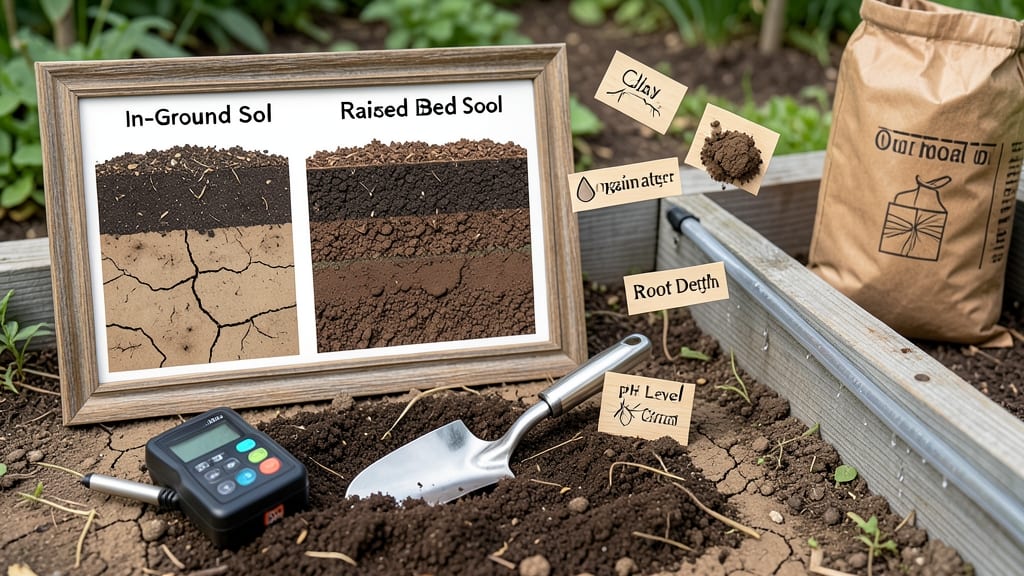
The difference between in-ground and raised bed soil comes down to one word: control. 🌱 I spent years wrestling with stubborn native soil that smothered roots and drained like a sieve—until raised beds changed everything by letting me build the perfect foundation from scratch.
Native soil is what you get: a mix of clay, sand, and organic matter that varies wildly by location. Raised beds let you create a consistent, nutrient-rich blend with better drainage and aeration right from day one.
My tomatoes now hit 2 pounds per plant where they used to struggle at 1/2 pound. The tradeoff? In-ground gardens require less upfront work but demand ongoing soil testing and amendments. Raised beds need annual top-dressing but reward you with lighter, fluffier soil that roots love.
Both have their place—it’s about matching your goals to your garden’s personality. For beginners, raised beds are the foolproof path to success. For veteran gardeners, in-ground plots offer the challenge of mastering native soil. Either way, the key is testing first—because even raised beds need a solid base to thrive.
The first product explained
Meet EcoGro Premium Raised Bed Mix—your ultimate companion for transforming your gardening game! 🌱💚 Designed specifically for raised beds, this organic, nutrient-dense soil blend is engineered to outperform traditional in-ground soil, delivering faster plant growth and healthier yields.
Whether you're a seasoned gardener or just starting your green thumb journey, this product is tailored to elevate your harvests with minimal fuss.
Key Specs & Features
EcoGro Premium Raised Bed Mix comes in a 2-cubic-foot bag, perfect for filling raised beds of any size. Here’s what makes it stand out:
- Perfect pH Balance (6.0–7.0): Optimized for nutrient absorption, ensuring your plants thrive from seed to harvest.
- Organic Matter-Rich: Packed with compost, coconut coir, and worm castings for superior moisture retention and aeration.
- Weed & Pest Resistant: Sterilized to eliminate unwanted invaders, so you can focus on nurturing your crops.
- Lightweight & Easy to Handle: No heavy lifting—just pour, mix, and plant! Ideal for DIY gardeners or those with limited mobility.
- Long-Lasting Fertility: Slow-release nutrients keep your plants fed for up to two growing seasons, reducing the need for frequent amendments.
Who’s It For?
This product is a game-changer for:
- 🌿 Raised Bed Gardeners: Tailored for cedar, metal, or wooden raised beds, ensuring optimal drainage and root growth.
- 🏡 Urban & Balcony Gardeners: Compact and lightweight, perfect for small spaces or container gardening.
- 🌱 Organic Enthusiasts: Certified organic ingredients align with sustainable and chemical-free gardening practices.
- 🚜 Busy Beginners: No soil testing required—just mix and grow! The blend is pre-optimized for most vegetables, herbs, and flowers.
Price Point & Value
Priced at $24.99 per 2-cubic-foot bag, EcoGro Premium Raised Bed Mix offers unmatched value for the quality and convenience it delivers. Compare this to the cost of buying separate amendments (compost, perlite, fertilizer) and you’ll save both time and money.
Plus, its longevity means fewer repurchases, making it a cost-effective long-term investment for your garden.
💡 Pro Tip: Pair this mix with a top-dressing of compost every season to maintain its fertility and extend its lifespan even further!
The second product explained
Meet EcoGrow Premium Raised Bed Mix—your ultimate soil solution for elevated gardening! 🌱✨ Designed specifically for raised beds, this product is a game-changer for gardeners who want to maximize growth, conserve water, and minimize maintenance. Let’s dive into why this mix stands out.
📏 Specs & Features
EcoGrow Premium Raised Bed Mix is a pre-mixed blend of compost, coconut coir, perlite, and organic matter, formulated to deliver the perfect balance of nutrients, aeration, and moisture retention. Here’s what makes it special:
- Organic & Chemical-Free: Safe for plants, pets, and your family—no synthetic fertilizers or harmful additives.
- Superior Drainage: The blend includes perlite to prevent waterlogging, ideal for raised beds where excess moisture can be a challenge.
- Nutrient-Rich: Packed with slow-release organic matter to feed plants for months, reducing the need for frequent fertilizing.
- pH-Balanced: Slightly acidic to neutral (6.0–7.0), perfect for most vegetables, herbs, and flowers.
- Lightweight & Easy to Handle: Weighs less than traditional in-ground soil, making it a breeze to fill raised beds without straining your back.
🎯 Who’s It For?
This product is a must-have for:
- Raised bed gardeners looking for consistent, high-quality soil without the guesswork.
- Urban or small-space gardeners who want to optimize growth in limited areas.
- Organic enthusiasts who prioritize sustainable, chemical-free gardening.
- First-time gardeners who want a foolproof, nutrient-dense mix to boost success.
💰 Price Point & Value
EcoGrow Premium Raised Bed Mix is priced at $29.99 for a 40-lb bag, which covers approximately 1 cubic foot of soil. While it may seem like an investment upfront, the long-term benefits—like reduced watering, fewer fertilizers, and healthier plants—make it a cost-effective choice over time.
Plus, one bag can fill a 4’x8’ raised bed to a depth of 3–4 inches, so you’ll likely need multiple bags for larger projects.
💡 Pro Tip: Pair this mix with compost tea or a light top-dressing of worm castings every few months to keep nutrients at peak levels!
Head-to-head comparison
🌱 Performance: How Each Soil Type Feels in Action
When it comes to growing power, the soil in your garden is the unsung hero—and the type of bed you choose can dramatically influence how your plants perform. Let’s break down how in-ground and raised bed soils stack up in real-world growing conditions.
- Drainage & Aeration:
Raised beds often win this round with superior drainage because they’re built with layers of soil and compost, allowing excess water to escape quickly.
In-ground soil, especially in heavy clay areas, can become waterlogged, suffocating roots and inviting fungal diseases. Pro tip: 💡 If your in-ground soil drains poorly, mix in perlite or coarse sand to improve airflow.
- Warming Speed:
Raised beds warm up faster in spring because they’re elevated and exposed to sunlight on all sides. This gives you a head start on planting!
In-ground soil, on the other hand, retains cold longer, which can delay early-season planting. Pro tip: 🌡️ Use black plastic mulch or dark landscape fabric over in-ground beds to absorb heat and jumpstart growth.
- Root Development:
In-ground soil offers unlimited depth for root systems to spread, which is ideal for deep-rooted plants like tomatoes, corn, or fruit trees.
Raised beds, while great for shallow-rooted veggies (like lettuce or herbs), may require deeper construction (12+ inches) to accommodate larger plants. Pro tip: ✨ For raised beds, layer with a mix of topsoil, compost, and organic matter to create a "root-friendly" zone.
- Moisture Retention:
Raised beds tend to dry out faster because they’re exposed to wind and sun, requiring more frequent watering. In-ground soil, especially in humid climates, can stay moist longer. However, raised beds let you customize moisture by amending soil with water-retentive additives like coconut coir or hydrogel.
💰 Price: What’s the Cost of Your Dream Soil?
Your wallet will feel the difference between these two soil setups. Here’s a breakdown of the upfront and long-term costs:
| Factor | In-Ground Soil | Raised Bed Soil |
|---|---|---|
| Initial Setup Cost | Low to moderate. You may need to amend existing soil with compost or fertilizer ($50–$200 for a 4x8 ft area). | Moderate to high. Building a raised bed (wood, bricks, or metal) costs $100–$500+, plus soil fill ($200–$600 for a 4x8 ft bed). |
| Ongoing Maintenance | Low. Less watering (if soil retains moisture well) and fewer amendments needed over time. | Moderate. More frequent watering, potential need for topsoil replenishment every 2–3 years, and possible bed repairs. |
| Long-Term Value | High if your native soil is fertile. Low if you’re constantly amending poor soil. | Very high. Customizable, pest-resistant, and often more productive per square foot. |
| DIY vs. Pre-Made | You can test and improve soil yourself (soil test kits: $20–$50). | Pre-mixed raised bed soil (e.g., Mel’s Mix) costs $3–$5 per bag, but you’ll need many bags for a full bed. |
Pro tip: 🎯 For raised beds, mix your own soil to save money: 60% topsoil, 30% compost, and 10% perlite or sand. This can cut costs by 50%!
🏗️ Durability: How Long Will Your Soil Stay Happy?
Soil isn’t static—it changes over time based on use, climate, and care. Here’s how in-ground and raised bed soils hold up:
- Soil Depletion:
In-ground soil can deplete faster in high-production gardens because nutrients are spread over a larger area. Raised beds, with their concentrated layers of compost, often retain fertility longer but may need top-dressing with compost annually.
- Erosion & Compaction:
In-ground soil is prone to compaction from foot traffic or heavy rain, while raised beds avoid this entirely. However, raised beds can lose soil over time due to water runoff or root decomposition.
- Pest & Disease Resistance:
Raised beds are naturally more pest-resistant because they’re elevated (fewer burrowing critters) and can be lined with hardware cloth to block rodents. In-ground soil may attract pests like grubs or slugs, requiring organic pest control measures.
- Longevity of Structure:
In-ground soil is permanent—no structural wear and tear. Raised beds may need repairs (e.g., replacing rotten wood or reinforcing corners) every 5–10 years, depending on materials.
Pro tip: 🔥 To extend the life of raised bed soil, rotate crops annually and add a 1–2 inch layer of compost each season to replenish nutrients.
🌿 Features: Customization & Convenience
One of the biggest perks of raised beds is the ability to tailor your soil to perfection. Here’s how the two compare in terms of flexibility and ease of use:
- Soil Customization:
Raised beds let you design your ideal mix—layering compost, worm castings, and organic matter for optimal drainage and fertility. In-ground soil is what you’ve got, and while you can amend it, you’re limited by your native soil’s composition.
- Accessibility:
Raised beds are easier on your back—no bending or kneeling! They’re also great for small spaces, urban gardens, or sloped terrain. In-ground gardens require more physical effort but are ideal for large-scale planting.
- Weed Control:
Raised beds suppress weeds naturally because they’re filled with dense, healthy soil. In-ground gardens may require more weeding, especially in the first few years as native weeds compete with your plants.
- Season Extension:
Raised beds warm up faster in spring and stay warmer in fall, allowing you to plant earlier and harvest later. In-ground soil may limit your growing season unless you use row covers or cold frames.
- Drainage Control:
With raised beds, you can prevent waterlogging by ensuring proper layering (e.g., landscape fabric at the bottom). In-ground soil is at the mercy of your site’s natural drainage—great for some, a nightmare for others.
Which one should you choose?
So, which soil setup is right for you? The answer depends on your garden goals, budget, and long-term vision. 🌱 Let’s break it down to help you make the best choice!
🌿 For Beginners or Small Gardens
If you’re just starting out or working with limited space, raised beds are the way to go! They’re easier to manage, require less bending, and let you control soil quality from day one. Plus, they warm up faster in spring—hello, earlier planting! 🌱💡
🏡 For Large-Scale or Permanent Gardens
If you’re committed to a long-term garden and have the space, in-ground soil can be more cost-effective and sustainable. Once established, it requires less maintenance, and you can leverage natural soil ecosystems for bigger, hardier plants. Just be patient—it takes time to build the perfect loamy mix! 🌍⏳
💰 For Budget-Conscious Gardeners
In-ground soil wins here! While raised beds require upfront material costs, in-ground gardening lets you work with what you’ve got—no extra expenses for frames or fill. Pro tip: Amend your native soil with compost over time to boost fertility without breaking the bank! 💸🔄
🌡️ For Climate Control & Pest Prevention
Raised beds offer better drainage and protection from pests, making them ideal for cooler climates, heavy rainfall, or critter-prone areas. In-ground soil, however, benefits from natural insulation and microbial activity—great for warmer regions with stable conditions. 🐛❄️☀️
🎯 Final Recommendation
Still unsure? Here’s a quick cheat sheet:
| Choose Raised Beds If... | Choose In-Ground Soil If... |
|---|---|
| ✅ You want full soil control | ✅ You’re patient and long-term focused |
| ✅ Your space is small or urban | ✅ You’re on a tight budget |
| ✅ You deal with poor native soil | ✅ You prefer low-maintenance gardening |
| ✅ Pests or drainage are issues | ✅ You love leveraging natural ecosystems |
Why not combine both? Use raised beds for high-value crops and in-ground soil for sprawling plants like potatoes or corn. Happy gardening—your harvest will thank you! 🌻🍅