
Plants
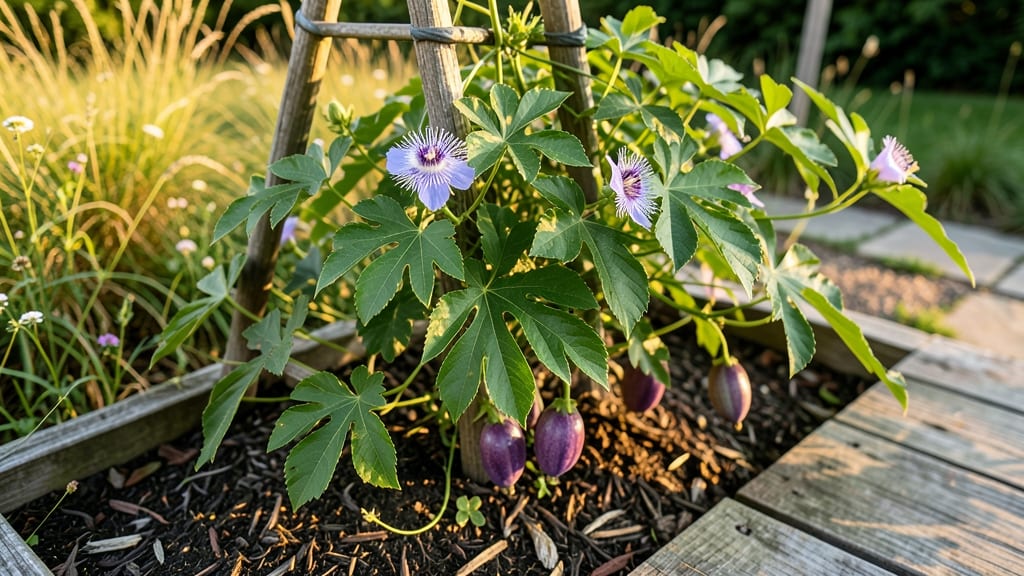
Growing passion fruit through its stages of growth is like nurturing a tropical treasure—each phase brings its own rewards, from delicate seedlings to vibrant fruit 🍈.
Picture this: you’ve just planted your seeds, dreaming of a lush vine heavy with harvests. But without knowing what to expect at each stage, you might miss critical moments—like when to prune for better airflow or how to spot nutrient deficiencies before they stall growth.
This month-by-month guide breaks down every stage, from germination to fruiting, so you can track your passion fruit vine’s progress like a pro. We’ll cover the ideal conditions, common pitfalls, and the exact timing for flowering and harvest, ensuring you don’t miss a thing.
Whether you’re a beginner or a seasoned gardener, you’ll learn how to give your passion fruit vine the care it needs to thrive—so you can enjoy a bountiful harvest in just 6-12 months.


Passion fruit growth stages explained: from seed to flowering
Watching a passion fruit vine transform from a tiny seed to a thriving vine capable of producing exotic fruits is one of the most rewarding experiences in gardening. The first 6 months are especially critical, as this is when the foundation for your entire harvest is established.
Understanding these early stages will help you identify growth milestones, troubleshoot potential issues, and set your vine up for success. Let’s break down what to expect during this exciting phase.
Passion fruit vines grow rapidly once established, but their early development requires patience and precise care. From the moment you plant your seed, your vine will go through three distinct phases: germination, vegetative growth, and pre-flowering.
Each phase has unique requirements, and missing the mark can delay—or even prevent—your first harvest. Let’s explore these stages in detail, so you can provide exactly what your vine needs at every turn.
The journey begins with germination, which typically occurs within 7-21 days after planting. To encourage quick and healthy sprouts, maintain your soil temperature between 70-85°F and keep it consistently moist. Passion fruit seeds are sensitive to cold, so avoid planting in areas prone to frost.
If you’re starting indoors, use a heat mat to simulate tropical conditions. Once your seedling emerges, you’ll notice a small cotyledon (seed leaf) followed by the first true leaves, signaling the transition to the next phase.
During the seedling establishment phase (weeks 4-6), your passion fruit vine will develop its first 2-4 true leaves, which are essential for photosynthesis. This is when you should introduce your seedling to full sun (6+ hours daily) and a balanced fertilizer like 5-10-10 to encourage root and leaf growth.
Be cautious with watering—overwatering can lead to root rot, while underwatering stunts growth. Aim for 1 inch of water per week, adjusting for rainfall or heat.
As your vine enters the vegetative growth phase (weeks 8-12), you’ll see explosive growth as it climbs toward its trellis or support structure. This is when passion fruit vines can grow 2-4 inches per week under ideal conditions.
To support this rapid expansion, provide a strong trellis or fence and prune any leggy or weak stems to redirect energy to healthier growth. During this phase, focus on deep watering (1-2 gallons per plant) and a phosphorus-rich fertilizer to strengthen roots and prepare for flowering.
The final early stage is pre-flowering, which can begin as early as 12 weeks after planting, depending on your climate. You’ll notice bud formation along the vine, followed by the appearance of exotic, trumpet-shaped flowers.
This is a critical transition point where your vine shifts its energy from leaf production to reproductive growth. To encourage flowering, reduce nitrogen-heavy fertilizers and switch to a potassium-rich formula (like 10-10-20). Additionally, hand-pollinate flowers using a small brush if you’re in an area with low pollinator activity.
One of the biggest mistakes gardeners make during these early stages is over-pruning or under-supporting the vine. Passion fruit vines are heavy and can snap under their own weight if not properly trellised.
Another common issue is nutrient imbalance, particularly a lack of magnesium or calcium, which can cause yellowing leaves or stunted growth. Regularly check your soil pH (ideal range: 6.0-7.5) and amend as needed with compost or lime.
By the time your vine reaches the flowering stage
Month-by-month passion fruit growth timeline for harvest readiness
Tracking your passion fruit vine’s progress month-by-month ensures you don’t miss critical growth windows like flowering or fruit set. In tropical zones, vines mature faster, while subtropical climates may require extended growing seasons and winter protection.
I’ve grown passion fruit in both environments, and the key difference is timing—expect 2-4 months of delay in cooler climates for flowering and fruiting.
Your vine’s first year focuses on establishing strong roots and vines. By month 6, you’ll see rapid leaf production and the first tendrils reaching for supports. Pruning young vines in months 3 and 6 encourages bushier growth, which translates to more flowering sites later.
In my subtropical garden, I prune aggressively in June and September to manage vine sprawl and redirect energy to fruit production.
- Month 1-3: Seedlings emerge and develop first true leaves. Provide daily misting and morning sunlight to prevent damping-off. Transplant to 5-gallon pots if indoor-started.
- Month 4-6: Vines reach 5-10 feet. Install trellis supports and begin light pruning to encourage branching. Watch for first tendrils—this signals rapid growth.
- Month 7-9: Flower buds form (tropical) or appear (subtropical). Apply phosphorus-rich fertilizer to boost blooms. Hand-pollinate if bees are scarce—use a soft paintbrush to transfer pollen.
- Month 10-12: Fruit sets and grows rapidly. Prune old wood to redirect energy. In subtropical zones, protect vines from light frosts with row covers or move pots indoors.
- Month 13-15: Harvest window opens! Fruit changes color and softens. Pick daily to encourage more production. Store unripe fruit in a paper bag at room temperature to ripen.
Flowering typically begins in months 7-9 for tropical varieties like Purple Passionfruit (Passiflora edulis), while subtropical types may delay until month 10. I once had a Granadilla vine (Passiflora ligularis) bloom in June in my Florida garden—unexpected but exciting!
Watch for 3-inch-long tubular flowers with crown-shaped petals; these are your first sign of impending fruit.
Fruit set occurs 2-4 weeks after flowering, marked by tiny green marbles forming at flower sites. At this stage, increase watering to 1-2 gallons per vine and reduce nitrogen fertilizer to prevent leafy growth over fruit.
In my USDA Zone 9b garden, I switch to a 5-10-10 NPK ratio to support fruiting.
Harvest readiness varies by variety but generally falls 6-9 months after flowering. Purple passionfruit turns deep purple-black when ripe, while yellow varieties develop a golden hue. Gently squeeze the fruit—it should yield slightly like a ripe avocado.
If you’re in a subtropical zone, harvest before the first frost or move potted vines indoors for indoor ripening.
Pro tip: Mark your calendar for month 12 to prune spent vines and fertilize for next year’s growth. In my experience, a well-maintained passion fruit vine can produce for 5+ years with proper care—imagine the harvest potential! 🌱