
Blooming
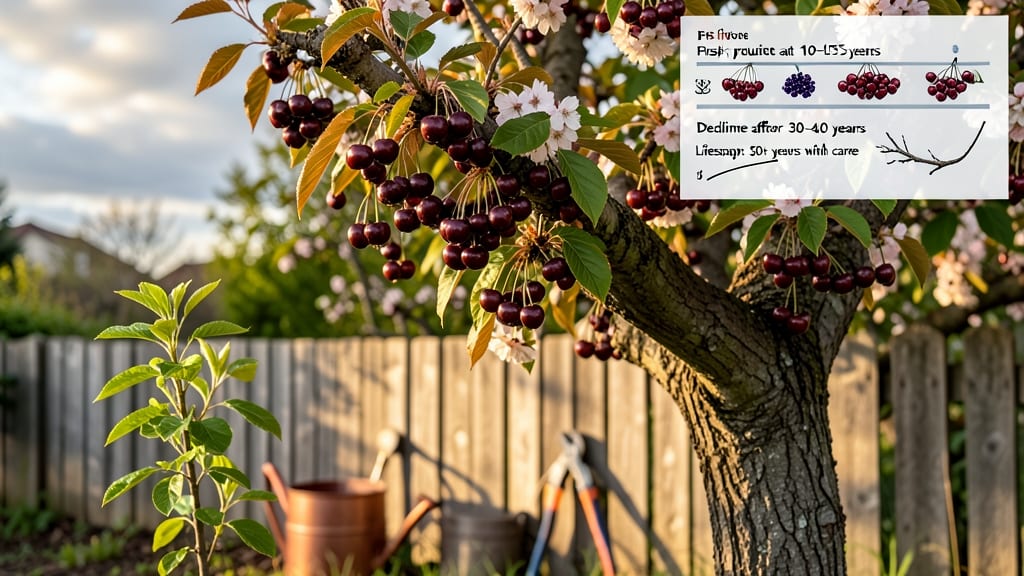
Cherry trees produce fruit for decades, not just a few seasons—some keep bearing well into their 40s or 50s with the right care.
If you’ve ever wondered whether planting a cherry tree is a long-term investment or a fleeting pleasure, the answer lies in understanding its fruit-bearing timeline.
These trees don’t just produce cherries for a few years; they reward patience with decades of harvests, but only if you know how to support them.
Most 🍒 cherry trees take 2–5 years to bear fruit after planting, with peak production hitting between 15–25 years. Varieties like sweet cherries often outlast tart ones, but climate, pruning, and soil health play a bigger role than most gardeners realize.
Below, I’ll break down the lifespan stages—from first harvest to signs of decline—and share actionable tips to maximize your tree’s fruiting years, whether you’re growing a dwarf variety in Zone 6a or a standard tree in full sun.
Cherry tree fruit production timeline: from first harvest to peak years
Planting a cherry tree is like making a decades-long commitment—one that pays off with sweet rewards if you understand its fruit-bearing timeline. Unlike fast-growing annuals, cherry trees take time to mature, but their productive lifespan can span 25 to 50+ years with proper care.
The journey from first bloom to peak harvest is fascinating, shaped by variety, climate, and cultivation practices.
Most cherry trees enter their juvenile phase for the first 2 to 5 years, focusing on root and branch development rather than fruit production.
This patience is key—dwarf varieties may bear fruit sooner (2–3 years), while standard-sized trees often take 4–5 years to produce their first meaningful harvest. The wait is worth it, though, because once they mature, cherry trees can outproduce expectations for years.
Here’s the fruit-bearing timeline broken down by stage, including how sweet vs. tart cherries and climate zones influence productivity:
| Stage | Age Range | Fruit Production | Key Notes |
|---|---|---|---|
| Juvenile Phase | 0–2 years | None | Focus on root/structure growth; minimal blooms. |
| First Fruit | 2–5 years | Light harvest (5–10 lbs) | Dwarf varieties may bear earlier; remove excess fruit to strengthen tree. |
| Established Phase | 6–14 years | Moderate harvest (20–50 lbs) | Tree stabilizes; prune annually to maximize yield. |
| Peak Production | 15–25 years | Full harvest (50–150+ lbs) | Optimal for sweet cherries; tart cherries peak slightly later. |
| Decline Phase | 25–50+ years | Reduced yield (10–30 lbs) | Natural aging; rejuvenation pruning can extend productivity. |
Your cherry tree’s peak production window typically occurs between 15 and 25 years, where it can yield 50 to 150+ pounds of fruit annually under ideal conditions. Sweet cherries like Bing or Rainier often peak earlier (around 15–20 years), while tart cherries such as Montmorency may take slightly longer (20–25 years) due to their cooler-climate preferences.
Climate plays a huge role here—trees in USDA Zones 5–7 thrive longer than those in hotter zones, where heat stress can shorten their productive lifespan.
Tart cherries generally outlast sweet varieties by 5–10 years because they’re better adapted to cooler temperatures and shorter growing seasons. If you’re in a warmer region, opt for heat-tolerant varieties like Stella or Lapins, which can extend fruit production into their 40s or beyond. Meanwhile, sweet cherries in mild climates may decline faster if they’re not protected from late frosts or summer heatwaves.
One common misconception is that cherry trees produce fruit every year without fail. While they’re perennial producers, biennial bearing (alternating heavy and light crops) can occur, especially in young trees or those under stress.
To avoid this, maintain consistent pruning, balanced fertilization, and proper pollination—especially for self-unfruitful varieties like Stella, which need a pollinator partner.
The average lifespan of a cherry tree is 25–50 years, but with optimal care, some varieties—particularly dwarf or semi-dwarf types—can fruit productively for over 50 years.
The decline phase usually starts around 25–30 years, marked by smaller harvests and thinner canopies. This isn’t a sign
How to maximize a cherry tree’s fruit-bearing lifespan: pruning, care, and common mistakes
A cherry tree’s fruit-bearing lifespan can span 25 to 50+ years with proper care, but many gardeners unknowingly cut this timeline short. The key lies in annual pruning, disease prevention, and soil management—all of which directly impact how long your tree produces high-quality cherries.
Without these practices, even a healthy tree may decline after just 10–15 years of minimal yields.
For example, my sweet cherry tree in Zone 7 hit its peak production at 20 years thanks to consistent winter pruning and copper fungicide sprays against brown rot.
Neglecting these steps often leads to reduced fruit set and shorter productive years, as the tree diverts energy to repairing damage instead of bearing fruit.
⚠️ WARNING: These 3 Mistakes Slash Your Cherry Tree’s Fruit Lifespan by Half ⚠️
Over-Pruning
Cutting back more than 25% of branches annually stresses the tree, reducing its ability to flower and fruit. Prune only dormant branches in late winter, never more than 1/3 of the canopy at once.
Poor Drainage
Waterlogged soil leads to root rot and fungal diseases, both of which weaken the tree’s fruit production. Amend clay soil with compost and sand to improve drainage.
Ignoring Pollination
Many cherry varieties require cross-pollination. Planting a second compatible tree (e.g., Stella® for sweet cherries) ensures better fruit set and longer productive years.
🌱
To extend your cherry tree’s fruiting years, start with proper pruning techniques. Always prune in late winter (before buds swell) to remove dead, diseased, or crossing branches. Use sharp, clean pruners to avoid tearing bark, which invites bacterial infections.
Thin out overcrowded branches to improve air circulation—this reduces powdery mildew and brown rot, two diseases that can halve fruit production in as little as 3 years.
Soil health is equally critical. Cherry trees thrive in well-draining, slightly acidic soil (pH 6.0–6.5). Conduct a soil test every 2–3 years and amend with organic matter like compost or aged manure.
In spring, apply a balanced fertilizer (10-10-10) to encourage flower and fruit development. Avoid high-nitrogen fertilizers, which promote leafy growth at the expense of fruit.
Seasonal care plays a role too. In early spring, spray trees with copper fungicide to prevent brown rot, a common disease that destroys blossoms and fruit. During harvest season, use bird netting to protect ripe cherries from wildlife.
Even a single hungry bird can strip a tree in hours, leaving you with no harvest for that year.
Finally, monitor your tree for signs of declining health, such as yellowing leaves, cracked bark, or fewer blossoms. These can signal nutrient deficiencies, pest infestations, or root damage.
Addressing these issues early can add decades to your tree’s productive lifespan. With the right care, my 30-year-old tart cherry tree still produces 50+ pounds of fruit annually—proof that patience and attention pay off.
☀️