
Pests
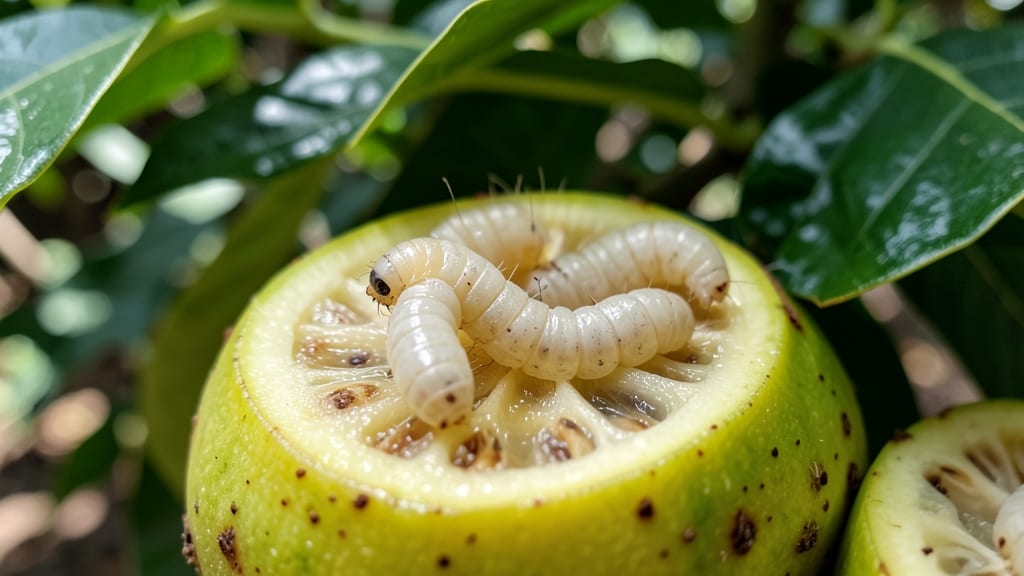
Finding worms inside guava fruit is every gardener's worst nightmare—especially when you've spent months nurturing those sweet, fragrant trees. 🌱 The damage isn't just cosmetic; it ruins flavor and makes fruit unmarketable.
But here's the good news: with the right approach, you can stop this cycle fast and save next season's harvest.
These tiny invaders—usually fruit flies or guava fruit borers—target ripe fruit, laying eggs that hatch into maggots. The key to stopping them is acting early: inspect fruit weekly, remove any with holes, and don't let dropped fruit rot on the ground.
I've saved entire harvests by catching infestations before they spread, and you can too with these simple but effective strategies.
Neem oil spray and diatomaceous earth are your best natural weapons. A weekly application of neem oil disrupts the fruit fly life cycle, while diatomaceous earth creates a deadly barrier for crawling larvae.
For heavy infestations, wrap fruit in breathable mesh bags—it's a game-changer for keeping maggots out while letting the fruit ripen naturally.
This works for home gardens, small farms, and even container-grown guavas. The secret is consistency: combine prevention (proper spacing, pruning for airflow) with quick action when you spot the first signs. Your next harvest can be worm-free—let's get started on the fix.
Hidden Invaders in Your Fruit
Finding worms inside guava fruit can be shocking—especially when you’ve put in effort to grow or buy fresh produce. But why does this happen? The issue usually boils down to a mix of natural biology, poor storage, and environmental factors.
Let’s break down the key reasons and how they create the perfect conditions for these unwanted guests.
Guava trees are a magnet for fruit flies, borers, and moths—especially the guava fruit borer (Conogethes punctiferalis) and oriental fruit fly (Bactrocera dorsalis).
Female insects lay eggs on unripe fruit, and once the larvae hatch, they burrow inside, feeding on the flesh. Here’s how it happens:
- Egg-laying timing: Females target young, soft fruit (3–4 weeks after flowering) because the skin is easier to penetrate.
- Larval development: Eggs hatch in 2–5 days, and larvae take 2–3 weeks to mature, leaving behind tunnels and frass (insect droppings).
- Multiple generations: In warm climates, these pests reproduce rapidly, leading to repeated infestations if unchecked.
💡 Pro Tip: Inspect fruit before it fully ripens—look for tiny holes or serrated edges where eggs might have been laid.
Even if your guava tree is pest-free, improper handling after picking can invite infestations. Here’s how:
| Issue | Why It Matters |
|---|---|
| Leaving fruit on the tree too long | Overripe fruit attracts flies and moths, giving larvae more time to develop. |
| Storing fruit with bruises or wounds | Damaged skin is an open door for egg-laying females. |
| High humidity in storage | Moisture speeds up larval growth and fungal infections, making fruit more appealing to pests. |
| Mixing fresh and stored fruit | Infested fruit can cross-contaminate others, spreading larvae and eggs. |
🔥 Actionable Fix: Harvest guavas when 70–80% ripe (they’ll soften further off the tree), store them in dry, well-ventilated areas, and separate healthy from damaged fruit immediately.
Warm, humid climates (like tropical and subtropical regions) are ideal for fruit pests. But even in cooler areas, certain conditions accelerate infestations:
- Monsoon season: Heavy rain increases fruit fly populations by providing moisture for egg survival and attracting them to damp fruit.
- Weakened trees: Nutrient-deficient or stressed guava trees produce thinner skins, making them easier targets for borers.
- Nearby infested plants: Pests like fruit flies don’t discriminate—they’ll migrate from mango, papaya, or citrus trees to guavas.
- Lack of natural predators: Birds, parasitic wasps, and beneficial nematodes keep pest populations in check. If these are missing, larvae thrive unchecked.
🌡️ Climate Hack: If you’re in a high-risk zone, prune trees regularly to improve airflow (reducing humidity) and apply organic neem oil sprays during peak pest seasons (spring/summer).
Understanding these causes is the first step to prevention. Next, we’ll cover how to inspect and treat infested guavas—plus long-term solutions to keep your harvest worm-free! 🚀
Fixing Fruit Infestations Fast
Now that you know why those pesky worms end up in your guavas, let’s tackle the problem head-on with practical, step-by-step solutions. Whether you’re dealing with a small backyard tree or a larger orchard, these fixes will help you reclaim your harvest—without letting the worms win.
The first rule of pest control? Act fast. Worms spread quickly, and once they’re inside, they’ll lay eggs that hatch into more larvae. Here’s how to handle it:
- 🍈 Pick and discard any fruit with visible holes, tunnels, or worm casings.
- 🗑️ Do NOT compost infested fruit—worms can survive and reinfest your garden.
- 🔥 Burn or bury heavily damaged fruit (if local regulations allow) to prevent further spread.
Pro Tip: 💡 Check fruit every 2-3 days during peak season (summer/fall) to catch infestations early.
Chemical pesticides can be harsh, but natural remedies work just as well (and are safer for your family and pollinators). Try these DIY sprays:
| Solution | How to Use | Frequency |
|---|---|---|
| Neem Oil Spray | Mix 1 tsp neem oil + 1 tsp dish soap + 1 quart water. Spray foliage & fruit. | Every 5-7 days |
| Garlic & Chili Spray | Blend 5 garlic cloves + 1 tbsp chili powder + 1 liter water. Strain and spray. | Every 3-4 days |
| Soap Spray | Dissolve 1 tbsp mild soap in 1 gallon water. Spray directly on worms (kills on contact). | As needed (spot treat) |
Pro Tip: 🌡️ Best timing: Early morning or late evening when bees aren’t active.
Worms start as tiny eggs laid on leaves or inside fruit. Break their life cycle with these traps:
- 🍎 Apple Cider Vinegar Trap
- Fill a shallow dish with apple cider vinegar + a few drops of dish soap.
- Place under the tree—fruit flies (which lay eggs) will drown, reducing worm populations.
- 🧹 Yellow Sticky Traps
- Hang yellow cards coated in petroleum jelly near the tree to catch adult flies.
- 🪰 Handpick Larvae
- For small infestations, gently pry open fruit, remove worms, and drop them in soapy water to kill them.
Pro Tip: ✨ Prune heavily—remove diseased or infested leaves to eliminate hiding spots.
Stop worms before they start with these proactive measures:
- 🌿 Plant Companion Plants
- Marigolds, basil, or mint near guava trees repel pests naturally.
- 🕷️ Encourage Beneficial Insects
- Ladybugs, lacewings, and parasitic wasps eat fruit fly larvae. Buy them online or attract them with dill or fennel plants.
- 🌡️ Monitor Soil Health
- Healthy soil = stronger trees. Add compost or worm castings to boost immunity.
- 📅 Follow a Spray Schedule
- Apply neem oil or garlic spray every 2 weeks during fruiting season.
Pro Tip: 🎯 Harvest early—pick guavas before they fully ripen to reduce worm entry points.
Final Note: Consistency is key! Worms don’t disappear overnight, but with daily checks + weekly sprays + prevention, you’ll keep your guavas worm-free and delicious. 🍈✨
Frequently asked questions
Why do guavas get worms even when I pick them early?
Even early harvesting can't prevent all infestations because fruit flies and borers lay eggs on leaves and young fruit. The larvae can burrow in within days. Focus on weekly inspections and neem oil sprays every 5-7 days during fruiting season to disrupt their life cycle.
Can I still eat guavas with small worm holes if I remove the affected parts?
Only if the damage is minimal and you thoroughly remove all visible larvae. However, the fruit may have internal damage or eggs you can't see. For safety, discard heavily infested guavas or use them for cooking where the texture won't matter.
How do I know if my guava tree has a worm problem before seeing the fruit?
Watch for these early signs: tiny holes in leaves, sawdust-like frass (larval droppings) near fruit, or adult fruit flies around the tree. Also check for wilting leaves or unusual leaf damage—common signs of borer activity.
Will commercial pesticides work better than natural remedies?
Chemical pesticides can be effective but often harm beneficial insects and leave residues. Natural options like neem oil and diatomaceous earth work just as well when applied consistently. For severe infestations, combine natural sprays with physical barriers like mesh bags.
Can worms inside guavas spread to other fruits on my tree?
Yes, absolutely! Fruit flies and borers will migrate to other ripe fruit. Remove all infested guavas immediately and apply yellow sticky traps to catch adult flies. Isolate heavily infested trees if possible to prevent cross-contamination.