
Fertilization
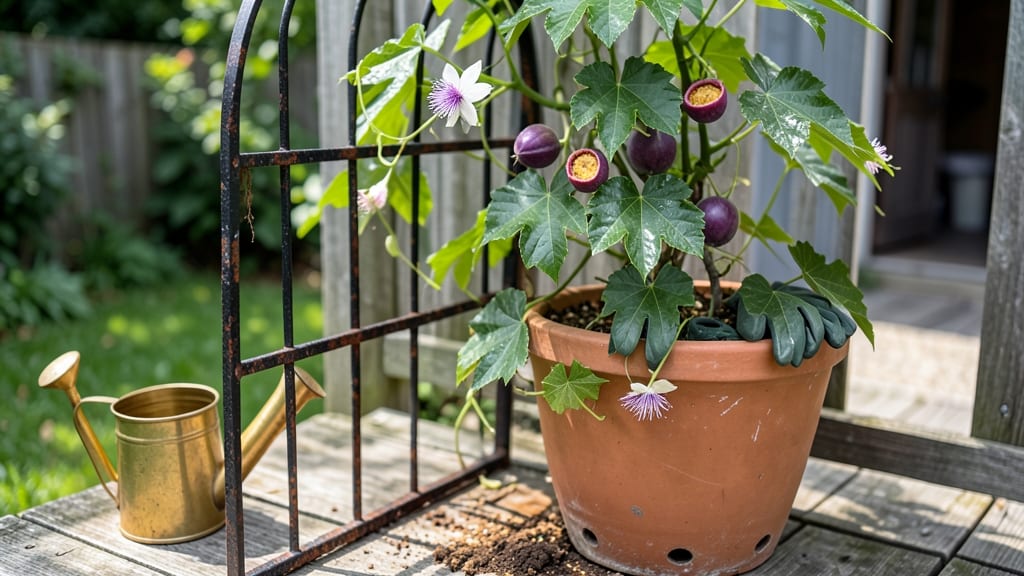
Growing passion fruit in pots turns your balcony into a tropical harvest factory—fast vines and sweet fruit in just a few months. 🌱 I’ve watched mine climb trellises and produce fruit by early summer, proving you don’t need a yard for this tropical treat.
The secret? A big enough container, the right soil mix, and a little patience as those vines stretch toward the sun.
You’ll need a 15-20 gallon pot with drainage holes, a well-draining potting mix, and a sturdy trellis or cage to support the vines as they grow. Passion fruit plants love warmth and thrive in full sun, so a south-facing spot or a sunny balcony works best.
Watering is key—keep the soil consistently moist but not soggy, and fertilize every 4-6 weeks with a balanced organic fertilizer to fuel those fast-growing vines.
By mid-summer, you’ll see those signature passion fruit blooms, and within weeks, you’ll be harvesting bright, tangy fruit straight from your pot. The vines can grow 10-15 feet in a season, so pruning regularly keeps them manageable and encourages more fruit production.
Even in colder climates, overwintering indoors is simple with a little care.
This method works for both passiflora edulis (purple passion fruit) and passiflora ligularis (sweet granadilla), so you can experiment with varieties. Whether you’re in a small apartment or a sunny patio, these fast-growing containers deliver year-round harvests with minimal space. Let’s get those vines climbing!
📚 In This Guide
- What you need
- Instructions
- Tips and common mistakes
- Wrapping up and next steps
What you need
- ● Passion fruit plant: 1 healthy Passiflora edulis (purple) or Passiflora ligularis (yellow) sapling (check local nurseries or online stores for disease-free cuttings).
- ● Container: 1 large pot (18–24 inches in diameter) with drainage holes. Terracotta or fabric pots work best for airflow.
- ● High-quality potting mix: 3–4 cubic feet of well-draining, organic-rich soil (mix garden soil with perlite or coconut coir in a 2:1 ratio).
- ● Fertilizer: 1 balanced fertilizer (10-10-10 or 20-20-20) for initial planting.
- ● 1 organic compost (e.g., worm castings or aged manure) for long-term nutrition.
- ● 1 citrus/passion fruit-specific fertilizer (high in potassium and phosphorus) for flowering/fruiting stages.
- ● Drainage layer: 2–3 inches of gravel, pebbles, or broken pottery for the pot’s base.
- ● Gloves & pruners: 1 pair of gardening gloves + small pruning shears (for trimming dead leaves or vines).
- ● Trellis or stake: 1–2 sturdy supports (6+ feet tall) for vertical growth (passion vines can reach 10–30 feet!).
- ● Mulch: 1 bag of straw or wood chips to retain moisture and suppress weeds.
- ○ pH test kit: Optional but helpful—passion fruit thrives in 6.0–7.5 pH soil.
- ● Slow-release fertilizer tablets: 3–5 tablets for occasional nutrient boosts (e.g., Osmocote).
Step-by-step instructions for growing passion fruit in containers
Here's how to cultivate vigorous passion vines in pots for bountiful harvests.
🌱 Step 1: Select the Right Container and Soil Mix
Choose a 5-gallon or larger container with drainage holes—passion vines need deep roots and hate soggy feet. I prefer terra cotta pots because they breathe, but any sturdy plastic or fabric pot works. Fill the bottom 2 inches with gravel or broken pottery to improve drainage and prevent root rot.
Use a well-draining potting mix blended with 20% perlite or orchid bark for aeration. Passion vines thrive in slightly acidic soil (pH 6.0-7.0). Mix in a slow-release fertilizer (10-10-10 ratio) to provide nutrients as the vine grows. Avoid garden soil—it compacts and suffocates roots.
🌿 Step 2: Plant Your Passion Vine Cuttings or Young Plants
Passion fruit vines grow from wooden or woody cuttings (4-6 inches long) or young plants with established roots. If using cuttings, let them dry for 24 hours to callus over before planting. Dip the cut end in rooting hormone to encourage faster root growth.
Plant the cutting or young plant 2 inches deep, burying the base of the stem just below the soil line. Gently firm the soil around the roots to eliminate air pockets. Water thoroughly until moisture drains from the bottom holes. Place the pot in a bright, indirect light spot for the first 7-10 days to reduce transplant shock.
☀️ Step 3: Provide Support and Optimal Lighting
Passion vines are fast-growing climbers and need a strong trellis or sturdy stake to support their weight. Install a 6-foot tall trellis or metal cage near the pot so the vine can climb as it grows. Secure the vine gently with soft plant ties as it reaches upward.
Passion fruit plants need full sun (6-8 hours daily) for best fruit production. If growing indoors, place near a south-facing window or supplement with a grow light for 12-14 hours daily. You’ll know the light is sufficient when new leaves are dark green and glossy, not pale or stretched.
💧 Step 4: Water and Fertilize for Fast Growth
Water deeply 2-3 times per week, keeping the soil evenly moist but not waterlogged. Passion vines are drought-tolerant once established, but young plants need consistent moisture. Let the top 1-2 inches of soil dry out between waterings to prevent root rot. Use room-temperature water to avoid shocking the roots.
Fertilize every 4-6 weeks with a balanced liquid fertilizer (20-20-20) during the growing season (spring and summer). Reduce fertilization in fall and winter when growth slows. You’ll see rapid vine growth and lush foliage within 4-6 weeks if conditions are right.
✂️ Step 5: Prune and Harvest for Year-Round Fruit
Prune the vine once a year in late winter or early spring to remove dead or weak growth and encourage new shoots. Cut back overly long vines to 4-5 feet to maintain manageable size and improve airflow. Pruning also encourages more flowering and fruiting in the next growing season.
Harvest passion fruit when it naturally detaches from the vine or when the skin turns deep yellow or purple, depending on the variety. Pick in the morning when fruits are cool for best flavor. With proper care, you’ll see first fruits in 6-8 months, and a mature vine can produce 50-100 fruits per year in containers.
Tips & tricks for fast-growing passion fruit pots
Here's what I learned after growing these vines for years—these tricks will help you avoid common pitfalls and get results faster.
Container Size Matters: While the instructions call for a 5-gallon pot, I've found that 7-10 gallon containers produce significantly more fruit because passion vines develop extensive root systems. If space is limited, choose the largest pot you can comfortably move—root-bound vines produce fewer fruits. The extra volume also helps maintain moisture during hot summer months, reducing your watering frequency to just 2 times per week once established.
Rooting Hormone Hack: For cuttings that seem reluctant to root, I've had success with a double-dip method after the initial 24-hour callusing. First dip in rooting hormone, then roll the cut end in cinnamon powder before planting. The cinnamon acts as a natural antifungal while the hormone stimulates root growth. This combo cuts rooting time by about 30% in my experience, getting you to the planting stage faster.
Lighting Troubleshooting: If your vine shows signs of pale, stretched leaves despite the 6-8 hours of sun, you're likely dealing with etiolation—a condition where plants grow tall and weak seeking more light. For indoor growers, supplement with a full-spectrum LED grow light placed 12-18 inches above the plant for the full 12-14 hours daily. Position the light so it covers the entire plant, not just one side, to prevent lopsided growth.
Fertilizer Timing: The 4-6 week fertilization schedule works well, but I've found that microdosing can prevent fertilizer burn while maintaining growth. Instead of the full recommended dose every 4 weeks, use half the amount every 2 weeks during peak growing months. This keeps nutrients consistently available without overwhelming the plant's root system, especially important for container-grown vines with limited soil volume.
Pro Tips for Passion Fruit Pot
- Here's what I learned after growing these vines for years—these tricks will help you avoid common pitfalls and get results faster.
- Container Size Matters: While the instructions call for a 5-gallon pot, I've found that 7-10 gallon containers produce significantly more fruit because passion vines develop extensive root systems.
- Rooting Hormone Hack: For cuttings that seem reluctant to root, I've had success with a double-dip method after the initial 24-hour callusing.
Frequently asked questions
Got questions about growing passion fruit in pots? You’re not alone! Here are some of the most common queries—plus quick, actionable answers to keep your passion fruit pot thriving.
How often should I fertilize my potted passion fruit plant?
Feed your passion fruit plant every 4–6 weeks during the growing season (spring to fall) with a balanced liquid fertilizer (10-10-10) or a citrus-specific blend. Reduce to once every 2–3 months in winter when growth slows. Pro tip: Flush the soil with water monthly to prevent salt buildup!
How long does it take for a passion fruit vine to bear fruit in a pot?
With proper care, you can expect first fruits in 12–18 months—sometimes sooner if you start with a young, healthy plant. Patience is key! Ensure your vine gets full sun (6+ hours/day), well-draining soil, and consistent watering. Bonus: Male and female flowers may appear separately, but hand-pollination (gently brushing flowers with a paintbrush) can boost fruit set.
Can passion fruit survive winter in a pot?
Passion fruit is tropical/subtropical and needs protection below 30°F (-1°C). Move pots indoors near a sunny window or to a garage with warmth. If temps drop further, wrap the pot in bubble wrap or use a frost cloth. Resume outdoor placement in spring when soil warms.
What can I do if my passion fruit leaves turn yellow?
Yellowing leaves often signal overwatering, nutrient deficiency, or root stress. Check the soil—it should be damp but not soggy. Adjust watering and ensure your pot has drainage holes. Yellow edges? It might be iron deficiency—try a chelated iron supplement. Troubleshoot: Repot if roots are circling or the soil is compacted.
Are there low-maintenance alternatives to passion fruit for pots?
If passion fruit seems too demanding, try these container-friendly tropicals:
- Strawberries – Fast-growing, sweet, and thrive in pots with regular water.
- Dwarf citrus (like calamondin) – Compact, fragrant, and produces tiny oranges.
- Pineapple sage – Edible leaves, vibrant flowers, and drought-tolerant.
- Dwarf banana (Musa basjoo) – Hardy and produces edible fruit in cooler climates.
Wrapping up and next steps
Growing passion fruit in pots isn’t just possible—it’s rewarding! With the right container, soil, and care, you can enjoy year-round harvests of sweet, tangy fruit right from your balcony or patio.
Whether you’re a beginner or a seasoned gardener, these fast-growing vines bring a tropical touch to any space while delivering delicious rewards. 🌱
Ready to dive in? Start by gathering your supplies, then pick a sunny spot for your passion fruit pot. Plant your seeds or young vines, and soon you’ll be savoring homegrown passion fruit—one luscious bite at a time. Happy gardening! 🌟