
Fertilization
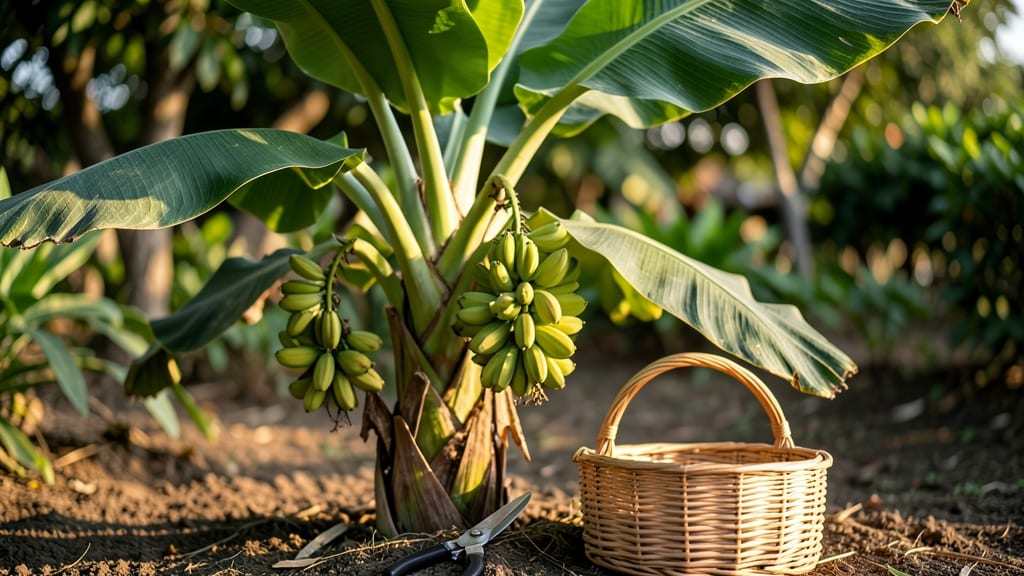
Musa basjoo fruit is technically edible but rarely eaten because its thick, fibrous flesh and mild flavor fall short compared to commercial bananas. The fruit’s hard seeds and irritating latex sap make it challenging to prepare safely.
This ornamental banana’s fruit is non-toxic but far from ideal for eating raw—its tough skin and starchy pulp require cooking to soften. 🌱 Gardeners often harvest it for novelty or fermenting into vinegar, but the sap can cause skin irritation during handling.
Unlike dessert bananas, Musa basjoo prioritizes ornamental leaves over fruit quality, so its edibility is more of a curiosity than a culinary asset.
If you’re curious to try it, wait until the fruit turns yellow and feels slightly soft when pressed—this indicates peak ripeness. Peeling requires caution due to the sap, and most people roast or bake slices to break down the fibers.
Just remember: while not poisonous, it’s not exactly a gourmet treat either!
💡 In This Article
- Why Musa Basjoo Fruit Differs From Edible Bananas
- Safe Harvesting and Preparation Tips for Tasting
Why Musa basjoo fruit differs from edible bananas
The key difference between Musa basjoo fruit and commercial bananas lies in their botanical purpose. While dessert bananas (like Cavendish) are bred for sweet, soft fruit with minimal seeds, the Japanese banana prioritizes large, decorative leaves and hardy growth over fruit quality.
Its seeds—each about 1/2 inch long—are embedded in a dense, starchy pulp that lacks the sugar content of dessert varieties, making it taste more like a bland potato than a ripe banana.
The milky latex sap that oozes when cutting the fruit contains serotonin, which can trigger skin irritation in sensitive individuals. This sap also hardens the fruit's texture, creating a fibrous resistance that requires 10-15 minutes of baking at 350°F to soften.
Unlike bananas, which ripen from green to yellow with increasing sweetness, basjoo fruit turns yellow but never develops the creamy texture or caramelized sugars that make commercial bananas so appealing. 🌱
Nutritionally, the starch-heavy composition means it has a lower glycemic impact than dessert bananas but also lacks the natural sweetness that makes bananas a popular snack.
The fruit's high fiber content (about 3-4 grams per 100 grams) contributes to its tough texture, while commercial bananas have only 1 gram per 100 grams. This structural difference explains why basjoo fruit is rarely cultivated for food—it simply doesn't offer the same eating experience.
Botanists classify basjoo as a "wild-type" banana, meaning it hasn't undergone the selective breeding that transformed its cousins into the sweet, seedless varieties we know today.
The fruit's thick peel (up to 1/4 inch thick) and dense interior make it impractical for fresh consumption, while the seeds—though not toxic—add an unpleasant crunch. This combination of factors makes it a curiosity rather than a culinary staple, despite being completely safe to eat when prepared properly.
What makes this even more interesting is how the fruit's characteristics align with its ornamental purpose. The plant's massive leaves (up to 8 feet long) and cold-hardy nature make it a prized garden specimen, while its fruit serves as a secondary (and often overlooked) feature.
Unlike food crops, where fruit quality is paramount, basjoo's value lies in its aesthetic appeal and resilience, not its edibility. 🌿
For comparison, consider how plant breeders have transformed wild bananas through generations of selection. A single dessert banana contains 0.1% seeds by weight, while basjoo fruit can have 20-30% seeds by volume.
This dramatic difference in seed content alone explains why one variety is a global staple and the other remains a gardener's novelty. The lesson here? Nature doesn't always prioritize palatability over other desirable traits!