
Container Gardens
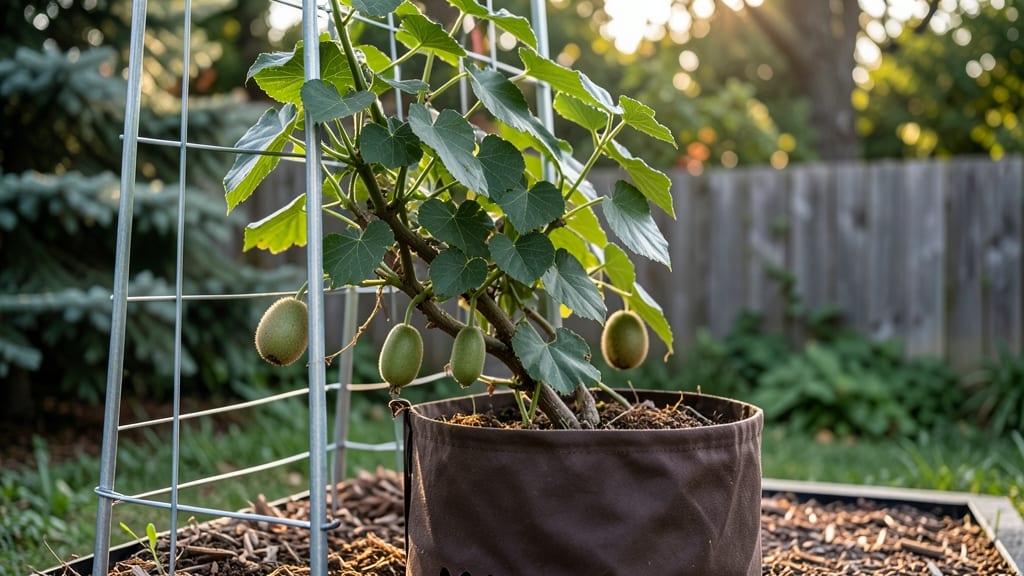
Growing kiwi fruit in pots lets you enjoy backyard harvests on a balcony or patio. 🌱 I’ve grown hardy kiwi vines for three seasons now, and the sweet-tart fruit is worth every bit of effort—even in small spaces. The key?
Choosing the right variety and mimicking the vine’s natural climbing habits with sturdy supports. You’ll need a 10- to 15-gallon container for mature vines, well-draining soil mixed with compost, and a sunny spot with at least 6 hours of direct light daily.
Hardy kiwi (Actinidia arguta) thrives in pots because it’s cold-hardy and compact, unlike its large-fruited cousins. Prune in late winter to shape the vine and encourage fruit production. By summer, you’ll see clusters of tiny flowers that eventually turn into 1- to 2-inch kiwis—sweeter and more aromatic than store-bought.
The vines grow aggressively, so plan for 8- to 10-foot trellises or sturdy fencing. With consistent watering and occasional fertilization, your balcony can become a mini orchard. Indoor growers can extend the season with grow lights, but outdoor pots yield the best flavor.
The biggest challenge? Pollination—hand-pollinating with a small brush ensures fruit set. Patience pays off: kiwi vines take 2-3 years to bear fruit, but the first harvest is unforgettable.
📚 In This Guide
- What you need
- Instructions
- Tips and common mistakes
- Wrapping up and next steps
What you need
- ● Container: A 5-gallon pot or larger (minimum 12" deep and 18" wide) with drainage holes. Opt for fabric grow bags or plastic/ceramic pots with handles for easy moving.
- ● Potting Mix: 10–15 gallons of well-draining, nutrient-rich soil (mix 50% potting soil, 30% compost, and 20% perlite or coarse sand for aeration).
- ● Kiwi Plant: A dwarf or compact variety like ‘Issai’ (self-pollinating) or ‘Jenny’ (female) paired with a ‘Tomuri’ (male) vine. Buy from a reputable nursery (avoid grocery store plants—they’re often grafted and won’t fruit well!).
- ● Fertilizer: Balanced fertilizer (10-10-10) for initial planting.
- ● Citrus/acid-loving plant fertilizer (e.g., Miracle-Gro® for Azaleas/Rhododendrons) during growing season (spring–fall).
- ○ Slow-release granules (optional but helpful for steady nutrition).
- ● Support System: Trellis or sturdy bamboo stakes (at least 6–8 feet tall) to train the vine vertically.
- ● Twine or soft plant ties to secure the vine as it grows.
- ● Watering Supplies: Watering can or hose with a gentle spray nozzle (kiwi vines hate soggy roots!).
- ○ Moisture meter (optional but handy for monitoring soil hydration).
- ● Mulch: 2–3 inches of organic mulch (e.g., straw or wood chips) to retain moisture and regulate soil temperature.
- ● Mycorrhizal Fungi: Adds to potting mix to boost root health (great for container plants!).
- ● Pruning Shears: Bypass pruners (sharp and clean) for trimming in late winter.
- ● Grow Lights: If indoors or in low-light areas, a full-spectrum LED grow light (12–16 hours/day).
- ● Pollination Aid: A soft paintbrush to hand-pollinate flowers if growing separate male/female vines.
Step-by-step instructions for growing kiwi fruit in pots
Here's how to cultivate hardy kiwi vines in containers—ideal for small spaces and urban balconies.
🪴 Step 1: Choose the Right Container and Drainage
Kiwi vines need at least 15-gallon containers for each plant to accommodate their sprawling roots. I recommend using fabric grow bags because they allow roots to breathe and prevent waterlogging, which kiwi plants hate. Ensure the container has multiple drainage holes—at least four—spaced evenly around the bottom. If your chosen pot lacks drainage, drill holes yourself using a ½-inch drill bit.
Place a 2-inch layer of gravel or broken pottery at the bottom before adding soil. This creates a reservoir for excess water while preventing root rot. The gravel also mimics the vine's natural preference for well-drained, aerated soil. If you're growing multiple vines, space containers at least 3 feet apart to allow for airflow and future growth.
🌱 Step 2: Prepare the Soil and Plant Your Kiwi Vine
Fill the container with a custom soil mix of 60% high-quality potting soil, 20% compost, and 20% perlite or coarse sand. Kiwi vines thrive in slightly acidic soil with a pH between 5.5 and 6.5, so test your mix with a soil pH meter if possible. Amend the soil further by mixing in ½ cup of slow-release organic fertilizer (like 10-10-10) into the top 6 inches of soil.
Plant your kiwi vine no deeper than its root flare—the point where the roots meet the stem. Gently tease out any circling roots and position the plant so the top of the root ball sits 1 inch below the container’s rim. This ensures stability while allowing room for mulch. Water thoroughly after planting, letting the water run out the drainage holes until it appears at the bottom of the pot.
☀️ Step 3: Position for Maximum Sun and Support
Kiwi vines are sun-hungry and require full sun exposure—at least 6 to 8 hours of direct sunlight daily. Place your containers in a south-facing location or under a strong grow light if indoors. If you’re growing in a cooler climate, a southeast or southwest exposure works well, but avoid shaded spots where the vine will struggle to produce fruit.
Install a strong trellis or sturdy post near the container immediately after planting. Kiwi vines are vigorous climbers and need support to grow upward. Use soft garden twine or flexible wire to loosely tie the main stem to the trellis as it grows. Avoid tight bindings—kiwi vines grow quickly and can outpace even the sturdiest supports if not monitored.
💧 Step 4: Water and Fertilize for Optimal Growth
Kiwi vines in containers dry out faster than in-ground plants, so water deeply 2 to 3 times per week during the growing season. Stick your finger 2 inches into the soil—if it feels dry, it’s time to water. Water slowly and evenly until it runs out the drainage holes, then let the pot drain completely. Overwatering leads to root rot, while underwatering causes leaf drop and poor fruiting.
Fertilize every 4 to 6 weeks during the growing season with a balanced organic fertilizer (like fish emulsion or compost tea). Kiwi vines are heavy feeders, so I also top-dress the soil with 1 inch of compost in early spring and again after harvest. Reduce watering and fertilizing in fall and winter as the vine enters dormancy, but keep the soil slightly moist to prevent stress.
✂️ Step 5: Prune and Train for Fruit Production
Prune your kiwi vine in late winter or early spring before new growth begins. Remove dead, diseased, or crossing branches first, then cut back last year’s growth by one-third to encourage bushier, more productive growth. Kiwi vines produce fruit on new wood, so avoid heavy pruning in fall or winter, which can reduce next year’s harvest.
Train the vine by tying new shoots to the trellis as they grow. Kiwi vines can grow up to 20 feet in a single season, so prune vigorously to keep them manageable in containers. Focus on 3 to 5 main stems and remove any suckers growing from the base. This directs energy into fruit production rather than excessive foliage. Harvest fruits when they turn golden and slightly soft to the touch, usually in late summer or early fall.
Tips & tricks for growing kiwi fruit in pots
Here's what nobody tells you about keeping your container-grown kiwi vines thriving—and actually producing fruit.
Container Size Matters: That 15-gallon minimum isn't just a suggestion—kiwi roots spread aggressively, and cramped containers lead to stunted growth and poor fruiting. If you're tempted to use smaller pots, think again: the roots need room to breathe, especially in fabric grow bags where they can expand more naturally. I've seen vines in 10-gallon containers struggle after just two seasons, while the 15-gallon plants produced fruit reliably. For maximum harvests, consider upgrading to 20-gallon containers if space allows.
Soil pH is Non-Negotiable: Kiwi vines are finicky about soil acidity, and that pH range of 5.5-6.5 is critical for nutrient uptake. If you don't have a pH meter, test your soil mix by adding a few drops of vinegar—if it fizzes, your mix is too alkaline. For a quick fix, mix in ½ cup of peat moss per container to lower pH naturally. I've found that container-grown vines actually tolerate slightly lower pH better than in-ground plants, so err on the acidic side if you're unsure.
Sunlight Strategy for Small Spaces: Those 6-8 hours of sunlight are essential, but achieving them in apartments or urban settings requires planning. If your balcony only gets 4-5 hours of direct sun, supplement with a full-spectrum LED grow light for 10-12 hours daily during winter months. Position the light 12-18 inches above the plant and keep it on a timer to mimic natural daylight cycles. I've successfully grown kiwi vines indoors year-round using this method, though fruit production will be lighter without natural sunlight.
Winter Care is Critical: When temperatures drop below 40°F, kiwi vines enter dormancy and become vulnerable. Move containers to a sheltered location or wrap them in bubble wrap to protect roots. Reduce watering to just keeping the soil slightly moist, and stop fertilizing entirely. I've lost vines to winter neglect when they were left outside in freezing temperatures—don't make my mistake! A garage with indirect light works well for overwintering, as long as it stays above freezing.
Pro Tips for Growing Kiwi Fruit In Pots
- Here's what nobody tells you about keeping your container-grown kiwi vines thriving—and actually producing fruit.
- Container Size Matters: That 15-gallon minimum isn't just a suggestion—kiwi roots spread aggressively, and cramped containers lead to stunted growth and poor fruiting.
- Soil pH is Non-Negotiable: Kiwi vines are finicky about soil acidity, and that pH range of 5.5-6.5 is critical for nutrient uptake.
Frequently asked questions
Got questions?
Here are answers to the most common queries about growing kiwi fruit in pots—because even the smallest balcony deserves a sweet harvest!
Can I grow kiwi fruit in pots if I live in a cold climate?
Yes, but with extra care! Choose cold-hardy varieties like Actinidia arguta (hardy kiwi) or use large containers (15+ gallons) to protect roots. Move pots indoors or to a sheltered spot during frost, and mulch heavily. A greenhouse or sunroom can extend the growing season too!
How long does it take for a potted kiwi plant to bear fruit?
Patience is key—kiwi vines can take 2–5 years to fruit when grown from cuttings or young plants. For faster results, buy a mature vine (3+ years old) or grafted plant. Male and female flowers must be present for pollination, so plant at least one male vine per 5–6 female vines.
What’s the best pot size for growing kiwi fruit?
Aim for at least 15–20 gallons for mature vines, with drainage holes to prevent root rot. Wider pots (18–24 inches in diameter) work better than deep ones, as kiwi roots spread horizontally. Use lightweight materials like fabric grow bags or plastic for easier moving during seasons.
Why aren’t my potted kiwi leaves turning green, and what can I fix?
Pale or yellowing leaves often signal nutrient deficiencies (like nitrogen or magnesium) or overwatering. Test soil pH (ideal: 5.5–6.5) and amend with compost or a balanced fertilizer (10-10-10). Ensure pots drain well, and avoid soggy soil. Yellow edges? Check for chlorosis—add iron supplements if needed!
Are there dwarf kiwi varieties perfect for small spaces?
Yes! Actinidia arguta (hardy kiwi) stays compact (10–15 feet) and produces edible, grape-sized fruits. Other space-saving options include Actinidia kolomikta (ornamental, cold-hardy) or Actinidia polygama. Just ensure your pot can support the vine’s weight and growth habit over time.
Wrapping up and next steps
Growing kiwi fruit in pots is a rewarding way to enjoy fresh, homegrown fruit—even in small spaces! With the right variety, container, and care, you can turn your balcony into a mini orchard.
Start with a hardy, compact vine, like Actinidia arguta (hardy kiwi), and follow the steps to ensure healthy growth and sweet harvests.
Now that you’re ready, plant your first vine this season and watch your green thumb flourish! 🌱 Ready for more container gardening tips? Check out our guide on training kiwi vines for small spaces to maximize your harvest.