
Blooming
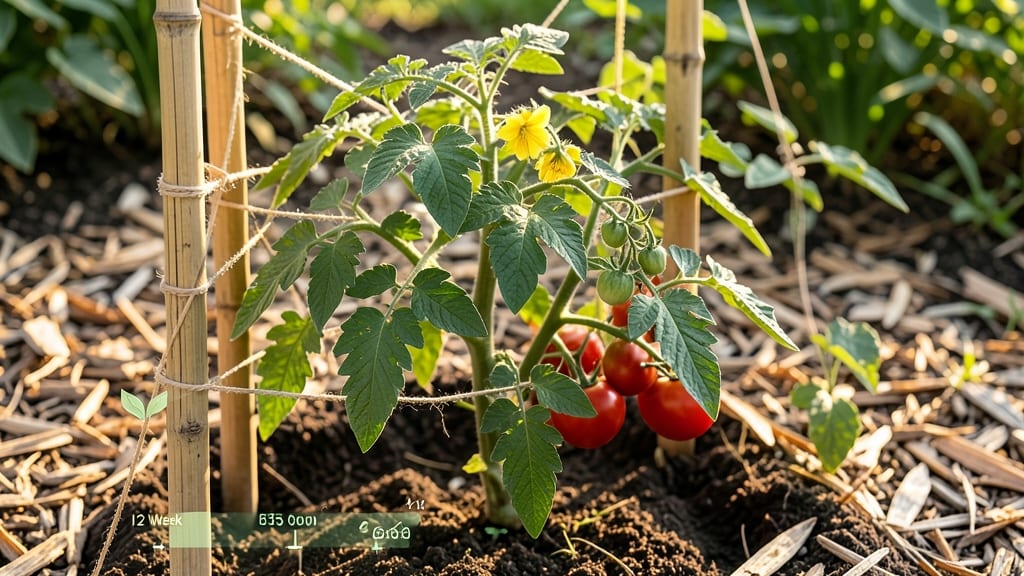
It takes tomatoes 60 to 85 days to produce fruit from seed under ideal growing conditions, though timing varies by type—cherry varieties can fruit in as little as 50–60 days, while heirlooms may need 70–90 days. Sunlight exposure, soil fertility, and consistent temperatures all impact how quickly plants bear tomatoes.
Understanding this timeline helps gardeners plan their planting schedules effectively. The process begins with seed germination, which typically takes 5–10 days, followed by the seedling stage that lasts about 3–4 weeks.
Once plants establish 6–8 true leaves, they enter the flowering phase, where proper pollination becomes critical for fruit set. 🌱 The key to faster production lies in creating optimal growing conditions—well-draining soil rich in organic matter, at least 6–8 hours of direct sunlight daily, and consistent moisture levels without waterlogging.
I've found that using grow lights in early spring can give seedlings a head start, especially in cooler climates where natural daylight is limited.
Another factor to consider is the tomato variety itself. Determinate types, which grow to a fixed size and produce fruit all at once, often mature faster than indeterminate varieties that continue growing and fruiting throughout the season.
For those eager to harvest sooner, choosing early-maturing hybrids like 'Early Girl' or 'Sweet 100' can shave weeks off the timeline. Proper spacing between plants also prevents competition for nutrients, allowing each plant to focus its energy on fruit development.
💡 In This Article
- Tomato Growth Stages From Seed to Fruit
- Speeding Up Tomato Fruit Production: Pro Tips for Gardeners
Tomato growth stages from seed to fruit
The tomato's journey from seed to ripe fruit unfolds in four distinct phases, each with its own timeline and critical requirements. First comes germination, where seeds sprout within 5-10 days when kept in 70-85°F soil with consistent moisture.
The seedling stage follows, lasting 3-4 weeks as the plant develops its first true leaves and a sturdy stem. During this phase, seedlings crave 12-16 hours of light daily—without enough, they'll stretch leggy and weak, delaying everything that follows.
Once seedlings reach 6-8 true leaves, they transition to the flowering phase, which typically takes 2-3 weeks under ideal conditions. This is where temperature becomes critical: tomatoes need daytime highs between 70-85°F and nighttime lows above 55°F to set flowers properly.
Below 55°F, flowers drop off (a condition called "blossom drop"), and above 90°F, pollen production suffers. The flowering stage is also when proper pollination becomes essential—either through bees or gentle hand-pollination with a paintbrush—to ensure fruit sets.
The final phase is fruit development, where the real magic happens over 30-50 days depending on variety. During this time, tomatoes need 1-2 inches of water per week delivered at soil level (not overhead) to prevent disease while maintaining steady growth.
The fruit's color change from green to red (or other mature hues) signals ripening, triggered by ethylene gas production.
What's fascinating is how temperature affects this final stage: cooler nights (60-65°F) actually enhance flavor development by slowing sugar conversion, while hotter days (85°F+) can lead to sunscald or reduced sweetness.
Here's where variety makes a dramatic difference: Cherry tomatoes like 'Sweet 100' often complete this cycle in 50-60 days because their smaller size requires less energy, while heirloom varieties like 'Brandywine' may take 70-90 days due to their larger fruit and slower growth habit.
Even within the same variety, factors like soil fertility (especially potassium and phosphorus) can shave 5-10 days off the timeline by promoting vigorous root and vine development.
What most gardeners don't realize is how light quality affects each stage. While quantity matters, tomatoes actually prefer blue light spectrum (400-500nm) for vegetative growth and red light spectrum (600-700nm) for flowering and fruiting.
This is why grow lights with a 10:1 red-to-blue ratio can accelerate flowering by up to 10 days compared to standard white bulbs. The science behind this lies in phytochrome pigments that regulate plant hormones—more red light triggers flowering, while more blue light promotes leafy growth.
For visual learners, imagine this timeline as a pyramid: the broad base represents the 3-4 week seedling stage where the plant builds its foundation, the middle represents the 2-3 week flowering phase where energy shifts to reproductive growth, and the narrow top is the 30-50 day fruiting period where all that preparation pays off.
Each stage builds on the last, making early care absolutely critical for faster fruit production. 🌱