
Blooming
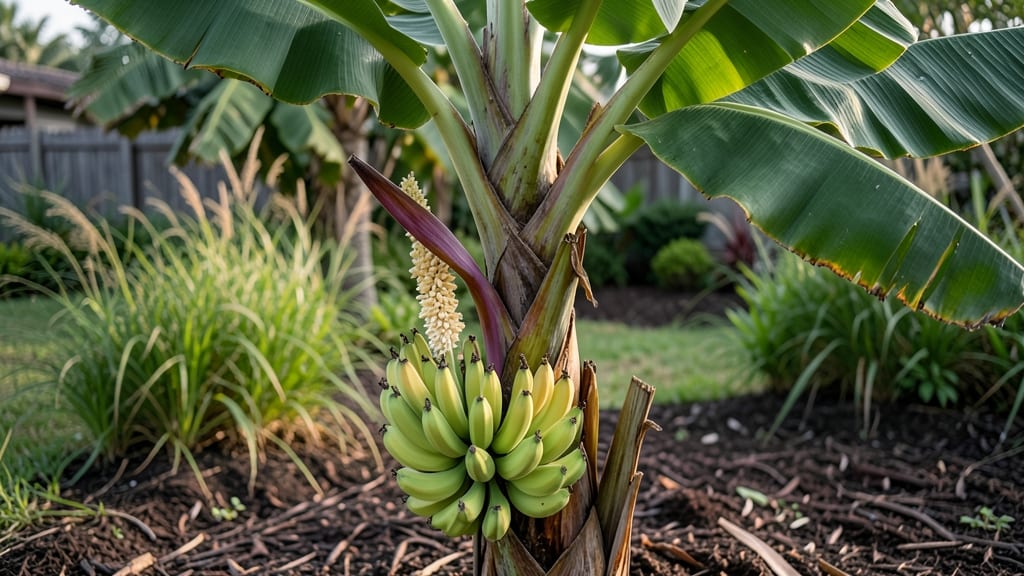
It takes banana trees 9 to 12 months to produce fruit after planting, though dwarf varieties can bear fruit in as little as 6 months with ideal growing conditions. The timeline varies based on cultivar, climate, and care, with flowering typically starting once the plant reaches 3 to 4 feet tall.
Understanding this timeline helps set realistic expectations for your banana tree.
The first 6 months focus on establishing a strong root system and pseudostem, while the next 3-6 months involve rapid vegetative growth. 🌱 Tropical climates with consistent warmth and humidity accelerate this process, while cooler regions may require extra care like protective coverings during winter.
Dwarf varieties like 'Lady Finger' often fruit faster because they mature quicker than larger types.
What many growers don't realize is that proper care during these early stages directly impacts fruiting time. For example, maintaining well-draining soil rich in organic matter and providing balanced fertilization (especially potassium) can shave weeks off the timeline.
I've seen banana trees in optimal conditions produce their first bunches in just 5-6 months, though this remains the exception rather than the rule.
💡 In This Article
- Banana Tree Growth Stages Before Fruiting
- Factors That Speed Up or Delay Banana Fruit Production
Banana tree growth stages before fruiting
The banana tree's journey to fruiting begins with the seedling stage, where the focus is on developing a strong root system and initial leaves. During this first 3 months, the plant prioritizes establishing roots that can anchor it and absorb nutrients efficiently.
You'll notice the pseudostem—a false stem made of tightly wrapped leaves—starting to form around 4-6 weeks after planting. This structure is crucial as it houses the plant's vascular system and supports future growth.
Once the pseudostem reaches about 1-2 feet tall, the tree enters its vegetative growth phase, which lasts roughly 3-6 months. This is when you'll see rapid leaf production, with each new leaf unfurling larger than the previous one.
The plant's height increases dramatically during this stage, often growing 1-2 feet per month under ideal conditions.
The leaves act like solar panels, capturing sunlight to fuel growth. 💫 What's fascinating is how the plant allocates energy—about 70% goes to leaf production, while the remaining 30% supports root and pseudostem development.
The transition to flowering occurs when the plant reaches 3-4 feet tall and has developed a sturdy pseudostem. This typically happens around 6-9 months after planting, though dwarf varieties may flower earlier.
The flowering process begins with the emergence of a flower spike from the center of the plant, which unfurls into a large, colorful bract. This spike contains thousands of tiny flowers that will eventually develop into banana hands.
The timing of this stage is highly sensitive to environmental cues, particularly day length and temperature.
Temperature plays a critical role in this stage. Banana trees thrive in temperatures between 75-85°F, with anything below 60°F slowing growth significantly. In cooler climates, growers often use row covers or greenhouses to maintain optimal temperatures. Additionally, the plant requires 12-14 hours of sunlight daily to trigger flowering.
Without sufficient light, the tree may remain in vegetative mode indefinitely. 🌿 This is why tropical regions see faster fruiting—consistent warmth and sunlight create perfect conditions for the flowering process.
One common misconception is that banana trees fruit annually. In reality, most commercial varieties produce one main bunch per year, with smaller "water suckers" (offshoots) developing around the base. These water suckers can be transplanted to create new plants, extending your banana harvest over time.
The first fruiting cycle sets the foundation for future productivity, so proper care during these initial months is essential for long-term success.
Understanding these stages helps explain why some trees fruit faster than others. For example, a 'Dwarf Cavendish' planted in Florida's warm climate might produce fruit in 6-8 months, while the same variety in a cooler region like California could take 10-12 months.
The key difference lies in how quickly the plant can transition from vegetative growth to flowering—a process influenced by both genetics and environmental factors.