
Landscaping
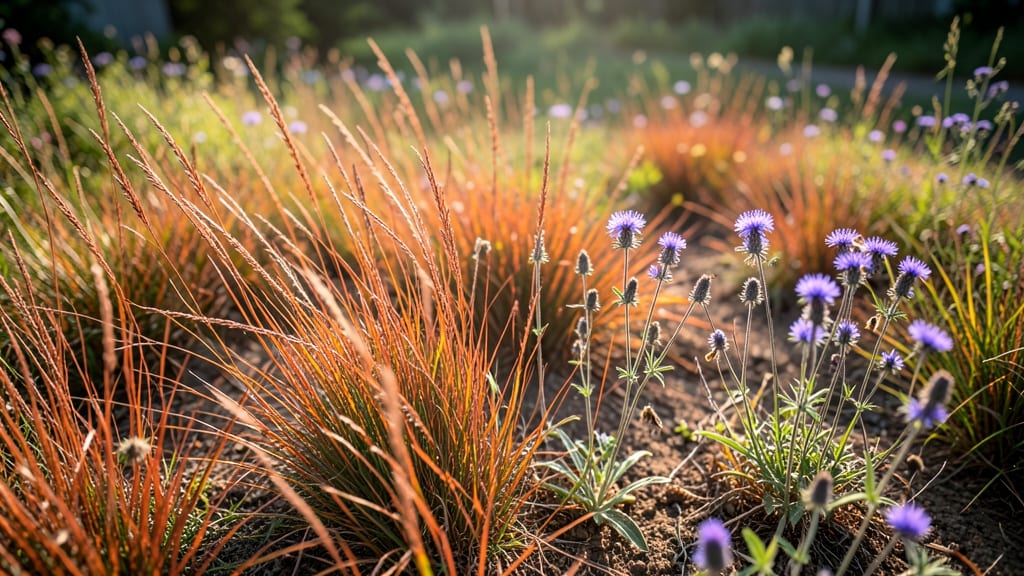
Transform your backyard into a pollinator paradise with these 10 creative garden bed designs that attract bees, butterflies, and hummingbirds while ensuring year-round blooms. Each layout balances beauty, functionality, and ecological benefits for any space size.
Pollinator-Focused Perennial Border Garden
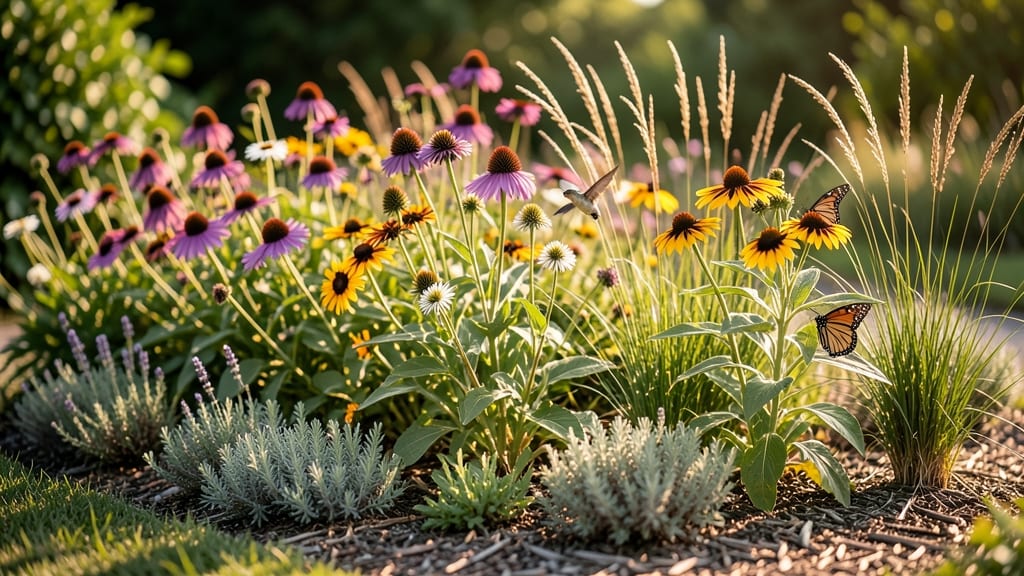
Tired of annuals that demand constant replanting? A pollinator-focused perennial border lets you plant once and enjoy decades of effortless blooms—while supporting bees, butterflies, and hummingbirds. This low-maintenance design thrives in full sun and requires only occasional watering after establishment.
Start with native perennials like purple coneflowers (drought-tolerant and long-blooming), black-eyed Susans (cheerful orange blooms from summer to fall), and milkweed (essential for monarch butterflies). Space them 18-24 inches apart for air circulation and mulch heavily to retain moisture. These plants spread naturally over time, filling in gaps without extra work.
Perfect for beginners, this garden bed becomes more stunning each year as plants mature and multiply. Plus, you’ll create a thriving ecosystem that keeps your backyard buzzing with life—no green thumb required. 🌻
Vertical Herb and Flower Trellis
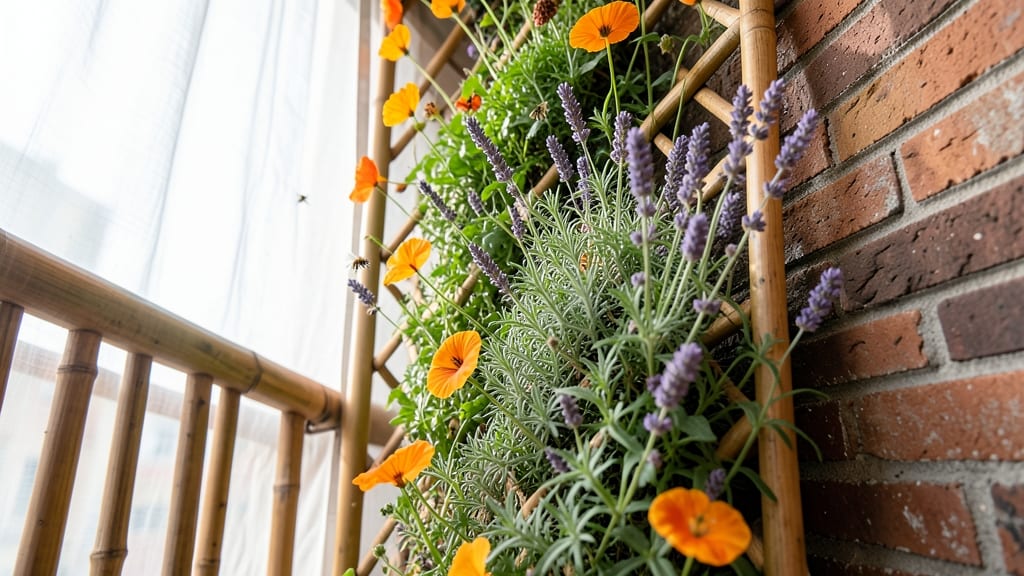
Turn your tiny balcony or cramped backyard corner into a thriving pollinator paradise with a vertical herb and flower trellis—where every inch counts! This space-saving design lets you grow edible herbs like fragrant thyme and lavender alongside vibrant climbing nasturtiums, creating a living tapestry that feeds both you and pollinators.
Start with a sturdy trellis (wood or metal works best) and plant thyme and lavender at the base—their woody stems and aromatic leaves add texture and scent. Train nasturtiums to climb upward, their bright orange or red blooms attracting bees and butterflies in droves. For extra pollinator appeal, weave in clematis or morning glories for continuous summer color. Water the base thoroughly but avoid soggy soil, and place your trellis where it gets at least 6 hours of sun daily.
This design is perfect for urban gardeners, renters, or anyone with limited space who still wants fresh herbs and a buzzing garden. Plus, the vertical structure keeps pests like slugs at bay while maximizing your harvest potential. 🌻
Seasonal Succession Planting Raised Bed
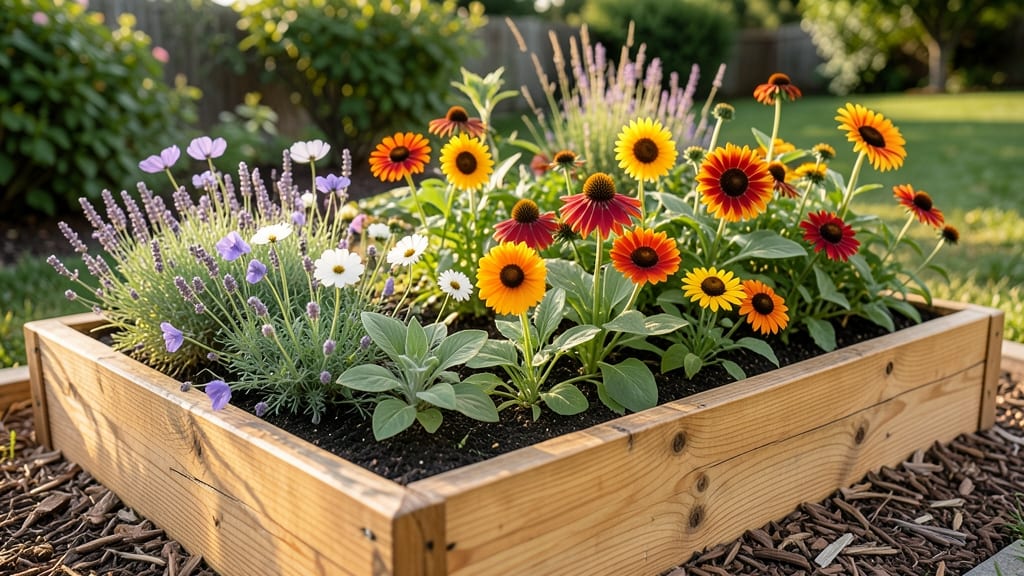
Tired of garden beds that look bare after summer? A seasonal succession planting raised bed keeps your backyard blooming nonstop by blending cool-season and warm-season flowers in perfect harmony. This smart layering trick ensures pollinators always have fresh nectar while giving you vibrant color from spring through frost.
Start with cool-season stars like pansies and snapdragons in early spring, then transition to heat-loving zinnias and marigolds as temperatures rise. Plant taller flowers at the back and shorter varieties in front for a layered look. The key is timing: sow warm-season seeds after your last frost date, then follow up with cool-season transplants in late summer for a seamless handoff.
This method is perfect for gardeners who want low-maintenance beauty without sacrificing pollinator support. Urban gardeners with small spaces will love how it maximizes every inch of their raised bed. 🌻
Wildflower Meadow Patchwork
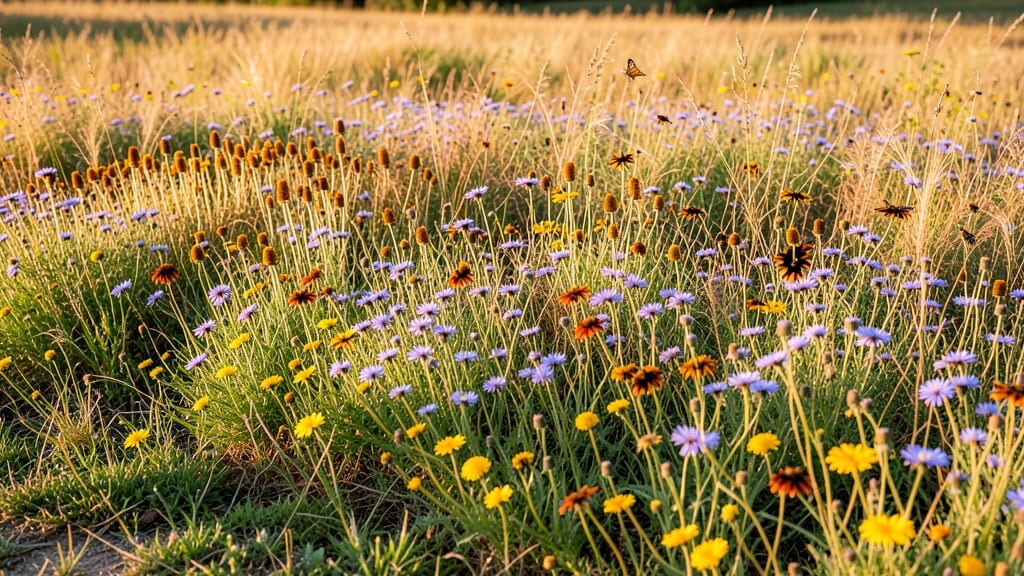
Tired of mowing endless lawn that demands constant care? A wildflower meadow patchwork transforms dull grass into a thriving ecosystem that needs far less water and maintenance while supporting local wildlife. This design blends native wildflowers like goldenrod, aster, and coreopsis for a soft, natural look that sways with the breeze and attracts pollinators year-round.
Start by clearing the area and loosening the soil—no need for tilling. Scatter seeds in late summer or early fall for best germination, then let nature do the work. These hardy plants thrive in full sun to partial shade and require only occasional watering once established. The result? A low-growing, drought-tolerant landscape that blooms from early summer through fall, offering nectar for bees and butterflies while reducing your gardening chores. 🌻
Butterfly Bush and Host Plant Layer
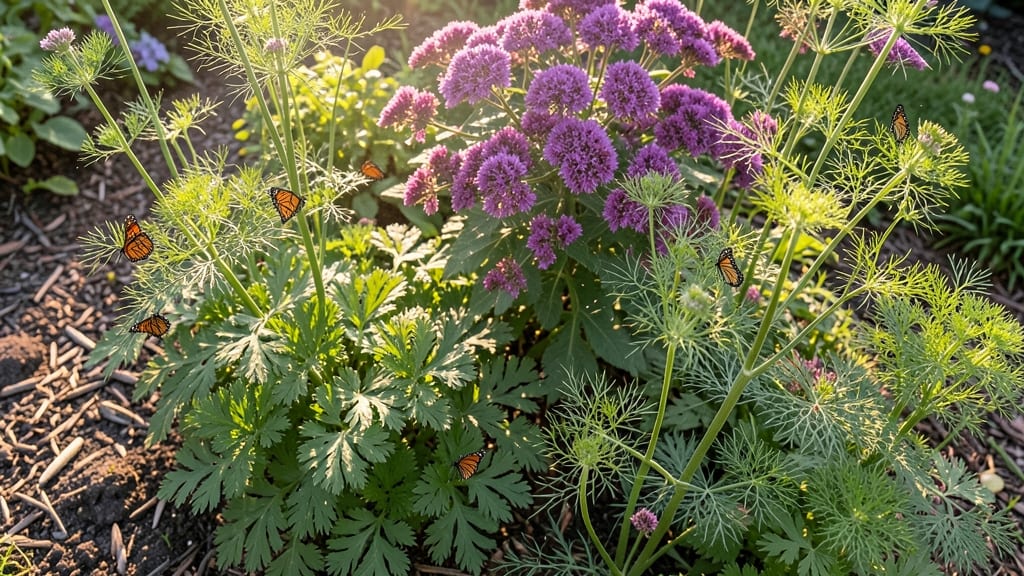
Watch your backyard transform into a butterfly hotspot with this two-layered design that supports every stage of a butterfly’s life cycle. Plant a butterfly bush (Buddleia)—the nectar magnet that draws adults in—and pair it with host plants like parsley, dill, and fennel, where caterpillars will munch and grow into stunning monarchs and swallowtails.
Start by placing your butterfly bush in full sun, where its fragrant spikes will bloom from mid-summer to fall. Interplant parsley and dill nearby—their flat leaves provide the perfect nursery for caterpillars, while fennel adds a tall, feathery backdrop. Mulch the bed to retain moisture, and avoid pesticides to keep these delicate visitors safe. This combo ensures year-round activity, from caterpillars in spring to fluttering adults in summer.
Perfect for gardeners who love watching nature unfold, this design is especially rewarding for families or anyone eager to witness the magical metamorphosis of butterflies. It’s a small space solution that delivers big results! 🌻
Edible Pollinator Garden with Fruit Trees
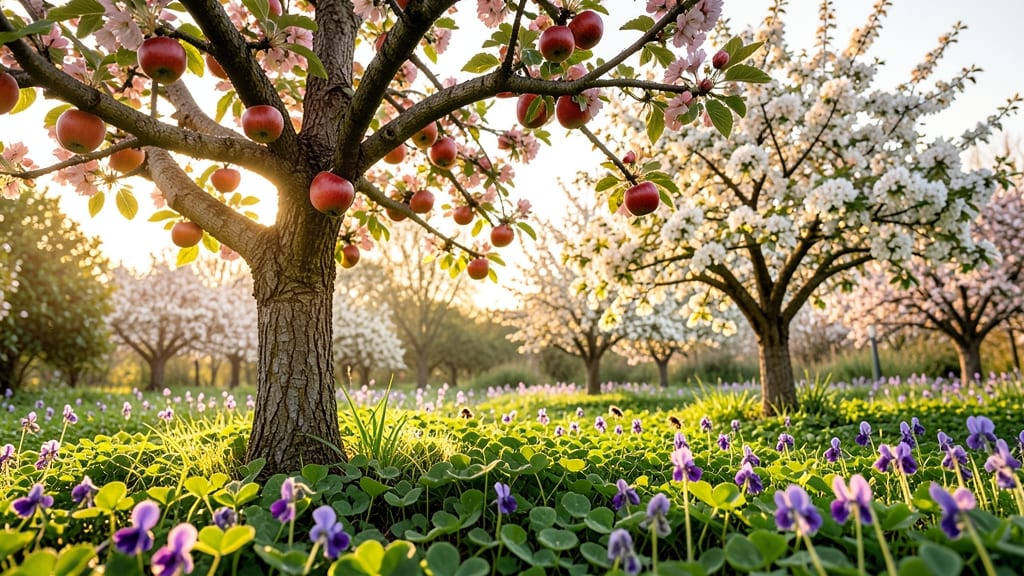
Why settle for a garden that’s just either beautiful or productive? This edible pollinator garden marries fruit trees like apple or cherry with a living carpet of clover and violets, turning your backyard into a dual-purpose powerhouse. The result? A bounty of fresh fruit and a buzzing, thriving ecosystem that supports bees, butterflies, and other pollinators.
Start by planting your fruit tree in well-draining soil with 6+ hours of sun, then fill the surrounding area with low-growing pollinator favorites like white Dutch clover (which fixes nitrogen) and purple violets (a bee magnet). Mulch with straw to suppress weeds and retain moisture, while ensuring the ground cover stays dense enough to deter grass but sparse enough for pollinators to access flowers. Prune your tree annually to maintain an open canopy, letting sunlight reach the ground plants below.
This design is perfect for urban homesteaders or families who want to grow their own food while giving back to local ecosystems. Plus, the early spring blooms of fruit trees provide critical nectar when other plants are still dormant, making it a lifeline for early-season pollinators. 🌱
Shade-Loving Pollinator Woodland Bed
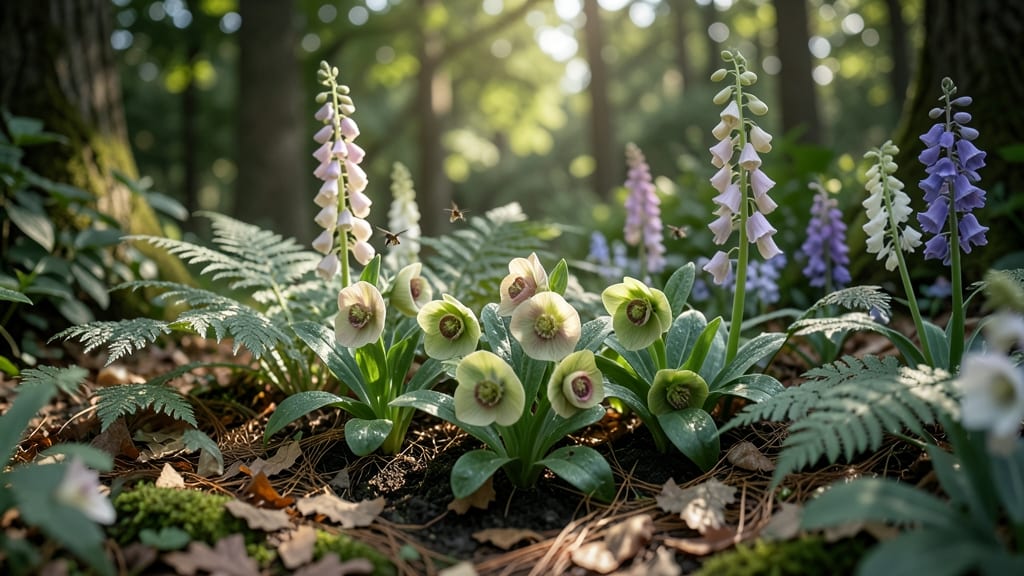
Turn your shady backyard into a thriving pollinator haven with a woodland-style garden bed that mimics the understory of a forest. This design combines elegant foliage plants like hellebores and ferns with nectar-rich blooms such as foxgloves and columbines, creating a magical space that hummingbirds and bees adore.
Start by layering low-growing hellebores and astilbes at the front for texture, then add taller foxgloves and columbines toward the back. Use organic mulch like wood chips to retain moisture and suppress weeds—critical for shade-loving plants. Plant in well-draining soil amended with compost, and water consistently during the first growing season to establish roots.
This design is perfect for gardeners with partial to full shade who want to support pollinators without sacrificing beauty. The combination of evergreen ferns and early-blooming hellebores ensures year-round interest, while the tall spires of foxgloves provide late-summer drama. 🌿
Container Pollinator Garden with Dwarf Plants
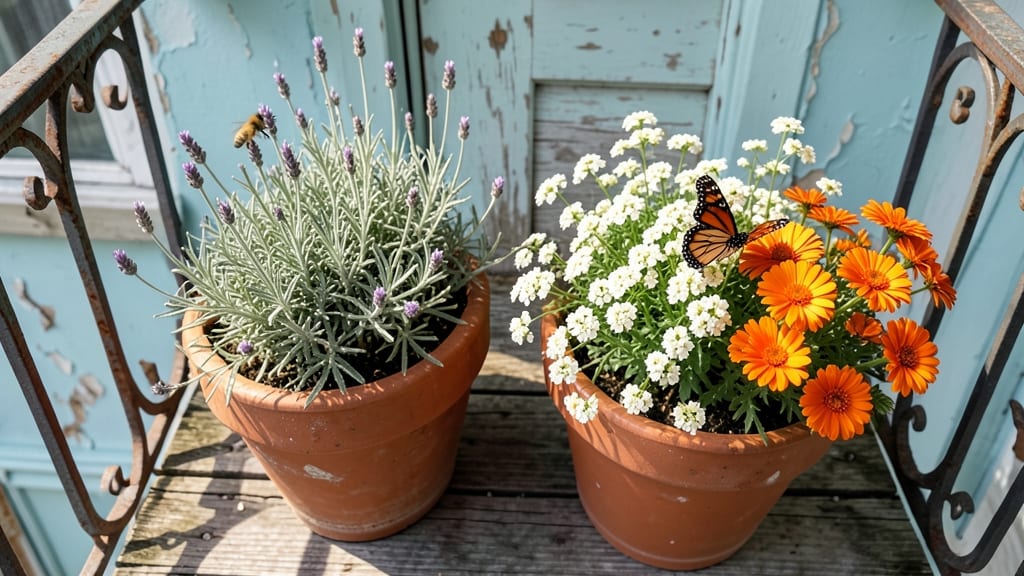
No yard? No problem! A container pollinator garden brings bees and butterflies to your balcony or patio using dwarf pollinator favorites like lavender, alyssum, and calendula. These compact plants thrive in pots while offering the same nectar-rich benefits as larger garden beds.
Start with well-draining soil and choose pots with drainage holes—terracotta works beautifully. Place containers where they’ll get at least 6 hours of sun daily, but the magic is in their mobility: move pots to follow the sun’s path or protect them from afternoon shade if needed. Grouping pots creates a visual feast for pollinators, who’ll flock to the clustered blooms.
Perfect for renters, small spaces, or urban gardeners, this design proves you don’t need a backyard to make a big pollinator impact. Just add water and watch your tiny garden buzz with life! 🌻
Water Feature and Pollinator Pond Edge
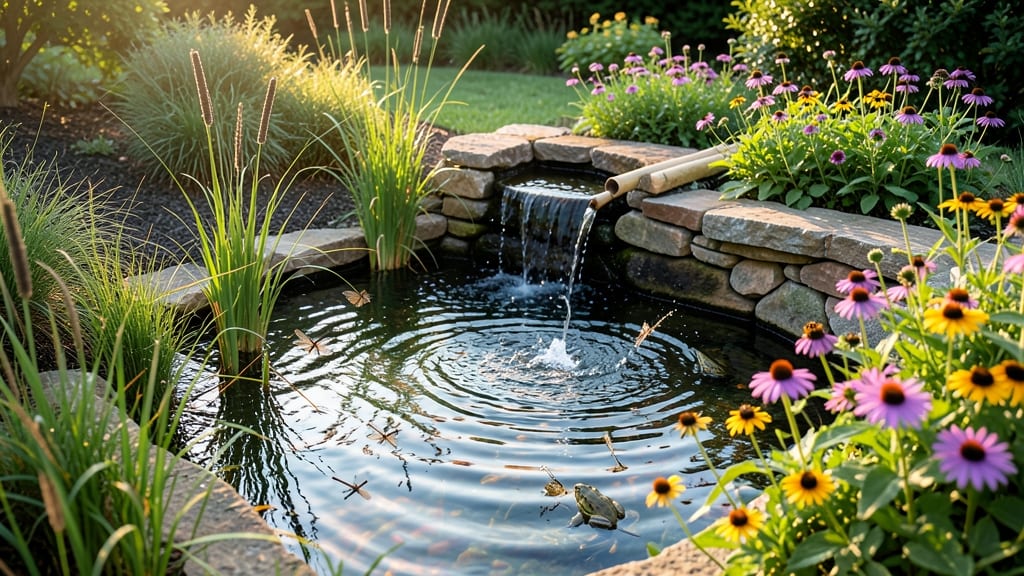
Turn your backyard into a thriving ecosystem with a water feature and pollinator pond edge—where every splash of water becomes a magnet for bees, butterflies, and amphibians. This design isn’t just visually stunning; it’s a lifeline for wildlife, especially in urban areas where natural water sources are scarce.
Plant pickerelweed (with its striking purple blooms) and swamp milkweed (a monarch butterfly favorite) along the edges of a small pond or fountain. These moisture-loving plants thrive in wet soil conditions and provide nectar-rich flowers while stabilizing the pond’s banks. Add a few lily pads or cattails for extra habitat, and you’ll create a self-sustaining oasis that hums with activity from spring to fall.
Perfect for gardeners who love the sound of running water but also want to support local ecosystems, this design requires minimal maintenance once established. Watch as dragonflies dart above the water and frogs claim their new home—your pond becomes a miniature wetland without the upkeep of a full-scale ecosystem. ✨
Native Grass Prairie with Wildflower Clusters

Transform a sun-drenched corner of your backyard into a self-sustaining prairie that thrives on nature’s own schedule—no watering schedule required. This low-water, high-impact design blends little bluestem (with its fiery autumn hues) and blazing star (a magnet for bees) to create a living tapestry that pollinators adore.
Start by clearing the area and loosening the soil—native prairie plants thrive in well-draining conditions. Scatter wildflower seeds like coneflower and purple prairie clover among clumps of switchgrass or big bluestem for texture. Space plants 12–18 inches apart to mimic natural density, and resist the urge to weed—this ecosystem is built for resilience. Once established, these plants need only seasonal rainfall to flourish.
Perfect for drought-prone regions or gardeners craving year-round interest, this design reduces maintenance while boosting biodiversity. Watch as butterflies and bees flock to your backyard, turning it into a thriving prairie oasis. ✨