
Plants
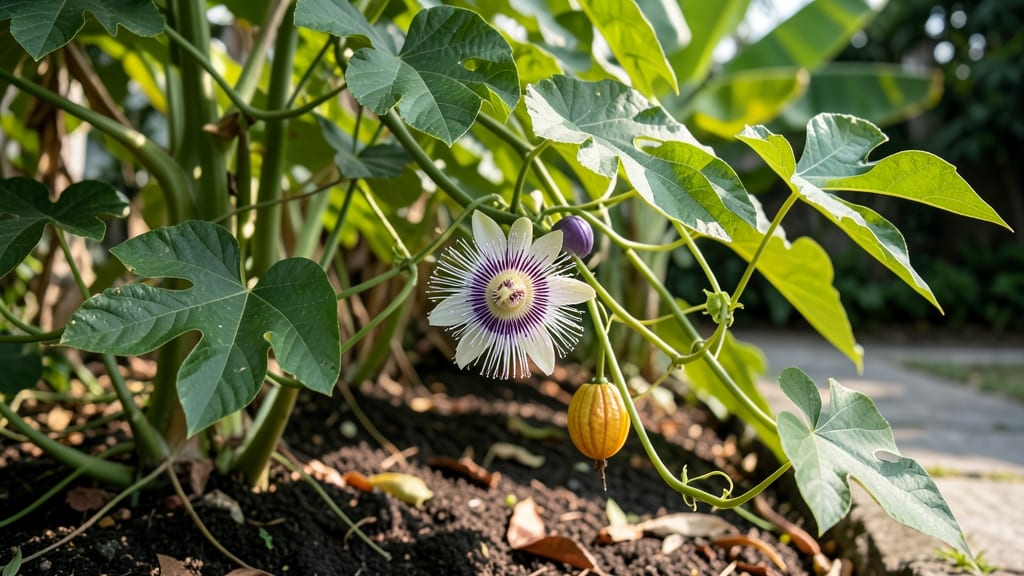
Passion fruit looks like a wrinkled, oval-shaped fruit with a tough, leathery skin that turns deep purple or golden yellow when fully ripe, often marked with silvery-white streaks. When cut open, you'll find a vibrant pulp packed with tiny black seeds.
Passion fruit's appearance changes dramatically based on its variety and ripeness. 🌿 The purple passion fruit, most common in grocery stores, has a glossy, deep purple skin that darkens as it ripens, while the yellow variety—often called "golden passion fruit"—develops a bright, sun-kissed hue.
The wrinkled texture isn't just for show; it helps protect the fruit from pests and extreme weather. When ripe, the fruit should feel slightly soft to the touch but not mushy, and it'll often give off a sweet, tropical aroma near the stem.
Inside, the pulp varies in color too—purple varieties have deep magenta flesh, while yellow ones are pale orange or yellow. That jelly-like interior is packed with edible seeds, which many people eat without hesitation.
The seeds add a subtle crunch and extra nutrients, making the fruit even more interesting to explore.
💡 In This Article
- Identifying Passion Fruit Rinds by Variety and Ripeness
- How to Spot Fake or Low-Quality Passion Fruit at the Market
Identifying passion fruit rinds by variety and ripeness
The most striking visual difference between passion fruit varieties lies in their rind color and texture. Purple passion fruit, scientifically known as Passiflora edulis, develops a deep, glossy purple skin when fully ripe, often with silvery-white streaks that resemble frost patterns.
These streaks aren't just decorative—they're a natural response to temperature fluctuations during growth, creating a waxy protective layer. In contrast, the yellow passion fruit (Passiflora edulis f. flavicarpa) matures to a bright golden hue, sometimes with faint green undertones when unripe. 🌈
Ripeness dramatically alters both color intensity and texture. An unripe purple passion fruit appears dull green or pale purple, while a ripe one deepens to a rich, almost blackish-purple. The rind should feel firm but yield slightly when pressed near the stem—a telltale sign of sweetness inside.
Size varies too: commercial varieties typically measure 2-4 inches long, though wild varieties can be as small as 1 inch or grow up to 6 inches. The wrinkled surface isn't just for aesthetics; these grooves increase surface area, helping the fruit absorb sunlight more efficiently for ripening.
Temperature plays a crucial role in color development. Purple passion fruit grown in cooler climates (60-75°F) develops more vibrant purple hues, while those in warmer regions (75-85°F) may produce fruit with greenish undertones.
The yellow variety, however, thrives in warmer conditions and develops its signature golden color when exposed to full sun for at least 6-8 hours daily. This heat exposure triggers higher levels of carotenoids, the pigments responsible for the yellow coloration. 🌞
Shape also varies subtly between varieties. Purple passion fruit often has an elongated oval shape, while yellow varieties tend to be more rounded or egg-shaped. The stem end is always the most reliable indicator of ripeness—it should be slightly dried and papery, not green or moist.
When cut open, the pulp color matches the rind: purple varieties reveal deep magenta flesh, while yellow ones show pale orange or yellow pulp. This color consistency is your best quality check at the market.
One fascinating detail is how the rind's thickness changes with ripeness. Unripe fruit has a thicker, tougher skin that protects the developing pulp, while ripe fruit's skin thins slightly, making it easier to pierce with your thumbnail—a quick test for freshness.
The silvery streaks you see on ripe fruit contain a waxy substance called cutin, which helps prevent water loss and pest damage. This natural coating is why passion fruit can stay fresh for 1-2 weeks at room temperature when properly stored.
For those growing passion fruit at home, pay attention to these visual cues to harvest at peak ripeness. The fruit should detach easily from the vine when gently twisted, and the rind should have that characteristic glossy sheen.
Overripe fruit may develop soft spots or a fermented smell near the stem—always a sign to use it immediately in recipes or juices. The contrast between the vibrant rind and the jewel-toned pulp inside makes passion fruit one of nature's most visually rewarding tropical fruits. 🌿