
Flowers
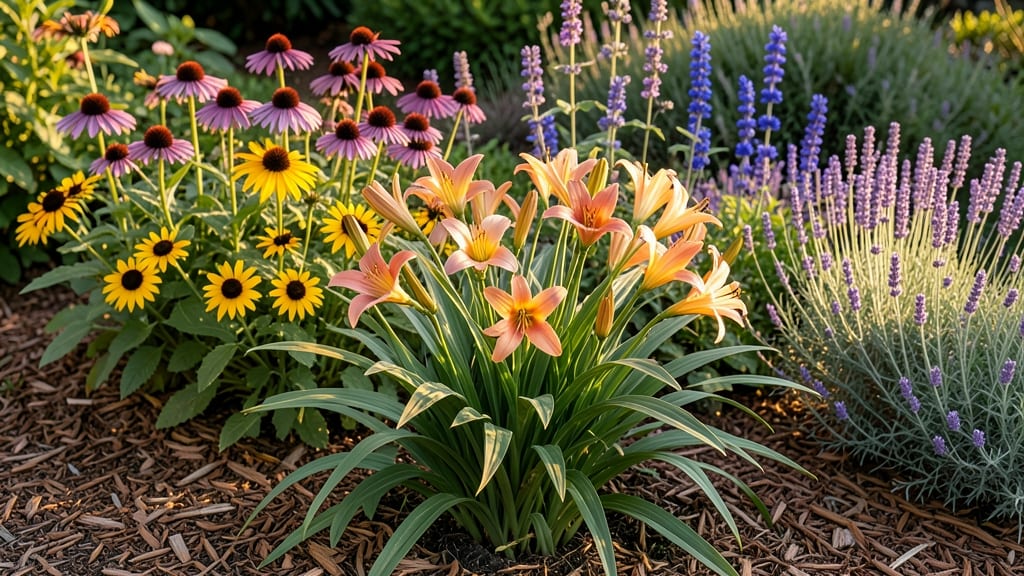
Choosing flower bed size matters for both visual appeal and plant health, with small beds (3–6 feet wide) ideal for borders, medium beds (6–10 feet) perfect for focal points, and large beds (10+ feet) needing structural plants like shrubs to prevent overcrowding and maintain harmony.
Flower bed dimensions directly impact how well your plants thrive and how cohesive your garden looks. 🌸 The spacing between plants determines root competition and airflow—too tight, and you'll end up with leggy, weak stems fighting for nutrients.
For small beds, I recommend grouping three to five plants together to create visual clusters without overwhelming the space. Larger beds benefit from layered planting, where taller plants like delphiniums or hollyhocks anchor the back while lower-growing annuals fill the front.
Your garden's overall style also dictates ideal bed sizes. Formal gardens often thrive with narrow, precise beds (3–5 feet wide) that align with pathways, while cottage-style gardens can sprawl with wider, irregular shapes (8–12 feet) to mimic natural meadows.
Always sketch your layout first—this helps visualize proportions and ensures you're not underestimating mature plant widths, which can double or triple from their nursery sizes.
💡 In This Article
- How Flower Bed Dimensions Affect Plant Growth and Aesthetics
- Designing Flower Beds by Size for Different Garden Styles
How flower bed dimensions affect plant growth and aesthetics
Flower bed dimensions aren't just about aesthetics—they directly influence plant health through root competition and sunlight exposure. Plants in small beds (3-6 feet wide) experience less root competition because their growth is naturally constrained, allowing nutrients to circulate efficiently.
However, this same constraint means they need 3-6 inches of spacing between plants to prevent overcrowding, which can lead to weak stems and increased susceptibility to fungal diseases.
In contrast, larger beds (10+ feet) require 12-24 inches of spacing for mature shrubs or perennials to accommodate their expansive root systems and prevent nutrient depletion in the center.
The width of your bed also impacts drainage and maintenance. Narrow beds (3-5 feet) dry out faster, making them ideal for drought-tolerant plants like lavender or sedum, while wider beds (8-12 feet) retain moisture longer, benefiting thirsty perennials like hostas or asters.
Here's the science: wider beds create microclimates where the center stays 5-10°F cooler in summer due to shade from surrounding plants, while edges dry out quicker.
This is why layered planting—tall plants at the back, medium in the middle, and low-growing at the front—creates a natural gradient that balances moisture and temperature across the bed. 🌿
Proportions matter just as much as size because they determine seasonal interest. A bed that's too wide for its height (like a 10-foot-wide bed with only 2-foot-tall plants) will look flat and unstructured, especially in winter when perennials die back.
The golden ratio for visual balance is a width-to-height ratio of 3:1 or 4:1. For example, a 6-foot-wide bed with 1.5-2-foot-tall plants creates a cohesive look year-round.
This principle also applies to plant selection: pair tall, vertical plants like canna lilies (5-6 feet) with mid-height black-eyed Susans (2-3 feet) and low ajuga (6 inches) to maintain visual interest at all levels.
Another critical factor is how bed dimensions affect maintenance. Wider beds (>strong>8 feet) require 2-3 feet of walking space around them for easy access, while narrow beds (3-4 feet) can be tucked directly against fences or walls.
This isn't just about convenience—it's about reducing soil compaction from foot traffic, which can smother roots. For example, a 5-foot-wide bed against a house might only need 1 foot of clearance, but a 10-foot-wide bed in the center of your garden needs 3 feet all around to prevent trampling.
This spacing also improves airflow, reducing the risk of powdery mildew, which thrives in dense, humid conditions.
Let's talk about the science of mature plant widths—they're often 2-3 times wider than their nursery pots. A 1-gallon shrub like a hydrangea might only be 1 foot wide when purchased, but it can mature to 4-5 feet across. This is why many gardeners underestimate their bed's needs.
To avoid this, always check the plant's mature width on the tag and add 12-18 inches of extra space for airflow. For instance, planting three hydrangeas (4 feet each) in a 6-foot-wide bed would leave no room for growth, leading to overcrowding and poor flowering. 🌸
Finally, consider how bed dimensions interact with sunlight patterns. A 6-foot-wide bed in full sun will have 2-3 hours more direct sunlight per day than a 12-foot-wide bed, where the center may only receive 4-5 hours due to shading from surrounding plants.
This is why sun-loving plants like daylilies or coneflowers thrive in narrower beds, while shade-tolerant plants like ferns or astilbe can handle the deeper shade of wider beds.
Always observe your garden's sunlight patterns for at least a week before finalizing your layout—this simple step can save you from struggling with leggy, sun-starved plants.