
Vegetables
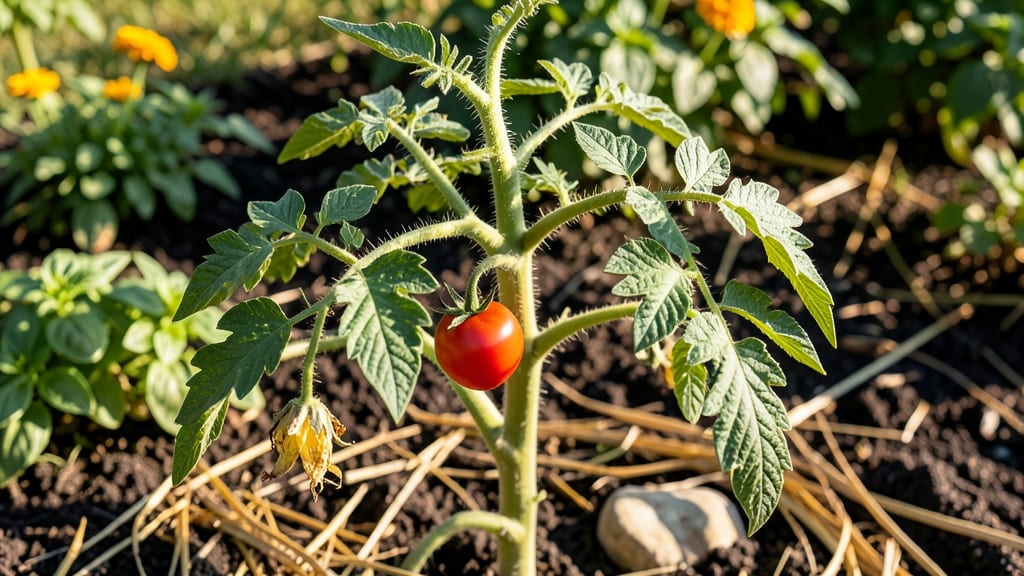
A tomato branch broke off with fruit, and your heart sinks—but this isn’t the end of your harvest. 🌱 The good news? With the right moves, you can save those tomatoes and strengthen the plant to prevent future breakage.
My first broken branch taught me that quick action and copper spray can turn a disaster into a second chance for ripe, flavorful fruit.
First, assess the damage: if the fruit is still attached, gently lay the branch on the soil near the plant—roots may regrow if the stem stays moist. For broken stems, harvest the tomatoes immediately (they’ll ripen off the vine) and prune any damaged growth back to healthy tissue.
Then, reinforce the plant with sturdy stakes or cages to prevent future snapping.
The real game-changer? A copper spray cure applied to the break site. This stops fungal infections that thrive on injured plants, giving your tomato healthy new growth. Within days, you’ll see fresh shoots pushing out, and those saved tomatoes will ripen just like the rest.
Prevention starts with stronger plants: add compost around the base, water deeply but consistently, and avoid overloading branches with too many fruit. Next season, you’ll watch your tomatoes thrive—no broken branches in sight. Let’s get that harvest back on track!
Root Causes Of Branch Snapping
When a tomato branch breaks off with fruit still attached, it’s rarely a random accident—it’s usually a sign that your plant is under stress or struggling to support its own weight. Understanding the underlying causes can help you prevent future breakage and ensure a healthier, more productive harvest.
Let’s break down the most common reasons why this happens, along with the science behind them.
Tomato plants are vigorous growers, but their branches and stems aren’t always built to handle the weight of an abundant harvest. When fruit sets heavily—especially in varieties like beefsteak or heirlooms—each tomato can weigh ½ to 2 pounds or more.
Over time, the cumulative weight strains the plant’s structural integrity.
- Why it happens: - Lack of support: Without proper staking, trellising, or pruning, branches grow weak and sprawling.
The stem’s vascular system (which transports water and nutrients) can’t keep up with the demand, leading to splitting or snapping under pressure. - Rapid fruit growth: If tomatoes swell quickly (common in warm, humid conditions), the branch may not have time to strengthen its cell walls.
This makes it prone to abrupt fractures, especially at the joints where branches meet the main stem. - Poor cell wall development: Young, fast-growing branches have less lignin (a tough, woody polymer) in their cell walls, making them more brittle.
Think of it like a green twig vs. a mature oak branch—one snaps easily, while the other bends.
- Actionable fix: - Prune strategically: Remove some fruit early in the season to reduce load. Aim for 5–7 tomatoes per truss (cluster) for most varieties. - Use strong supports: Install bamboo stakes, cages, or a Florida weave trellis to distribute weight evenly.
For indeterminate tomatoes, tie branches to the support every 6–12 inches. - Train vines upward: Guide branches in a vertical, zigzag pattern to prevent them from sagging under fruit weight.
Tomatoes are thirsty plants, and fluctuations in water or nutrient availability can weaken their structural resilience. Both overwatering and underwatering create conditions that make branches more susceptible to snapping.
- Why it happens: - Drought stress: When soil dries out, the plant wilts and its cell turgor pressure drops. This makes stems brittle and prone to breakage, especially when touched or when wind blows.
Even after rewatering, the damage to the vascular system can linger. - Overwatering: Soggy soil depletes oxygen in the roots, preventing them from absorbing nutrients like calcium and potassium—critical for cell wall strength.
Without these, branches become soft and mushy, like overcooked pasta. - Nutrient deficiencies: - Calcium deficiency (blossom end rot’s silent partner): While calcium is famous for preventing rot, it also strengthens cell walls.
A lack of calcium (often due to uneven watering or poor soil pH) leads to weakened stem tissues. - Potassium deficiency: Potassium regulates water balance and structural integrity. Without it, branches become flaccid and prone to snapping, even under light loads.
- Actionable fix: - Water deeply and consistently: Aim for 1–2 inches of water per week, delivered at the soil level (not the leaves).
Use drip irrigation or soaker hoses to avoid wetting foliage, which can spread disease. - Mulch heavily: Apply 3–4 inches of organic mulch (straw, wood chips) to retain moisture and regulate soil temperature. - Fertilize with balance: Use a low-nitrogen, high-potassium fertilizer (like 5-10-10) when fruit sets.
For calcium, side-dress with crushed eggshells or gypsum, or add lime to raise soil pH if it’s below 6.0. - Avoid heavy feeding early: Too much nitrogen early in the season promotes leafy growth at the expense of structural strength.
Shift to a phosphorus-heavy fertilizer (like 10-20-10) at flowering to support fruit development.
Wind, rain, and extreme temperatures can turn a sturdy tomato plant into a tinderbox of stress. Even a gentle breeze can cause a heavily laden branch to snap like a twig if the plant isn’t prepared.
- Why it happens: - Wind damage: Strong gusts push branches sideways, creating shear stress at the point where the branch meets the stem.
Over time, this weakens the pith (the spongy center of the stem), making it more likely to crack or break. - Heavy rain: Saturated soil reduces oxygen availability, while rain droplets can physically weigh down branches, increasing the risk of snapping.
Additionally, hail or strong downpours can directly damage stems. - Temperature swings: Sudden heatwaves cause rapid growth spurts, while cold snaps slow down nutrient transport.
Both scenarios disrupt cell wall development, leaving branches vulnerable. - Hail or pests: Physical damage from hailstones, birds, or chewing insects (like hornworms) can create weak points where branches are more likely to snap under fruit weight.
- Actionable fix: - Protect from wind: Plant tomatoes near a windbreak (like a fence or tall grass) or use wind-resistant cages.
For container-grown tomatoes, secure pots to the ground with stakes. - Shade cloth in extreme heat: If temperatures exceed 90°F (32°C), use 30–50% shade cloth to prevent sunscald and heat stress, which weaken stems. - Prune for airflow: Thin out foliage to reduce wind resistance and improve air circulation, which lowers humidity and disease risk. - Cover young plants: Use row covers or lightweight fabric during hail storms or heavy rain to protect delicate branches.
While pests and diseases often steal the spotlight for leaf damage or fruit rot, they can also sap the strength right out of your tomato’s branches, making them prone to snapping.
- Why it happens: - Sap-sucking insects: Aphids, whiteflies, and spider mites feed on plant sap, starving stems of essential nutrients needed for cell wall maintenance.
Weakened stems lose turgor pressure and become brittle and easy to break. - Fungal infections: Diseases like early blight or septoria leaf spot cause lesions on stems, which disrupt water and nutrient flow.
As the infection spreads, the stem’s structural integrity deteriorates, making it more likely to snap. - Root damage: Nematodes, rot, or girdling roots reduce the plant’s ability to anchor itself and transport water. Without a strong root system, the above-ground structure collapses under stress.
- Actionable fix: - Monitor for pests: Inspect leaves and stems weekly for signs of infestation.
Use neem oil or insecticidal soap for mild cases, or introduce beneficial insects (like ladybugs) for natural control. - Prevent fungal spread: Remove infected leaves immediately and space plants for airflow.
Apply copper fungicide (like the one mentioned in your article title!) as a preventative spray every 7–10 days during humid weather. - Improve soil health: Amend soil with compost and mycorrhizal fungi to strengthen roots and enhance nutrient uptake.
Avoid over-fertilizing with nitrogen, which attracts pests and encourages weak, leafy growth.
Pro Tip 💡: If you’ve already lost a branch with fruit, don’t toss it! Place the broken piece in a shady, humid spot (like a cardboard box with damp paper towels) to encourage regrowth. Some varieties, like cherry tomatoes, may even sprout new roots and produce a secondary harvest!
Quick Fixes for Broken Tomato Branches
When a tomato branch snaps under the weight of ripe fruit, it’s a frustrating setback—but don’t toss those tomatoes! With the right approach, you can salvage your harvest and even strengthen your plant for future growth.
Below, we’ve mapped out practical solutions based on the most common causes, along with prevention tips to keep your tomato plants sturdy and productive.
Cause: Heavy fruit or wind stress caused the branch to break. Solution:
- 🍅 Gently Reattach the Branch (If Possible)
- If the break is clean (no jagged edges), you can try splinting the branch back into place.
- Use a soft plant tie (like a strip of old T-shirt or a rubber band) to secure it to a nearby sturdy stem or stake.
- Pro Tip: 💡 Apply a hormone rooting gel to the broken end to encourage regrowth.
- 🍅 Harvest Immediately & Redistribute Weight
- Pick all fruit on the broken branch to reduce strain on the remaining plant.
- Spread the remaining tomatoes on a tray or cloth in a shady spot to ripen slowly.
- 🌿 Prune for Balance
- Trim one or two smaller branches from the opposite side of the plant to even out weight distribution.
- Avoid over-pruning—remove only what’s necessary to prevent future stress.
Prevention for Next Time: ✅ Stake or Cage Early – Install tomato cages or bamboo stakes before the plant gets top-heavy. ✅ Use a Support Harness – Tie the main stem to the stake every 6–8 inches for extra stability. ✅ Thin Fruit Clusters – Remove small or extra tomatoes to prevent overloading branches.
Cause: Strong winds or sudden storms snapped the branch. Solution:
- 🔧 Assess the Damage
- If the break is clean, follow the reattachment steps above.
- If the branch is crushed or mushy, it’s best to remove it to prevent disease.
- 🌿 Reinforce the Plant
- Brace the remaining branches with soft ties to nearby stakes or trellises.
- Reduce watering temporarily to help the plant focus on recovery rather than new growth.
- 🍅 Save the Fruit
- Place broken-off tomatoes in a cool, dry place (like a cardboard box with holes) to slow ripening.
- Quick Tip: 🌡️ If tomatoes are green, hang them upside down in a paper bag with a banana to speed up ripening naturally.
Prevention for Next Time: ✅ Windbreaks – Use burlap screens or tall plants (like corn) as a natural windbreak in exposed areas. ✅ Dwarf or Determinate Varieties – If wind is a recurring issue, opt for bushier tomato varieties (like ‘Roma’ or ‘Patio’) that are less prone to snapping. ✅ Deep Watering Before Storms – Well-hydrated plants are more flexible and less likely to break.
Cause: A jagged break can invite fungus or bacteria (like early blight or bacterial spot). Solution:
- 🧼 Sterilize Tools & Hands
- Before touching the plant, wash hands with soap and disinfect pruners with rubbing alcohol or bleach water (1:10 ratio).
- 🍅 Apply a Copper Spray (Like the One in Our Title!)
- Spray the broken area (and nearby leaves) with a copper fungicide (like Bordeaux mixture or copper sulfate) to prevent infection.
- Bonus: Copper also boosts plant resilience against future stress.
- 🌿 Remove Damaged Leaves
- If leaves near the break are yellowing or spotted, prune them off to stop the spread of disease.
Prevention for Next Time: ✅ Regular Inspections – Check plants weekly for weak spots, cracks, or early signs of rot. ✅ Avoid Overhead Watering – Water at the base (not leaves) to keep foliage dry and reduce fungal risks. ✅ Rotate Crops – If disease is a recurring issue, don’t plant tomatoes in the same spot next year.
Even if you can’t save the branch, don’t waste the fruit!
- 🥘 Cook or Preserve Them – Use in sauces, salsas, or roasted dishes before they spoil.
- 🍅 Ferment or Can – Turn them into hot sauce, ketchup, or sun-dried tomatoes for long-term storage.
- 🐝 Feed to Wildlife – If they’re too far gone for eating, leave them on the ground for birds or compost them.
Final Thought: A broken branch doesn’t mean the end of your harvest—it’s just a temporary setback. With these fixes, your tomato plant can bounce back stronger, and you’ll still enjoy a bountiful crop! 🍅✨
Frequently asked questions
Can I save tomatoes still attached to a broken branch?
Yes! If the branch is still connected but broken, gently lay it on the soil near the plant. Keep the stem moist and cover with a plastic bottle (cut in half) to create a mini greenhouse. Roots may regrow if the stem stays hydrated. For broken stems, harvest the tomatoes immediately—they'll ripen off the vine.
How do I prevent my tomato plants from snapping again?
Install sturdy supports like bamboo stakes or cages early in the season. Prune to remove 1-2 smaller branches opposite the broken one to balance weight. Thin fruit clusters to 5-7 tomatoes per truss and train vines vertically. For windy areas, use windbreaks or choose bushier varieties.
What should I do with broken-off tomatoes that aren't ripe yet?
Place them in a cool, dark place (like a cardboard box with holes) to slow ripening. For green tomatoes, hang them upside down in a paper bag with a banana to speed up ripening naturally. The ethylene gas from the banana triggers the ripening process. Use them in sauces or roasted dishes if they don't ripen fully.
Will copper spray really help prevent disease after a break?
Copper fungicide creates a protective barrier that prevents fungal infections like early blight from entering through the broken stem. Spray the break site and surrounding leaves every 7-10 days during humid weather. It also helps strengthen the plant's natural defenses against stress.
Can I regrow a tomato branch that broke off?
Sometimes! Place the broken piece in a shady, humid spot (like a cardboard box with damp paper towels). Some varieties, especially cherry tomatoes, may sprout new roots within 2-3 weeks. Once roots form, transplant it back to the garden. Keep the soil consistently moist during this process.