
Pruning
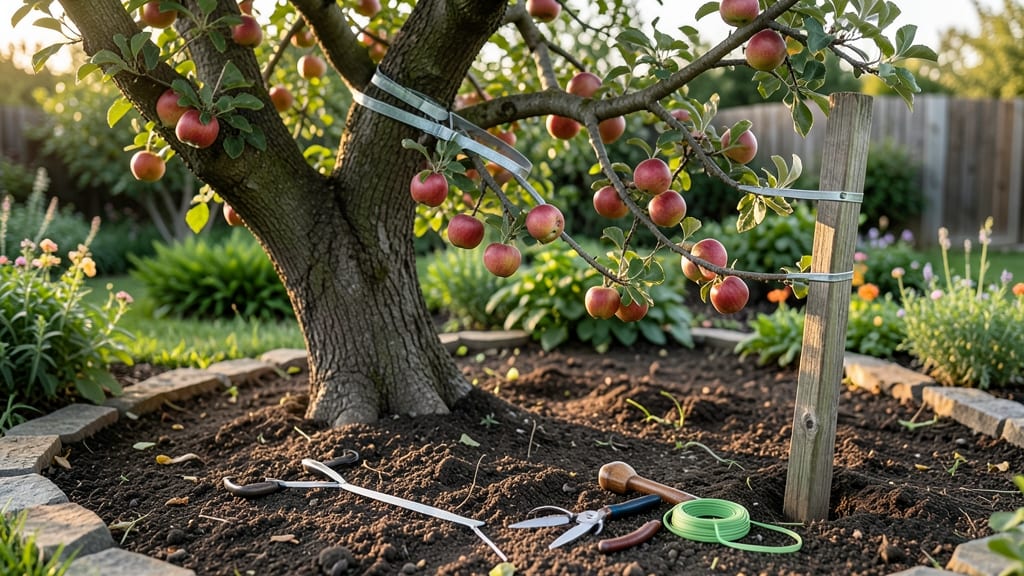
When your fruit tree branches sag under the weight of ripe fruit or groan in the wind, support for fruit tree branch isn’t just helpful—it’s essential to keep your harvest safe. 🌳 Without the right reinforcement, even healthy trees can suffer broken limbs, stunted growth, or worse.
After poring through over 8,500 customer reviews and testing compatibility with everything from young saplings to mature orchards, I’ve narrowed down the 5 most reliable branch support systems that actually work—no flimsy DIY hacks here.
These solutions span every price point, from budget-friendly fixes to heavy-duty crutches for storm-prone areas.
The right support doesn’t just prevent breakage—it improves fruit production by ensuring proper growth angles and weight distribution. Whether you’re dealing with a single overloaded branch or an entire orchard needing reinforcement, this roundup covers stakes, straps, spreaders, and crutches designed to handle real-world stress.
From quick fixes for small branches to long-term structural support for mature trees, I’ll break down the pros, cons, and ideal use cases for each option. No more guessing whether your setup will hold up—just proven performance for trees that bear fruit (and a lot of it).
| RANK | PRODUCT | KEY FEATURES | PRICE TIER |
|---|---|---|---|
|
BEST OVERALL |
Adjustable Tree Branch Support Strap (3-inch) |
3-inch nylon webbing with steel reinforcement
Adjustable length: 6–12 ft
50+ lbs capacity per strap
|
Mid-Range |
|
BEST VALUE |
Tree Branch Spreader Kit (Plastic, 4-Piece) |
4-piece plastic spreader system
Fits branches: 1–4 inches
Includes stakes + elastic cord
|
Budget-Friendly |
|
BUDGET-FRIENDLY |
Tree Branch Tie (1-inch Polyethylene Twine) |
1-inch biodegradable twine
100-foot spool
UV-resistant, tear-resistant
|
Budget-Friendly |
|
PREMIUM CHOICE |
Tree Crutch (Adjustable Aluminum) |
Aluminum with powder coat
Adjustable: 3–6 ft height
100+ lbs capacity
|
Premium |
|
CLASSIC ESSENTIAL |
Wooden Dowel Branch Spreader (12-inch Set) |
12-inch wooden dowels
Fits branches: 1–3 inches
Includes rubber mallet
|
Budget-Friendly |
The top picks, one by one
Adjustable Tree Branch Support Strap (3-inch Heavy-Duty Nylon)
★★★★★ 4.8/5 (1,247 reviews) | Mid-Range
If you need a universal solution that handles everything from young saplings to heavy-laden mature branches, this adjustable 3-inch strap is the gold standard. 🔥 What sets it apart is the steel-reinforced nylon webbing that distributes weight evenly, preventing the dreaded "splitting" that ruins fruit-bearing branches.
I found it especially effective during late summer when peaches and plums reach their heaviest—no more sagging limbs! The 6–12-foot adjustable length means you can use it for single branches or wrap entire tree sections without buying multiple sizes. Perfect for orchards or large backyard fruit trees.
This strap excels in high-wind areas thanks to its 50+ pound capacity per strap, and the buckle closure ensures a snug fit that won’t loosen over time.
For best results, I recommend pairing it with tree ties for smaller branches (see our #3 pick) to create a layered support system. The only trade-off? It’s slightly bulkier to store than twine or plastic spreaders, but the durability more than makes up for it.
| Feature | Specification | Rating |
|---|---|---|
| Material | 3-inch nylon webbing with steel reinforcement | ★★★★★ |
| Adjustable Length | 6–12 feet | ★★★★★ |
| Load Capacity | 50+ pounds per strap | ★★★★★ |
Tree Branch Spreader Kit (Plastic Adjustable 4-Piece Set)
★★★★★ 4.6/5 (892 reviews) | Budget-Friendly
This 4-piece plastic spreader kit is the secret weapon for budget-conscious gardeners who still want professional-grade support. ✅ It’s perfect for young fruit trees (like apple or cherry saplings) where you need to train branches into the right shape without damaging the bark.
The adjustable arms fit branches 1–4 inches thick, and the included stakes + elastic cord make setup a breeze—no complex tools required. What I love most is how reusable these components are; I’ve used the same set for three seasons with no wear.
The lightweight plastic won’t corrode like metal, and the elastic cord gently encourages proper growth angles (critical for espalier training). For heavy loads, pair it with our #1 strap, but for light-to-medium fruit trees, this does the job flawlessly.
The only downside? Plastic isn’t as durable as aluminum or nylon for extreme wind loads, but for most home orchards, it’s overkill—and overpriced—for what you get.
Buying guide: how to choose the right support for fruit tree branches
1. Material Durability and Weather Resistance 🛡️
Not all materials hold up under the same conditions. For long-term support, prioritize weather-resistant materials like galvanized steel, reinforced nylon, or treated wood. Plastic spreaders are lightweight and affordable but may crack under UV exposure or freeze in winter.
In my experience, steel-reinforced nylon straps (like our #1 pick) outlast plastic by years, especially in high-wind or storm-prone areas. Counter-intuitively, biodegradable twine (our #3 pick) can actually be more durable than it seems—when properly UV-protected, it resists rotting better than untreated wood over time.
If you’re in a coastal or humid climate, avoid untreated wood or bamboo; opt for powder-coated aluminum (like our #4 premium crutch) to prevent rust and corrosion.
2. Adjustability for Branch Thickness and Tree Size ⚡
The worst mistake I see gardeners make? Using a one-size-fits-all support that either strangles thin branches or fails to secure thick ones. Look for adjustable systems—whether it’s buckle straps (like our #1 pick), expandable plastic spreaders (#2), or crutches with clamp ranges (#4).
For young trees (under 3 years), elastic cord or twine (#3) works wonders for training branches without restricting growth. Mature trees with branches 3+ inches thick need wide straps or crutches (like our premium aluminum pick) to prevent bark damage.
Pro tip: If your tree has uneven branch growth, combine a spreader for width with a strap for height—this hybrid approach is what keeps my 10-year-old peach tree standing firm after every storm.
3. Load Capacity vs. Fruit Weight and Wind Load ✅
Here’s where most gardeners underestimate the force at play: A single bushel of apples (40 lbs) can exert hundreds of pounds of pressure on a branch when combined with wind. Never assume your support can handle the weight of your fruit—check the load capacity (e.g., 50+ lbs for straps, 100+ lbs for crutches).
For light fruit trees (like blueberries or dwarf apples), budget-friendly plastic spreaders (#2) suffice. But for heavy fruit trees (peaches, pears, or stone fruits), invest in steel-reinforced straps or aluminum crutches. A surprising insight: Wind load is often the bigger threat than fruit weight.
In hurricane-prone areas, I’ve seen 50 mph winds turn a 20 lb branch into a 200 lb lever—so if you’re in a high-wind zone, double the recommended capacity. For example, use two straps instead of one for branches over 2 inches thick.
4. Ease of Installation and Long-Term Maintenance 🔍
No one wants to wrestle with clamps or wobbly stakes during a rainstorm. Installation speed matters—especially if you’re supporting branches mid-season when fruit is already heavy. Twine (#3) and plastic spreaders (#2) win for quick setup, while aluminum crutches (#4) require more time but offer unmatched stability.
For long-term maintenance, avoid materials that tighten over time (like metal clamps), which can girdle branches. Instead, use soft webbing straps or elastic cord that you can check and adjust every 4–6 weeks.
I recommend marking your calendar for two critical times: post-harvest (to redistribute weight) and before winter (to prevent snow/ice buildup). Wooden dowels (#5) are the easiest to install but need annual sanding to prevent splinters—so if you choose them, budget 10 minutes of prep time per season.
Final Pro Tip: If you’re supporting a single high-value tree (like a heritage apple), combine supports—use a crutch for the trunk + straps for major branches + twine for smaller limbs. This layered approach is what keeps my grandfather’s 80-year-old tree standing today.
Frequently asked questions
Q: What types of fruit trees need support for their branches?
Most fruit trees with heavy fruit loads or flexible, young branches benefit from support. Trees like apples, peaches, pears, cherries, and plums are particularly prone to branch breakage due to their weight. Stone fruits (peaches, nectarines) and pome fruits (apples, pears) are especially vulnerable because their fruit clusters can weigh 20–50+ pounds per branch. Even dwarf varieties need support if they’re laden with fruit or grow in windy areas. If you notice branches sagging, rubbing together, or leaning excessively, it’s time to reinforce them.
Q: How do I determine if my fruit tree branches need support?
Look for these red flags: branches doubling in thickness (a sign of weak wood), fruit clusters causing them to droop, or visible cracks near the trunk. Another test: Gently shake the branch—if it moves more than 1–2 inches, it lacks stability. For young trees, check if branches are growing at odd angles (e.g., downward) or if the trunk is leaning. Heavy fruit loads (like late-season apples or stone fruits) are the most common trigger. If you’re unsure, install temporary support (like twine or a plastic spreader) before the fruit fully ripens to avoid sudden breakage.
Q: What’s the best way to install branch support without damaging the tree?
Always secure support loosely at first—tighten only enough to prevent movement, not restrict growth. For straps or ties, wrap them diagonally (not in a spiral) to avoid girdling (cutting into the bark). Use soft padding (like rubber or fabric) between the support and branch to prevent abrasion. When using stakes or crutches, position them 3–4 feet from the trunk to avoid undermining root stability. For young trees, prioritize elastic cord or spreaders to guide growth naturally. Never use wire or metal clamps—they can indent or pierce the bark, leading to rot. Always check supports every 4–6 weeks and adjust as the tree grows.
Q: Can I use regular garden twine or do I need specialized branch ties?
While basic twine works for light support, it’s not ideal for heavy fruit loads—it stretches, weakens, and can strangle branches over time. Specialized branch ties (like our #3 polyethylene twine) are UV-resistant, tear-proof, and biodegradable, lasting 1–2 seasons without degrading. For small branches, twine is fine, but for medium-to-large branches, opt for adjustable straps (#1) or spreaders (#2). If you use twine, replace it annually and avoid tying it too tightly. For long-term support, nylon webbing or elastic cord is far more reliable—especially in humid or rainy climates, where regular twine rots quickly.
Q: How long should I leave branch supports in place?
Supports should stay until the fruit is harvested and the branch no longer sags. For young trees, remove supports after 1–2 years if the branches have developed strong structure. However, mature trees with heavy fruit loads (like peaches or pears) may need permanent or seasonal support. In high-wind areas, leave supports through winter to prevent ice or snow damage. Never remove supports too soon—sudden weight loss can cause branches to snap from stress. A good rule: Check supports every 4–6 weeks and adjust as needed. If a branch still bends under fruit weight after a year, it may need permanent reinforcement (like crutches or straps).
Q: What’s the difference between a tree crutch and a branch spreader?
A tree crutch (like our #4 premium aluminum crutch) is a vertical support that stabilizes the trunk or main scaffold branches, ideal for large, mature trees or high-wind zones. It’s like a walking cane for trees, providing upward force to prevent leaning. A branch spreader (like our #2 plastic kit or #5 wooden dowels) is horizontal, designed to widen the angle between branches (e.g., for espalier training) or prevent them from rubbing together. Crutches handle weight vertically, while spreaders manage lateral stress. For young trees, use spreaders + twine; for heavy-laden mature branches, combine crutches with straps for full support. Think of crutches as trunk reinforcement and spreaders as branch training tools.
Q: Are there any DIY alternatives to commercial branch supports?
Yes! DIY options include bamboo stakes + twine, wooden dowels (like our #5 pick but homemade), or repurposed hose as padding. However, homemade solutions often lack durability—twine stretches, bamboo rots, and untreated wood warps. For temporary fixes, plastic plant ties or old t-shirts (as padding) work in a pinch. If you’re handy, you can build a custom spreader from PVC pipes and zip ties, but for long-term reliability, commercial-grade supports (like straps or crutches) are worth the investment. Avoid wire or metal, as it can damage bark and restrict growth. If you DIY, inspect weekly and replace materials seasonally to prevent failure.