
Flowers
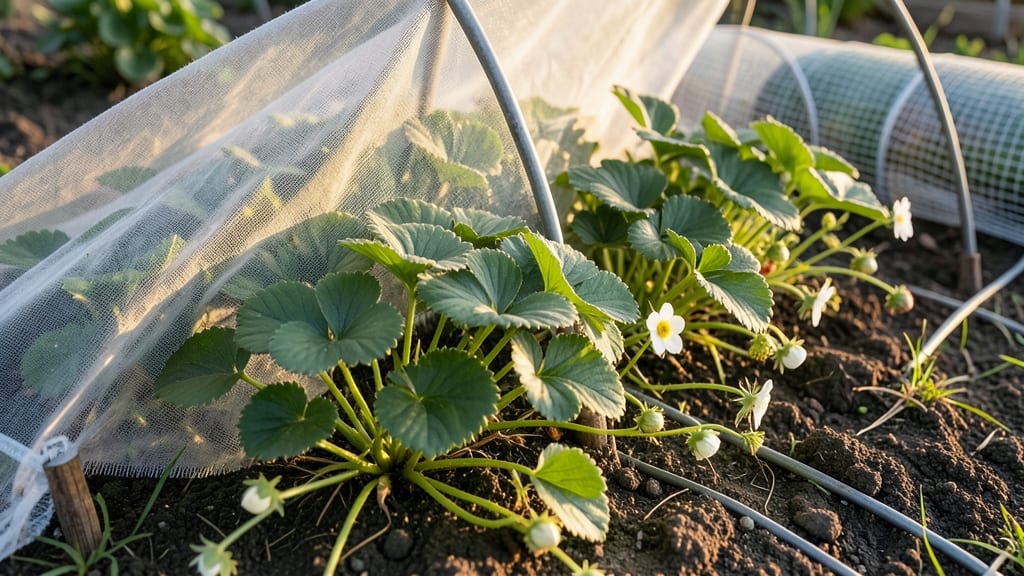
My strawberry bed cover saved last year's harvest from a late frost that would've wiped out every plant. 🌱 The right covering keeps berries sweet, plants healthy, and your hands off the hose—while protecting against pests, temperature swings, and even hungry critters.
Without it, I'd be fighting back from scratch every spring.
You'll need lightweight row covers for frost, straw or mulch for insulation, and sturdy stakes to keep everything in place. Organic mulch also suppresses weeds and retains moisture, cutting watering time by nearly half.
The key is balancing breathability—too much cover can smother plants, while too little won't protect them when temperatures drop below 28°F.
By late spring, you'll see lush green foliage and the first ripe berries 2-3 weeks earlier than uncovered beds. The plants stay productive longer, and you avoid the heartbreak of frost damage ruining your harvest. Even in summer, a light cover keeps berries cleaner and extends their shelf life.
Works for raised beds, in-ground patches, or even container strawberries—just adjust the material based on your climate. The biggest mistake? Skipping airflow checks. A quick peek every few days keeps your berries thriving all season.
📚 In This Guide
- What you need
- Instructions
- Tips and common mistakes
- Wrapping up and next steps
What you need
- ● Frost cloth or row cover: Choose a lightweight, breathable fabric rated for 30°F (-1°C) or lower (e.g., 3.5 oz. polypro or spunbonded polyester). You’ll need enough to cover your entire strawberry bed with overlap—measure your bed’s dimensions and add 1–2 feet extra on all sides.
- ● Sturdy hoops or supports: Option 1: Metal or PVC hoops (4–6 ft. tall, spaced 3–4 ft. apart). Use 1-inch diameter for durability.
- ● Option 2: Bamboo stakes or wooden dowels (1–2 inches thick) if you prefer a natural look.
- ● Heavy-duty clips or staples: Garden clips, binder clips, or U-shaped staples to secure the cover to hoops or the ground. Aim for 10–15 clips per 10 ft. of fabric.
- ● Bricks, rocks, or sandbags: For anchoring edges and preventing wind damage. 4–6 per corner should suffice.
- ● Twine or zip ties: To fasten hoops together or secure loose fabric.
- ● Thermal mass: Black plastic mulch or cardboard under the cover to absorb daytime heat and release it at night.
- ● Mini greenhouse kit: Pre-made hoop house frames if you want a low-maintenance setup.
- ● Venting kit: A zippered tunnel or mesh panels to allow airflow on warm days.
- ● LED grow lights: For extending the growing season in ultra-cold climates.
Step-by-step guide to frost-proofing your strawberry bed
Here’s how I protect my strawberries through winter—keeping plants healthy and ready for spring harvests.
🌱 Step 1: Choose the Right Cover Material
For frost protection, I use breathable fabric covers (like frost cloth rated for 20-25°F) or straw mulch (4-6 inches deep). Avoid plastic sheets—they trap moisture and suffocate roots. If using fabric, select one with UV protection to prevent sun damage during warmer days.
Lay the cover evenly over the bed, ensuring it drapes loosely. Tuck edges under or use bricks/rocks to weigh them down—this prevents wind from lifting it off during cold snaps. The goal is to insulate without smothering—think cozy blanket, not suffocating tarp.
💧 Step 2: Prepare the Bed Before Covering
Before applying frost protection, water the bed deeply until soil is moist 4-6 inches down. This prevents roots from drying out under cover. I add a 2-inch layer of straw over the soil first—this acts as a moisture barrier and adds insulation.
Remove any dead leaves or debris from the bed. These can harbor pests or rot under cover. If your strawberries are still producing, harvest any remaining fruit before covering—cold-damaged berries won’t ripen properly.
☀️ Step 3: Apply Cover at the Right Time
Put the cover on when nighttime temperatures drop below 32°F. Check the forecast—if frost is expected, act before dark. Fabric covers work best when dry, so avoid putting them on if rain is forecasted within 24 hours.
During the day, remove the cover if temperatures rise above 40°F to prevent overheating. Watch for condensation—if the cover feels damp, lift it briefly to air out. Overheating can stress plants just as much as frost.
✂️ Step 4: Monitor and Adjust Through Winter
Check the bed every 2-3 days during cold snaps. Look for ice crystals on leaves—this is normal, but if leaves turn black or mushy, remove the cover immediately to prevent rot. Adjust the cover’s position if wind shifts it too much.
In late winter, gradually remove the cover during the day to harden off plants. Start with 2-3 hours of exposure, then increase daily. This helps strawberries adjust to spring conditions without shock. By mid-March, they should be uncovered entirely.
🌿 Step 5: Post-Winter Care for Spring Growth
Once frost risk passes, remove all winter coverings and inspect plants. Prune any blackened or damaged leaves with clean scissors. This encourages new growth and reduces disease risk. Water lightly if the soil feels dry—roots are still recovering from winter.
Apply a thin layer of compost (½ inch) around plants to replenish nutrients lost over winter. This jumpstarts spring growth. If you notice yellowing leaves, it’s often a sign of nitrogen deficiency—add a balanced fertilizer (10-10-10) at half strength.
Tips & tricks for frost-proofing strawberry beds
Here's what I've learned after years of protecting my strawberries—these little details make all the difference between healthy plants and winter casualties.
Material Matters: When choosing your frost cloth, opt for one rated for 20-25°F that has UV protection. I've ruined perfectly good fabric covers by using unprotected ones that degraded after just one season. The UV protection keeps the material from becoming brittle, so it lasts multiple winters. For straw mulch, make sure it's 4-6 inches deep—any less won't provide enough insulation during hard freezes.
Timing is Everything: The 24-hour dry rule before applying fabric covers is crucial. If rain is forecasted within that window, wait it out—wet fabric loses its insulating properties and can actually make frost worse. I've learned this the hard way after seeing my strawberries suffer from damp covers during unexpected nighttime rains. Also, those 2-3 hours of daytime exposure in late winter are perfect for hardening off plants—it's like giving them a gentle wake-up call before full springtime conditions.
Visual Cues Save Plants: Those ice crystals on leaves during cold snaps are normal, but watch for the difference between frost and rot. Frosted leaves will be crisp but still firm, while rotten leaves will feel mushy and may have dark spots. When you're gradually removing covers in late winter, look for leaves that perk up when uncovered—that's your sign they're ready for more exposure. The 32°F threshold is your guide, but always check the forecast for sudden temperature swings.
Post-Winter Prep: That ½-inch layer of compost in Step 5 is more important than you might think. Strawberries are heavy feeders, and winter depletion shows up as yellowing leaves. I've seen plants that looked fine after winter suddenly struggle when I skipped this step. For extra insurance, add your balanced fertilizer (10-10-10) at half strength—this gives plants a gentle boost without overwhelming them after their winter rest.
Pro Tips for Strawberry Bed Cover
- Here's what I've learned after years of protecting my strawberries—these little details make all the difference betwe...
- Material Matters: When choosing your frost cloth, opt for one rated for 20-25°F that has UV protection. I've ruined p...
- Timing is Everything: The 24-hour dry rule before applying fabric covers is crucial. If rain is forecasted within tha...
Frequently asked questions
Got questions about keeping your strawberry plants cozy and frost-free? We’ve got answers! Here are some of the most common concerns—and solutions—to help you master the art of strawberry bed protection.
When should I start using a strawberry bed cover?
Start covering your strawberry beds before the first frost of the season—typically in late fall or early winter, depending on your climate. If you’re in a mild zone, you might delay until temperatures dip below 32°F (0°C). For extra protection, cover plants after a light frost to prevent shock.
What’s the best material for a strawberry bed cover?
Opt for breathable, frost cloth (rated for 25–30°F/-4 to -1°C) or lightweight row covers made of polyester or polypropylene. Avoid plastic sheets—they trap moisture and can suffocate plants. For heavier frosts, layer with straw mulch or burlap for added insulation.
Can I use a strawberry bed cover in summer to protect from heat?
Yes! While bed covers are designed for frost, they can also shield plants from intense summer heat (like 90°F/32°C+). Use shade cloth (30–50%) instead of frost cloth to allow airflow. Remove covers during the day if temperatures drop, and secure them loosely to prevent overheating.
Will a bed cover keep pests away?
A strawberry bed cover doesn’t fully replace pest control, but it’s a great first line of defense against birds, rabbits, and slugs. For persistent pests, combine covers with diatomaceous earth or neem oil. Check for holes or gaps weekly—even small openings can let critters in!
How long can I leave the cover on during the day?
Remove covers early in the morning (around 10 AM) if temperatures rise above 50°F (10°C) to prevent overheating. On cloudy or cool days, you can leave them on longer. Always secure edges with bricks or clips to avoid wind damage.
What if my strawberries still get frost damage?
If you spot blackened leaves or mushy berries, act fast! Prune damaged foliage (but leave healthy growth) and water deeply to help recovery. For next season, extend covers earlier or add a low tunnel for extra warmth. Over time, your plants will bounce back!
Wrapping up and next steps
Protecting your strawberry plants with a strawberry bed cover is a game-changer for year-round health and productivity! Whether you’re battling frost, pests, or harsh weather, this simple solution ensures your plants thrive without extra stress. 🌱❄️
Ready to give your strawberries the best defense? Start by gathering your materials, then follow the steps to create a cozy, frost-proof haven for your plants. Your next step? Try it this season and watch your strawberry patch flourish—you’ve got this! 💪