
Tools
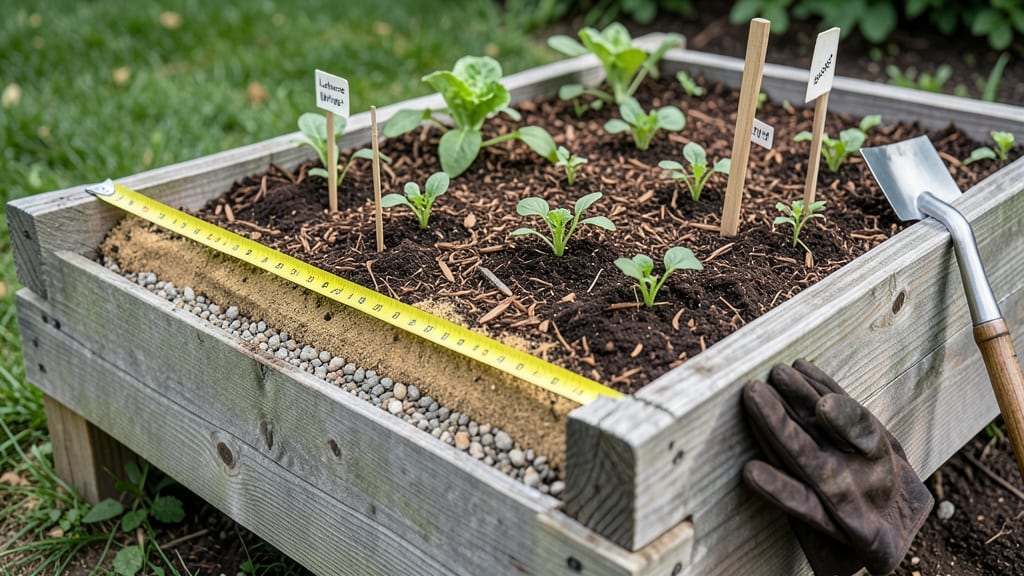
A 12-inch soil depth in your raised garden bed is the foundation for strong roots, better drainage, and a thriving harvest 🌱 — and getting it right avoids years of frustration with stunted plants.
Picture this: You’ve spent hours selecting seeds, building the perfect bed, and even adding compost, only to watch your carrots grow crooked or your tomatoes struggle to stay upright.
The issue? Shallow soil limits root space, starving plants of the nutrients and stability they need. Without the right depth, even the hardiest crops will fight to survive.
Most vegetables need at least 6 to 12 inches of loose, fertile soil to spread their roots, but deep-rooted crops like potatoes or asparagus demand 18 inches or more.
The good news? You don’t need a PhD in horticulture to fix it—just a few smart layering tricks and a little planning.
In this guide, I’ll break down the science behind soil depth, how to measure and adjust your bed, and the layering secrets that keep roots happy year after year. No more guesswork—just a bed that works as hard as you do.
Why 12-Inch soil depth is the minimum for healthy root systems
When I first built my raised garden beds, I assumed 6 inches of soil would be enough—until my carrots grew lopsided and my tomatoes struggled to establish. That’s when I learned the hard way: root systems need space to thrive.
A 12-inch soil depth isn’t just a recommendation; it’s a biological necessity for most vegetables, herbs, and even some flowers. This depth ensures roots can access nutrients, water, and oxygen while avoiding compaction and poor drainage.
The 12-inch rule comes from decades of horticultural research. Plant roots spread horizontally but also grow downward to escape competition and find resources. Shallow soil forces roots to crowd near the surface, where they’re more vulnerable to temperature swings, drought, and nutrient depletion.
For example, potatoes and carrots need deep soil to develop fully—otherwise, they’ll fork or grow stunted. Even leafy greens like lettuce benefit from deeper soil because it holds moisture longer and supports stronger root structures.
| Plant Type | Minimum Soil Depth | Root Characteristics | Notes |
|---|---|---|---|
| Shallow-Rooted Plants | 6-8 inches | Spread wide but shallow | Herbs (basil, parsley), lettuce, radishes |
| Medium-Rooted Plants | 10-12 inches | Moderate depth, sturdy roots | Tomatoes, peppers, beans, onions |
| Deep-Rooted Plants | 12-18 inches | Long taproots or tubers | Carrots, potatoes, parsnips, asparagus |
| Perennials & Shrubs | 18+ inches | Extensive root systems | Fruit trees, berry bushes, rhubarb |
One of the biggest misconceptions is that drainage alone justifies shallow soil. While good drainage is critical, it’s only part of the equation. Nutrient availability is another key factor. Deeper soil layers contain more organic matter, microbes, and minerals that roots can access.
For instance, nitrogen and phosphorus often concentrate in the lower layers, where they’re less affected by surface evaporation. Without enough depth, plants like corn or squash won’t develop the strong stalks or vines they need to support their weight.
Another critical factor is temperature regulation. Soil near the surface heats up and cools down quickly, which can stress roots—especially in hot climates. Deeper soil acts as a thermal buffer, keeping roots in a more stable temperature range.
I’ve noticed this firsthand with my strawberries: those planted in 6-inch beds struggled during summer heatwaves, while those in 12-inch beds produced fruit consistently. The extra depth helped maintain cooler, more stable root zones.
Let’s talk about water retention, because it’s often overlooked. Shallow soil dries out faster, forcing plants to send roots closer to the surface where they’re exposed to the elements. In my arid climate**, this meant my peppers wilted by midday even though I watered them daily.
Once I increased the soil depth to 12 inches, the moisture stayed available longer, and my plants thrived. Deeper soil also allows for better capillary action, where water moves upward from lower layers to feed surface roots.
For root crops like carrots and beets, depth isn’t just about health—it’s about harvest quality. These vegetables need room to grow straight and uniform. In shallow soil, they’ll fork or split as they compete for space, making them unmarketable.
I once tried growing Danvers carrots in a 6-inch bed, and 80% of them were deformed. Switching to a 12-inch bed solved the problem instantly. The same goes for potatoes, which need at least 12 inches to develop properly shaped tubers.
What about shallow-rooted plants like herbs or lettuce? They can thrive in less depth, but even they benefit from the extra space. A 12-inch depth still improves moisture retention and reduces the risk of soil compaction** from foot traffic or watering.
Plus, deeper beds allow you to layer compost and nutrients over time, creating a richer growing environment. I’ve seen basil and cilantro grow twice as fast in deeper beds because the roots can access a larger volume of fertile soil.
If you’re working with an existing raised bed and can’t dig deeper, don’t panic. You can still improve conditions by amending the soil with compost, perlite, or coconut coir to enhance aeration and drainage. However, for long-term success, 12 inches is the gold standard.
It’s the sweet spot where most vegetables can access everything they need without compromising growth. For perennials or deep-rooted plants, consider going even deeper—up to 18 inches—to give them a head start.
Remember, soil depth isn’t just about the numbers—it’s about creating an environment where roots can explore, expand, and thrive. Whether you’re growing
How to calculate and adjust soil depth for different plant types
Getting your raised garden bed soil depth right is the foundation for healthy plants. Most vegetables need at least 12 inches of soil to thrive, but deeper layers (18+ inches) support root crops like carrots and potatoes.
The key is balancing drainage, root space, and nutrient distribution—let’s break down how to measure and adjust your bed.
Start by measuring your existing soil depth with a trowel or ruler. Dig vertically to the bottom of the bed—if it’s less than 6 inches, you’ll need to add layers.
For herbs and greens, 6-8 inches works, but tomatoes and peppers demand 12+ inches. Pro tip: Use a soil probe for precise measurements in compacted beds.
To adjust your bed, start with a 4-inch gravel or coarse sand layer at the bottom for drainage. Next, add topsoil mixed with compost (50/50 ratio) to reach your target depth.
For sandy soils, add peat moss or coconut coir to retain moisture, while clay-heavy soils benefit from perlite or vermiculite for aeration.
For deep-rooted plants, extend your bed’s height to 18+ inches by stacking untreated lumber or cinder blocks. Divide the bed into sections if needed—this lets you tailor soil depth per plant type without overhauling the entire structure.
Always water deeply after amending to settle layers and eliminate air pockets.
Monitor your soil’s performance by checking root growth and plant vigor. If leaves yellow or stems wilt, your bed may need more organic matter or better drainage. Mulch with straw or wood chips to preserve moisture and prevent soil compaction over time.