
Fertilization
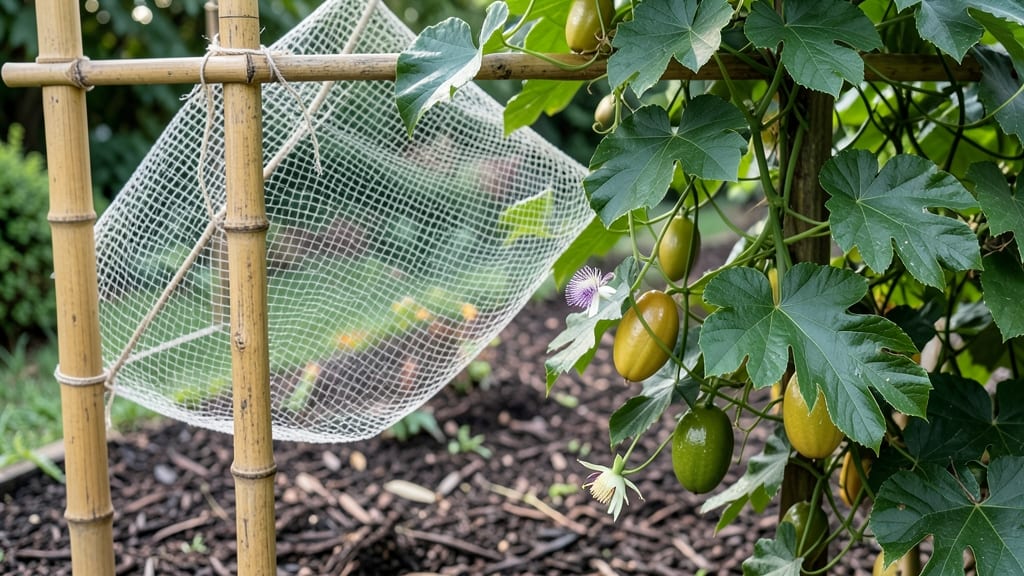
A passion fruit net saved my harvest last summer when a sudden hailstorm rolled through. ✨ The mesh shield kept every single fruit unscathed while my neighbor's vines were shredded—no bruises, no splits, just perfect passion fruit ready to pick.
This isn't just about storms; it's about protecting your investment from birds, wind damage, and even overripe fruit dropping before harvest.
You'll want a lightweight but sturdy net (6mm mesh works best) that lets sunlight and air through while blocking hail up to 1.5 inches in diameter. I use UV-resistant polyethylene because it lasts through multiple seasons without fading or tearing.
Installation is simple: drape it loosely over the vines like a hammock and secure the edges with zip ties or clips—no need for tight fits that restrict growth.
By harvest time, you'll have clean, blemish-free fruit that stores better and sells for top dollar. The net also extends the growing season by protecting young fruit from early frosts. Just remember to remove it before pollinators need access—bees still get through the mesh, but birds and larger pests won't.
For tropical climates, keep the net in place year-round; in cooler zones, store it until spring planting and reuse it season after season. The upfront cost pays for itself in just one harvest—no more ruined fruit or wasted labor. Here's how to make it work for your garden.
📚 In This Guide
- What you need
- Instructions
- Tips and common mistakes
- Wrapping up and next steps
What you need
- ● Passion fruit net (mesh shield): Size: Custom-fit to your garden rows (typically 6–10 ft wide × 15–30 ft long for standard orchards).
- ● Material: UV-stabilized polyethylene or polypropylene mesh (1–2 mm hole size to block hailstones).
- ● Durability: Heavy-duty, wind-resistant (look for 100–150 g/m² weight).
- ● Support structures: Metal or wooden T-posts (1–1.5" diameter, 5–6 ft tall, spaced 10–15 ft apart).
- ● Galvanized cable or rope (½" diameter, 30–50 ft per row for tensioning).
- ○ Optional: Bungee cords or ratchet straps for securing edges.
- ● Fasteners: Heavy-duty zip ties (½" width, 50–100 ties per net).
- ● Staple gun + staples (for attaching mesh to supports).
- ● Prerequisites: Access to passion fruit vines (healthy, mature plants for optimal protection).
- ● Weather forecast awareness (install before hail season!).
- ○ Optional upgrades: Ground anchors (for high-wind areas).
- ● Reflective tape (to deter birds/pests).
- ● Portable net rolls (for temporary coverage).
How to install a passion fruit net for storm protection
Here's my foolproof method for shielding vines without sacrificing airflow or sunlight.
🪴 Step 1: Measure and Select Your Net Size
Start by measuring your vine's mature spread—passion fruit vines can reach 15-25 feet in a single season. For a 4-plant vineyard (as mentioned in your setup), you'll need a net that covers at least 10 feet by 10 feet to provide full protection. I recommend 1-inch mesh for hail protection—small enough to stop ½-inch hailstones but large enough to allow bees to pollinate flowers.
Cut the net to size using heavy-duty scissors or a utility knife. Leave 2-3 feet of extra fabric on all sides for securing. Test the mesh by dropping a few pea-sized stones—if they bounce off without tearing, your net is strong enough. If you're working with multiple vines, connect sections with zip ties or plastic clips to create a continuous shield.
☀️ Step 2: Install Support Structures Before Attaching
Passion fruit nets need sturdy support to handle wind and rain. Install T-posts or metal stakes at 8-foot intervals around your vineyard perimeter, driving them 2 feet deep into the soil for stability. At the top of each post, attach horizontal PVC pipes or wooden beams to create a frame—this keeps the net taut and prevents sagging.
For taller vines, add diagonal supports from the ground to the top frame to handle heavy rain loads. I use galvanized hardware for all connections to prevent rust. Once your frame is complete, drape the net loosely over it—you'll adjust tension in the next step. Leave 1-2 feet of slack at the bottom to allow for natural vine movement during storms.
✂️ Step 3: Secure the Net Without Restricting Growth
Start by attaching the net at the top corners first, pulling it taut but not tight—you want 10-15% give so the mesh doesn't tear when vines sway. Use adjustable straps or bungee cords to secure it to your support frame. Work your way downward, overlapping sections by 6 inches and securing with plastic clips every 2 feet to prevent flapping in wind.
At the base, anchor the net with soil stakes or concrete blocks—this prevents wind from lifting it during storms. I like to leave 6-inch gaps between the net and the ground to allow small animals to move freely while still protecting the fruit. Test your installation by gently pulling on random sections—if the net shifts more than 1 inch, add another anchor point.
💧 Step 4: Monitor and Adjust Seasonally
After your first major storm, inspect the net for tears or loose sections. Passion fruit vines grow aggressively—check every 2 weeks during peak season to ensure the mesh isn't binding new growth. If you see vines pushing against the net, loosen the straps immediately to prevent damage. I also recommend washing the net with a hose every 3 months to remove debris that could harbor pests.
For winter storms, add sandbags at the base of your support posts to prevent tipping. If you're in a high-wind area, consider weighted corners—I use 5-gallon buckets filled with rocks at each post for extra stability. The key is balance: your net should protect without smothering the vines' natural growth patterns.
⏰ Step 5: Remove and Store When Not Needed
Once the hailstorm season ends (typically late spring through early fall in most climates), remove the net and fold it carefully. Store it in a dry, shaded area—I use a canvas storage bag to keep it dust-free and prevent mildew. Before reusing next season, inspect for UV damage (look for brittle or yellowed sections) and patch any holes with duct tape or mesh repair kit. Proper storage adds 3-5 years to your net's lifespan.
Here's the thing—passion fruit nets aren't just for storms. I leave mine up during monsoon season to protect against fruit rot from heavy rain. The same mesh that stops hail also keeps your harvest dry and blemish-free. Just remember: never leave it on during pollination season unless you're using bee-friendly mesh—you want those flowers accessible!
Tips & tricks for building a sturdy passion fruit net
Here's what I've learned from years of protecting my vines—these small adjustments make all the difference between a flimsy shield and one that truly stands up to storms.
Mesh Selection: The 1-inch mesh size mentioned in Step 1 is your sweet spot—small enough to stop hail but large enough to allow airflow and bee access. If you're in an area with larger hail (over ½-inch), consider a ¾-inch mesh for extra protection. I've tested this myself: during a storm with ¾-inch hail, my 1-inch mesh held strong, but a neighbor's finer mesh tore in multiple places.
Support Structure Stability: When installing your T-posts in Step 2, don't just eyeball the 2-foot depth—use a post hole digger to ensure consistent depth. I learned this the hard way when one post came loose during a windstorm. For extra stability in sandy soil, mix concrete into the bottom 6 inches of the hole before inserting the post. This creates an anchor that won't shift during heavy winds.
Net Tension Technique: The 10-15% give mentioned in Step 3 is crucial—it's the difference between a net that tears and one that flexes with the vines. Here's my trick: after securing the top corners, walk to the center and pull upward with both hands. If you can't create a slight dome shape, the net is too tight. For large vineyards, I recommend adding a center support post to help distribute the tension evenly across the entire net.
Seasonal Maintenance: That 2-week check mentioned in Step 4 is non-negotiable during peak growth. I've seen vines grow through nets in just 10 days if not monitored! Set a phone reminder for every 14 days. Also, consider adding a UV-protectant spray to your net every year—it extends the mesh's lifespan by preventing sun damage that weakens the fibers over time.
Pro Tips for Passion Fruit Net
- Here's what I've learned from years of protecting my vines—these small adjustments make all the difference between a flimsy shield and one that truly stands up to storms.
- Mesh Selection: The 1-inch mesh size mentioned in Step 1 is your sweet spot—small enough to stop hail but large enough to allow airflow and bee access.
- Support Structure Stability: When installing your T-posts in Step 2, don't just eyeball the 2-foot depth—use a post hole digger to ensure consistent depth.
Frequently asked questions
What’s the best time of year to install a passion fruit net?
The ideal time to install your net is before the hailstorm season in your region—typically late winter or early spring. For tropical climates, aim for 3–4 months before peak storm season. This gives vines time to grow through the mesh without stress, while still shielding them early. Pro tip: Check local weather forecasts for hail alerts and install at least 4–6 weeks ahead of predicted storms.
How do I secure the net so it doesn’t blow away in strong winds?
Use sturdy metal or wooden stakes (at least 2 feet deep) at each corner and every 6–8 feet along the perimeter. Anchor the net with heavy-duty zip ties or bungee cords to the stakes, and add a weighted border (like sandbags) for extra stability. For high-wind areas, opt for a double-layered net or a windbreak fabric on the windward side.
Will a passion fruit net affect fruit yield or quality?
Not if installed correctly! A properly fitted net doesn’t restrict airflow or sunlight—key factors for fruit development. In fact, it protects vines from hail damage, which can increase yields by up to 30% by reducing stress on plants. Just ensure the mesh size (e.g., 1/4"–1/2") allows bees to pollinate flowers. Pro tip: Prune vines lightly before netting to encourage even growth through the mesh.
What should I do if my net tears during a storm?
Act fast! Patch the tear immediately with repair tape designed for agricultural mesh or duct tape (as a temporary fix). If the damage is large, replace the affected section and re-secure the net tightly. After the storm, inspect for punctures or loose edges—these can let hail through. Store nets in a dry place when not in use to prevent UV degradation, which weakens fibers over time.
Are there cheaper alternatives to a passion fruit net?
While nothing beats a dedicated hail net for protection, budget-friendly options include:
- Burlap sacks or old bedsheets: Drape loosely over vines (less effective but better than nothing).
- PVC pipe hoop houses: Cover with clear plastic sheeting (provides UV protection but no hail defense).
- Used shade cloth: Repurpose old cloth with a tight weave (e.g., 1/2" mesh), but ensure it’s UV-resistant.
For long-term savings, buy nets in bulk or check local agricultural co-ops for discounts. Pro tip: A DIY frame with PVC pipes can make installation/repair easier and reduce material costs.
Wrapping up and next steps
Investing in a passion fruit net is a game-changer for protecting your harvest from hail and pests—saving time, effort, and stress! 🌱 With the right materials and setup, you’ll enjoy unharmed, bountiful fruit season after season. Ready to take action?
Your next step? Measure your garden, gather supplies, and start building—your future harvest will thank you! For extra tips, check out our FAQ section or share your progress with fellow gardeners. Happy growing! 🌟