
Fertilization
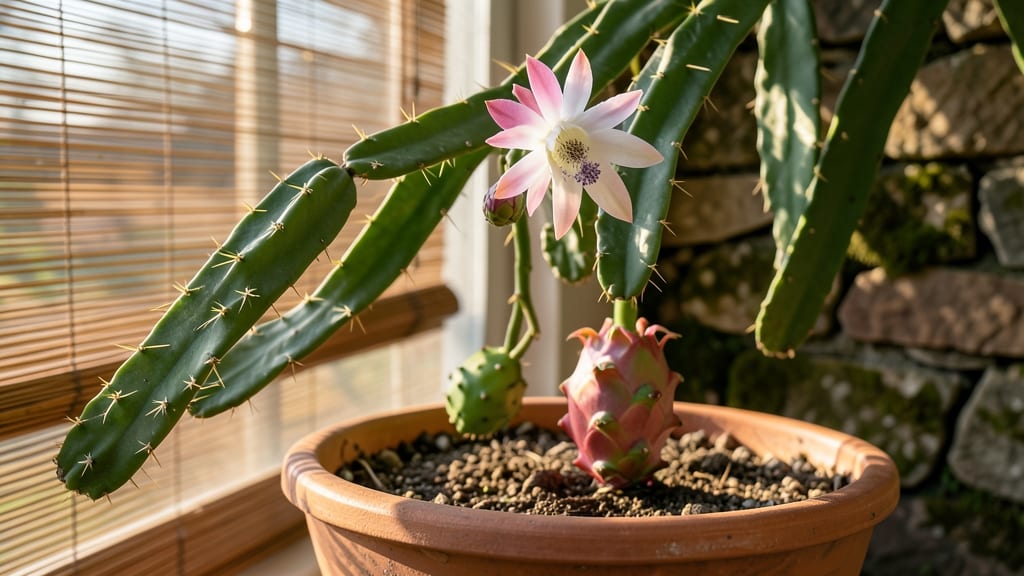
Dragon fruit is naturally prickly with tough, sharp scales covering its exterior, which protect the fruit while growing on the plant. These spines are part of its rind and do not penetrate when handled carefully, though they can irritate skin if forced or cut open improperly.
Dragon fruit's prickly exterior isn't just for show—it's a built-in defense system. 🌵 These sharp scales, called areoles, grow from the fruit's cactus-like skin and act as a natural barrier against pests and harsh sunlight.
Unlike other tropical fruits, dragon fruit belongs to the cactus family, so its spiky texture is actually a protective adaptation. The good news? You can safely handle the fruit by gripping the base or using a knife to slice through the skin without risking punctures.
When selecting dragon fruit, look for firm, vibrant skin—this indicates ripeness. The spines should feel dry and crisp, not mushy or damp. Once you're ready to eat, simply cut the fruit in half lengthwise, then use a spoon to scoop out the bright pink or white flesh.
The edible part is always smooth and seed-speckled, while the outer rind remains inedible and prickly.
💡 In This Article
- Why Dragon Fruit Develops Prickly Skin
- Safe Ways to Peel and Eat Prickly Dragon Fruit
Why dragon fruit develops prickly skin
The dragon fruit's signature prickly exterior isn't just a quirky feature—it's a sophisticated evolutionary adaptation. These sharp, scale-like spines, called areoles, grow from specialized cells in the fruit's epidermis, much like the protective spines on its parent cactus plant, Hylocereus undatus.
The spines serve a dual purpose: they deter herbivores by making the fruit physically difficult to consume, and they reflect sunlight to prevent overheating in the fruit's tropical growing conditions.
Botanically, these spines are modified leaves or bracts that contain vascular bundles, allowing them to transport nutrients from the fruit. 🌵 What's fascinating is how the spines develop—each one forms from a cluster of cells that harden into a rigid, crystalline structure containing calcium oxalate crystals.
This same compound gives chard its sharp flavor and makes the spines feel abrasive to the touch. The density of spines varies by dragon fruit variety, with some types like the white-fleshed Hylocereus megalanthus having fewer, softer spines compared to the deep-pink varieties.
This prickly defense system is particularly effective when compared to other tropical fruits. Unlike smooth-skinned fruits like mangoes or papayas, which rely on bright colors and sweet aromas to attract seed dispersers, dragon fruit combines both chemical and physical protection.
The spines create a barrier that prevents insects and small animals from piercing the skin to feed on the developing fruit, while the fruit's vibrant color and sweet aroma still attract birds and bats for seed dispersal once ripe.
Interestingly, the spines aren't just for protection—they also play a role in the fruit's hydration strategy. In arid tropical climates, the spines help reduce water loss by creating microclimates that trap moisture near the fruit's surface.
This adaptation mirrors how other cactus fruits, like the prickly pear, manage water conservation. The spines' orientation—pointing slightly outward—helps channel rainwater toward the fruit's base, ensuring the plant receives maximum hydration during rare downpours.
When examining dragon fruit up close, you'll notice the spines are hollow at their base and filled with a spongy tissue that connects to the fruit's vascular system. This connection allows the spines to remain hydrated and firm, even as the fruit ripens.
The spines' sharpness comes from their tapered shape, which creates a point that can easily puncture soft tissues—though they're designed to stay attached to the fruit rather than detach like barbed wire.
This structural integrity is why you'll never find dragon fruit spines scattered around like those of a prickly pear.
Understanding this botanical design helps explain why dragon fruit's prickliness persists even in cultivation. Unlike many domesticated fruits that have been bred for smoother skins (like seedless watermelons), dragon fruit hasn't undergone significant selection against its spines because they serve crucial ecological functions.
The fruit's commercial success actually relies on maintaining these protective features—they ensure the fruit arrives at markets intact and undamaged, ready for consumers to handle with care.