
Companion Plants
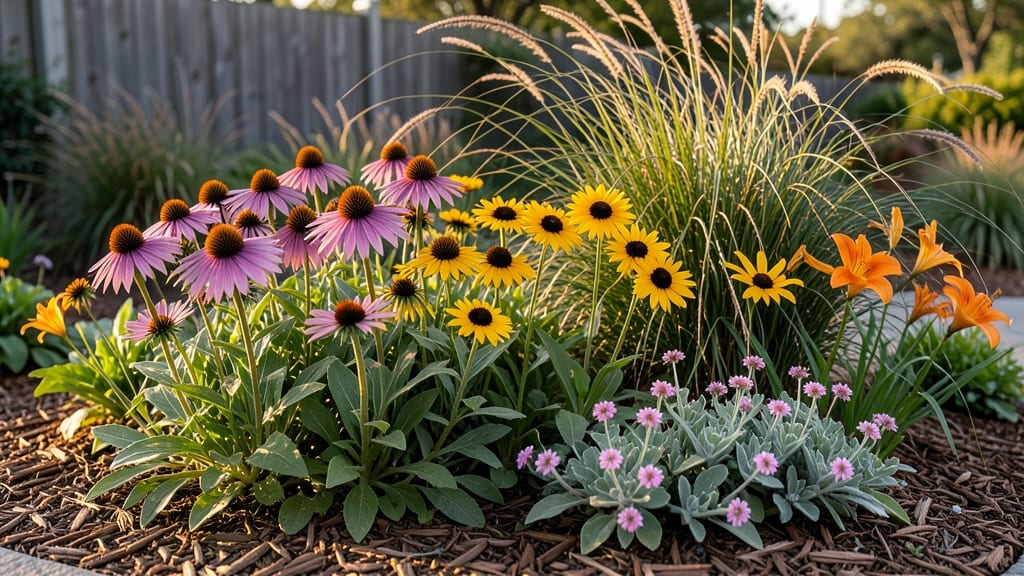
Your flower bed plants can burst with color all year without the constant deadheading battle. 🌸 I’ve designed beds that stay vibrant with just a little seasonal swapping—no daily chores, just stunning results. The secret lies in mixing perennials with the right annuals and evergreens that naturally fill gaps.
Start with three layers: tall plants like coneflowers or bee balm at the back, mid-height like black-eyed Susans, and low-spreading options like creeping thyme or ajuga. Add a few bulbs like daffodils or alliums for early spring pops, then layer in late-season bloomers like asters or ornamental grasses.
This combo keeps your bed lush and full from March through frost.
You’ll spend less than 30 minutes a month on maintenance—just a quick trim here, a light mulch there. The colors coordinate themselves with this simple formula: pair purples with silvers, reds with greens, and yellows with blues. Even pollinators will thank you for the nonstop buffet.
Works for cottage-style charm, modern minimalism, or pollinator paradises—just tweak the plant mix. Here’s how to build one that thrives with almost no effort.
📚 In This Guide
- What you need
- Instructions
- Tips and common mistakes
- Wrapping up and next steps
What you need
- ● Flower bed plants: Perennials (e.g., Coneflower, Black-Eyed Susan, Daylily) – 3-5 plants per square foot
- ● Annuals (e.g., Marigold, Zinnia, Petunia) – 1-2 plants per square foot (for seasonal pops of color)
- ● Evergreens (e.g., Heuchera, Sedum) – 1-2 plants per 2 square feet (for winter interest)
- ● Soil amendments: Compost (5-10 lbs per 10 sq ft)
- ● Slow-release fertilizer (10-15 lbs per 100 sq ft)
- ● Tools: Garden trowel or spade
- ● Pruning shears (sharp, for clean cuts)
- ● Wheelbarrow or garden cart (for hauling soil/amendments)
- ● Measuring tape (to plan spacing)
- ● Gloves (durable, for protection)
- ● Mulch (2-3 inches, organic or inorganic) – retains moisture and suppresses weeds
- ● Drip irrigation kit or soaker hoses – automates watering for busy gardeners
- ● Edging tools (metal or plastic) – defines borders and keeps plants tidy
- ● Garden stakes or cages – supports taller plants (e.g., Delphinium, Hollyhock)
- ● Slow-release plant food tabs (e.g., Osmocote) – mixes into soil for seasonal feeding
How to design a low-maintenance flower bed for season-long color
Here's how to create a vibrant, resilient flower bed that thrives with minimal deadheading.
🌱 Step 1: Select Plants for Continuous Bloom Cycles
Choose a mix of early, mid, and late-season bloomers to ensure color from spring through fall. I like to combine bearded iris (spring), black-eyed Susans (summer), and Russian sage (fall) for a seamless transition. Each plant should have a different bloom time to prevent gaps in color.
Prioritize perennials over annuals—they return year after year with less replanting. For example, coneflowers bloom from midsummer to frost, while salvia provides early color. Group plants with similar water needs together to simplify irrigation.
☀️ Step 2: Plan for Sunlight and Soil Conditions
Assess your bed's sunlight exposure first—most flowering perennials need at least 6 hours of direct sun daily. If your space is shadier, opt for hostas or heuchera alongside sun-loving varieties. I test sunlight by placing a white board in the bed for a few hours to track shadows.
Amend the soil with 2-3 inches of compost before planting to improve drainage and fertility. Test your soil's pH—most flowers prefer 6.0-7.0. If your soil is heavy clay, mix in sand or perlite to prevent waterlogging, which causes root rot and stunted blooms.
🪴 Step 3: Space Plants for Airflow and Future Growth
Check plant tags for mature width and space them accordingly—crowding invites fungal diseases and weakens stems. For instance, daylilies need 2-3 feet apart, while coreopsis thrives in 18-inch spacing. I sketch a rough layout on graph paper, scaling to match my bed's dimensions.
Plant in odd-numbered groups (3, 5, or 7) for a natural, full look. Dig holes twice as wide as the root ball to encourage root spread. Water each plant deeply before backfilling soil to eliminate air pockets that strangle roots.
💧 Step 4: Mulch and Water Strategically
Apply 2-3 inches of mulch (like shredded bark) to retain moisture and suppress weeds. Keep mulch 2 inches away from stems to prevent rot. I water deeply 2-3 times per week in summer, focusing on the base rather than overhead spraying to avoid fungal spores.
Let the top 1-2 inches of soil dry between waterings—overwatering is the fastest way to kill a flower bed. Install a drip irrigation system if possible; it delivers water slowly at the roots where plants need it most.
✂️ Step 5: Deadhead and Prune for Longevity
Deadhead spent blooms weekly to redirect energy into new flowers, not seed production. For coneflowers and black-eyed Susans, I snip just above the next set of leaves to encourage bushier growth. Avoid cutting into old wood—always leave 1-2 inches of stem to protect the plant.
In late fall, cut back woody stems (like Russian sage) to 6 inches tall, but leave grasses and ornamental plants standing for winter interest. Divide overcrowded perennials like iris every 3-4 years in early spring to rejuvenate their vigor.
Tips & tricks for perfect flower bed design
Creating a vibrant, low-maintenance flower bed isn't just about planting—it's about smart planning that saves you time and effort down the road.
Seasonal Layering Strategy: When selecting plants in Step 1, I recommend adding catmint (late summer) and asters (fall) to your mix—they bridge the gap between summer and winter blooms beautifully. The key is to overlap bloom times by at least 2-3 weeks between each plant type. This creates that "always in bloom" effect without requiring constant deadheading. I sketch a simple color wheel chart to visualize transitions between seasons.
Soil Prep Shortcut: For Step 2's soil amendment, I've found that mixing in worm castings (alongside the 2-3 inches of compost) gives plants an immediate nutrient boost. The worms also improve soil structure naturally. If you're working with heavy clay, add 1 part perlite to 3 parts soil—this creates perfect drainage while still retaining moisture. Test your soil's pH with an inexpensive kit before planting; adjusting it to 6.0-7.0 makes all the difference in plant health.
Plant Spacing Visual: In Step 3, when checking mature plant widths, I create a simple grid on graph paper where each square represents 1 foot. This helps visualize how plants will fill out over time. For example, placing daylilies 2.5 feet apart (instead of the minimum 2 feet) gives them room to spread without crowding. I always leave extra space around Russian sage—it grows wider than most people realize.
Watering Hack: For Step 4's watering routine, I install a smart irrigation timer that delivers water at dawn. This prevents fungal issues from evening moisture and ensures consistent hydration. The "let top 1-2 inches dry" rule works best with a moisture meter—stick it in the soil before watering to avoid guesswork. In hot climates, I increase watering to every other day during peak summer months while maintaining the same base-watering approach.
Pro Tips for Flower Bed Plants
- Creating a vibrant, low-maintenance flower bed isn't just about planting—it's about smart planning that saves you tim...
- Seasonal Layering Strategy: When selecting plants in Step 1, I recommend adding catmint (late summer) and asters (fal...
- Soil Prep Shortcut: For Step 2's soil amendment, I've found that mixing in worm castings (alongside the 2-3 inches of...
Frequently asked questions
Got questions about keeping your flower beds vibrant without the fuss?
Here are answers to the most common concerns—so you can enjoy lush blooms all year with minimal effort!
What are the easiest low-maintenance flower bed plants for beginners?
Start with perennials like coneflowers, black-eyed Susans, or daylilies—they thrive with little care and return yearly. For annuals, try marigolds or zinnias; they bloom nonstop with basic watering. Pro tip: Mix native plants (like bee balm) for resilience and local pollinator support!
When is the best time to plant flower bed annuals for continuous blooms?
For spring-to-fall color, plant cool-season annuals (like pansies) in early spring, then swap for heat-lovers (like petunias) in late spring. Succession plant every 4–6 weeks to avoid gaps. Troubleshoot: If blooms fade fast, check soil moisture—most annuals need 1 inch of water weekly!
How can I reduce deadheading without spending hours in the garden?
Choose self-cleaning plants like shasta daisies (dead petals drop on their own) or coreopsis. For others, deadhead in batches (e.g., every Sunday morning) or use pruning shears to snip multiple stems at once. Time-saver: Group high-maintenance plants together for quick trims!
What’s the best mulch for flower beds to cut down on weeds and watering?
Use 3–4 inches of organic mulch (like shredded bark or pine straw) to suppress weeds and retain moisture. Avoid piling mulch against stems—keep it 2 inches away to prevent rot. Bonus: Dark mulches (e.g., cocoa hulls) warm soil faster in spring!
Are there flower bed plants that naturally repel pests without chemicals?
Yes! Plant marigolds (deter bugs), lavender (keeps mosquitoes away), or nasturtiums (repels aphids). Pair them with roses or vegetable gardens for a pest-free zone. Pro move: Interplant basil near tomatoes to fend off hornworms!
Wrapping up and next steps
Creating a vibrant, low-maintenance flower bed is easier than you think! By choosing the right flower bed plants—like perennials, succulents, and evergreens—you can enjoy year-round color with minimal effort. The key? Smart planning, seasonal swaps, and a little deadheading know-how. 🌸
Now that you’re armed with tips and tricks, it’s time to roll up your sleeves! Start small—pick one section of your garden to transform, or sketch a layout before planting.
Whether you’re a beginner or a seasoned gardener, every bloom you add brings you closer to that dream garden. Happy planting! 🌱