
Vegetables
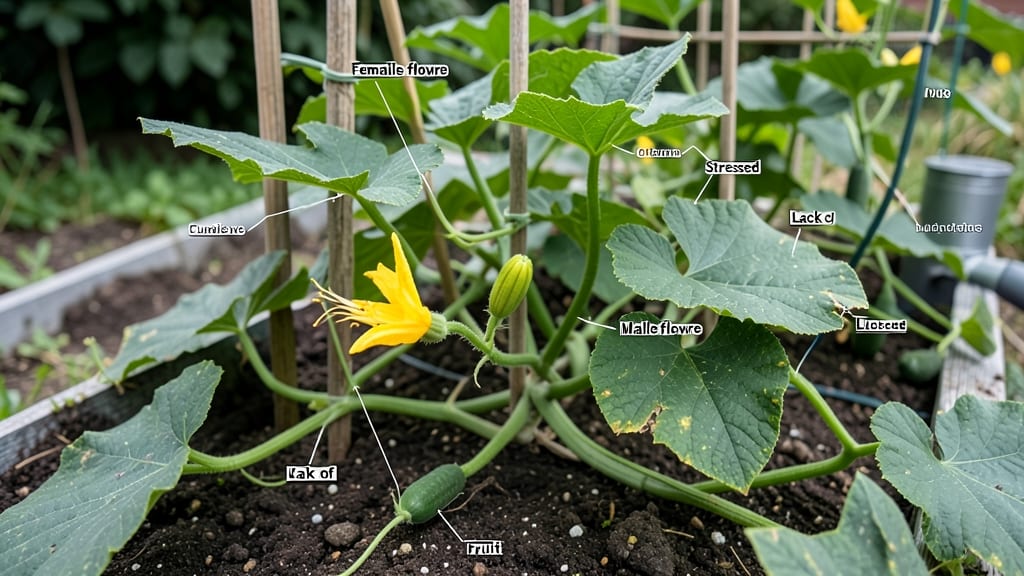
Your cucumber vines are thriving but still not producing fruit? 🌿 The problem usually boils down to two things: pollination failures or hidden growing mistakes that keep plants from setting fruit. I’ve seen healthy-looking vines produce zero cucumbers for years—until I fixed these overlooked issues.
Most gardeners assume cucumbers self-pollinate, but they actually need help from bees or gentle shaking to transfer pollen. Even in containers, poor airflow or overcrowding can block fruit development. The fix is surprisingly simple: hand-pollinate with a paintbrush or tweak your care routine in just 3 key areas.
By next week, you’ll see tiny cucumbers forming along the vines—proof your plants are finally ready to produce. The best part? These solutions work for both bush and vining types, whether you’re growing in the ground or containers.
Here’s where to start: check your watering schedule, adjust fertilization, and add a quick pollination boost. Let’s get those cucumbers growing!
Root Causes Behind Poor Cucumber Fruit Set
When your cucumber plants look lush but refuse to produce fruit, the issue often boils down to a few key biological and environmental factors.
Understanding these causes is the first step toward fixing the problem—because once you know why your plants are struggling, you can take precise action to turn things around.
Cucumbers are monoecious (or sometimes dioecious), meaning male and female flowers grow on the same plant (or separate plants, in the case of dioecious varieties). Female flowers—the ones that eventually become fruit—require pollination to trigger fruit development. Without it, flowers wilt and drop off without setting fruit.
Why it happens:
- Lack of bees or other pollinators – Cucumbers rely on insects (like bees, butterflies, and even wind) to transfer pollen from male to female flowers. If your garden is isolated or pollinators are scarce (due to pesticides, lack of flowering plants, or urban settings), pollination fails.
- Poor timing of flower opening – Female flowers often open earlier in the morning than male flowers. If the weather is cool (<55°F/13°C) or rainy, pollinators may not visit, leaving female flowers unpollinated.
- Hand-pollination oversight – In greenhouses, containers, or areas with few pollinators, gardeners must manually transfer pollen using a soft brush or cotton swab.
Actionable fix: ✅ Attract pollinators by planting bee-friendly flowers (like marigolds, nasturtiums, or borage) near cucumbers. ✅ Hand-pollinate by gently brushing male flowers (identifiable by their long, slender stems) onto female flowers (which have a tiny cucumber at the base). ✅ Avoid early-morning watering near flowers, as wet pollen washes away.
Cucumbers are warm-season crops that thrive in specific temperature ranges. Too hot or too cold can disrupt flower development and fruit set.
Why it happens:
- Cold nights (<50°F/10°C) – Low temperatures slow pollen development and reduce pollinator activity. Female flowers may drop before pollination occurs.
- Heat stress (>90°F/32°C) – High daytime temperatures can cause male flowers to abort before releasing pollen, leaving female flowers unpollinated. Extreme heat also leads to flower drop (a condition called "shedding").
- Frost damage – Even a light frost can kill flowers and young fruit, resetting the plant’s growth cycle.
Actionable fix: ✅ Use row covers in early spring to protect plants from cold snaps. ✅ Provide afternoon shade (via shade cloth) if temperatures exceed 90°F (32°C). ✅ Choose heat-tolerant varieties like ‘Straight Eight,’ ‘Marketmore,’ or ‘Lemon Cucumber’ for hot climates.
Cucumbers are heavy feeders, and poor nutrition—especially deficiencies in phosphorus, potassium, or boron—can stunt flower and fruit development.
Why it happens:
- Nitrogen overload (too much "green" growth) – Excess nitrogen promotes leafy growth at the expense of flowers and fruit. Plants may produce lots of vines but few female flowers.
- Phosphorus deficiency (P) – Critical for flower and fruit development. Symptoms include dark green leaves with purple stems and weak roots.
- Potassium deficiency (K) – Leads to weak stems, poor pollination success, and misshapen fruit. Leaves may develop yellow edges (scorching).
- Boron deficiency – A micronutrient essential for cellular division in fruit. Without it, flowers may drop, and young fruit can abort or develop cracks.
Actionable fix: ✅ Test soil pH (ideal range: 6.0–6.8). Adjust with lime (to raise pH) or sulfur (to lower pH) if needed. ✅ Apply a balanced fertilizer (e.g., 10-10-10 or 5-10-10) at planting, then switch to a low-nitrogen, high-phosphorus formula (e.g., 2-8-4) when flowers appear. ✅ Add compost or worm castings for slow-release nutrients. ✅ Use boron supplements (e.g., borax or soluble boron) if soil tests show a deficiency (follow package rates carefully).
Inconsistent watering—whether underwatering or overwatering—can stress cucumber plants and prevent fruit set.
Why it happens:
- Drought stress – Cucumbers need 1–2 inches of water per week. Too little water causes flower drop and poor pollen viability.
- Overwatering or poor drainage – Soggy roots suffocate plants, leading to root rot and nutrient uptake issues, which weaken flower and fruit development.
- Inconsistent moisture – Fluctuating soil moisture (e.g., dry soil followed by heavy watering) causes cellular stress, leading to aborted flowers.
Actionable fix: ✅ Water deeply and consistently (aim for 1–1.5 inches per week, including rain). ✅ Use drip irrigation or soaker hoses to keep moisture even at the root zone (avoid wetting leaves/fruit to prevent disease). ✅ Mulch heavily (with straw or grass clippings) to retain soil moisture and regulate temperature. ✅ Avoid watering during peak sun (midday) to reduce evaporation and pollen wash-off.
Certain pests and pathogens damage flowers, leaves, or roots, reducing a plant’s ability to produce fruit.
Why it happens:
- Squash vine borers or cucumber beetles – These pests chew on flowers and young fruit, preventing pollination and fruit development.
- Powdery mildew or downy mildew – Fungal diseases distort leaves, reducing the plant’s energy for flower production.
- Root-knot nematodes – Microscopic worms that damage roots, starving the plant of water and nutrients, leading to stunted growth and poor flowering.
Actionable fix: ✅ Use row covers early to block pests like cucumber beetles and squash vine borers. ✅ Apply neem oil or insecticidal soap for soft-bodied pests (follow label rates). ✅ Rotate crops annually to break disease/pest cycles. ✅ Test soil for nematodes and treat with beneficial nematodes (e.g., Steinernema carpocapsae) if needed.
Not all cucumber varieties are created equal—some are parthenocarpic (self-pollinating and fruit-bearing without pollinators), while others rely heavily on external pollination.
Why it happens:
- Non-parthenocarpic varieties (e.g., traditional slicing cucumbers) require pollination to set fruit. In pollinator-poor environments, they may produce mostly male flowers early on.
- Hybrid vs. heirloom differences – Some hybrids are bred for higher fruit set under stress, while heirlooms may be more sensitive to environmental changes.
Actionable fix: ✅ Choose parthenocarpic varieties (e.g., ‘Diva,’ ‘Excelsior,’ or ‘Sweet Success’) if you’re in a greenhouse, container, or low-pollinator area. ✅ Plant a mix of varieties—some may perform better in your specific climate. ✅ Hand-pollinate non-parthenocarpic types if natural pollinators are scarce.
Fixing Cucumber Fruit Set Fast
Now that you know why your cucumbers aren’t producing fruit, let’s roll up our sleeves and turn things around! The good news? Most issues have simple, actionable fixes—no advanced gardening degree required. Below, we’ve matched common problems to proven solutions, plus tips to keep your plants thriving long-term.
If your cucumbers are flowering but not fruiting, they’re likely missing the pollination step. Cucumbers rely on bees (or wind) to transfer pollen, but sometimes Mother Nature needs a little help.
How to Fix It:
- 🔥 Grab a Paintbrush or Cotton Swab – On a sunny morning (when flowers are open), gently brush the male flower’s pollen onto the female flower’s pistil (the tiny bump at the base of the blossom). Male flowers grow on long stems with no bulge; female flowers have a tiny cucumber-shaped bump behind the petals.
- 👨🍳 Do It Daily for 3–5 Days – Consistency is key! Check for new blooms every morning and pollinate them.
- 🐝 Invite Pollinators – Plant bee-friendly flowers (like marigolds or nasturtiums) nearby. Avoid pesticides, especially during bloom time.
💡 Pro Tip: If you’re growing parthenocarpic cucumbers (like ‘Diva’ or ‘Sweet Success’), they don’t need pollination—just focus on other fixes!
Cucumbers are tropical plants that hate stress from temperature swings. If your garden is too hot or too cold, flowers drop before fruiting.
How to Fix It:
- 🌡️ Keep Temps Ideal (70–85°F) – Use shade cloth (30–50%) if temps hit 90°F+. In cold climates, wait until soil is at least 60°F before planting.
- 💦 Boost Water Consistency – Drought stress = fewer fruits. Water deeply 1–2 inches per week, keeping soil moist (not soggy).
- 🌿 Mulch Like a Boss – Spread straw or grass clippings around plants to regulate soil temp and retain moisture.
✨ Prevention Hack: Plant cucumbers in late spring (after frost risk) or early fall for cooler, more productive growing seasons.
Too much nitrogen = lush leaves, zero fruit. Weak soil = weak plants. Let’s get that nutrient ratio right!
How to Fix It:
- 📊 Test Your Soil – Aim for a balanced fertilizer (like 5-10-10) or a low-nitrogen, high-phosphorus blend (10-20-10) to encourage flowering.
- 🥗 Feed at the Right Time – Skip heavy nitrogen feeds when flowers appear. Instead, use compost tea or fish emulsion for a gentle boost.
- 🌱 Amend Soil Before Planting – Mix in compost, aged manure, or worm castings for organic goodness. Avoid fresh manure—it can burn roots!
🔥 Quick Fix: If your plants are already over-fertilized, flush the soil with water to reduce salt buildup.
Aphids, cucumber beetles, and powdery mildew can sabotage fruit production by damaging leaves or flowers.
How to Fix It:
- 🛡️ Prevent Pests Early –
- Neem oil spray (weekly) deters beetles and aphids.
- Row covers (lightweight fabric) keep pests out before planting.
- Handpick beetles in the morning (they’re sluggish then!).
- 🌿 Boost Plant Health – Strong plants resist disease. Space cucumbers 12–24 inches apart for airflow and prune suckers (side shoots) to focus energy on fruit production.
- 💧 Water at the Base – Avoid wetting leaves to prevent fungal diseases like powdery mildew.
💡 Organic Remedy: Mix 1 tsp baking soda + 1 quart water + a drop of dish soap for a DIY mildew spray.
Not all cucumbers are created equal—some need pollination, others don’t. And planting too early or too late can derail fruit set.
How to Fix It:
- 🌱 Pick the Right Seeds –
- Pollinator-dependent (e.g., ‘Straight Eight’): Need bees or hand-pollination.
- Parthenocarpic (e.g., ‘Corinto’): Set fruit without pollination—ideal for containers or greenhouses.
- 📅 Time Planting Right –
- Direct-sow after last frost when soil is warm.
- Start indoors 3–4 weeks before transplanting (if your climate is short).
- 🌿 Give Them Space – Overcrowded plants compete for nutrients and light. Use trellises to save space and improve airflow.
🎯 Variety Tip: For small spaces, try bush cucumbers like ‘Bush Champion’—they’re compact and productive!
If your plants are severely stressed (wilting, yellowing, or dying back), they may need a fresh start.
How to Fix It:
- 🌱 Prune Damaged Vines – Cut back dead or diseased growth to redirect energy.
- 💧 Hydrate Deeply – Soak the root zone for 20–30 minutes to revive wilted plants.
- 🌿 Consider Regrowing – If the plant is beyond saving, pull it and sow new seeds (or transplant a healthy starter) to restart the cycle.
⏰ Time-Sensitive: Act fast—cucumbers grow quickly, and new plants can fruit in 50–60 days!
🌟 Final Encouragement: Even experienced gardeners hit bumps with cucumbers, but with these fixes, you’ll be harvesting crisp, homegrown cukes in no time. Try one solution at a time, observe changes, and adjust as needed. Happy growing! 🥒🌿
Frequently asked questions
Why are my cucumber plants full of flowers but no fruit?
This usually means your flowers aren't getting pollinated. Cucumbers rely on bees or wind to transfer pollen, but if your garden lacks pollinators (especially in greenhouses or urban areas), female flowers simply drop off without forming fruit. Try hand-pollinating with a soft brush every morning for 3-5 days—gently transfer pollen from male flowers (long stems) to female flowers (with tiny cucumber bumps at the base).
Can I fix cucumber fruit set if my plants are already over-fertilized?
Yes! Too much nitrogen causes leafy growth at the expense of fruit. First, flush the soil with water to reduce salt buildup, then switch to a low-nitrogen, high-phosphorus fertilizer (like 5-10-10) to encourage flowering. Avoid fertilizing again until you see new blossoms forming. For organic options, use compost tea or fish emulsion instead.
What's the best way to tell male vs. female cucumber flowers?
Male flowers grow on long, slender stems with no bulge at the base, while female flowers have a tiny cucumber-shaped bump (the ovary) behind the petals. Check flowers early in the morning—they open best then. If you're unsure, look for the mini cucumber at the base of female blooms (even before pollination).
Will cucumbers produce fruit in containers without pollinators?
Only if you choose parthenocarpic varieties like 'Diva' or 'Sweet Success'—these set fruit without pollination. For traditional varieties, you'll need to hand-pollinate daily. Containers also need 1-2 gallons of soil per plant and consistent moisture. Use a trellis to save space and improve airflow, which helps prevent disease that can further reduce fruit production.
How long should I wait before giving up on cucumber fruit?
Give it at least 2-3 weeks of consistent care after implementing fixes. If you've hand-pollinated daily, adjusted fertilization, and maintained proper temperatures/watering for this period with no improvement, the plant may be too stressed. At that point, consider pruning back damaged vines or starting fresh with new seedlings—cucumbers grow quickly and can produce fruit in just 50-60 days.