
Trees
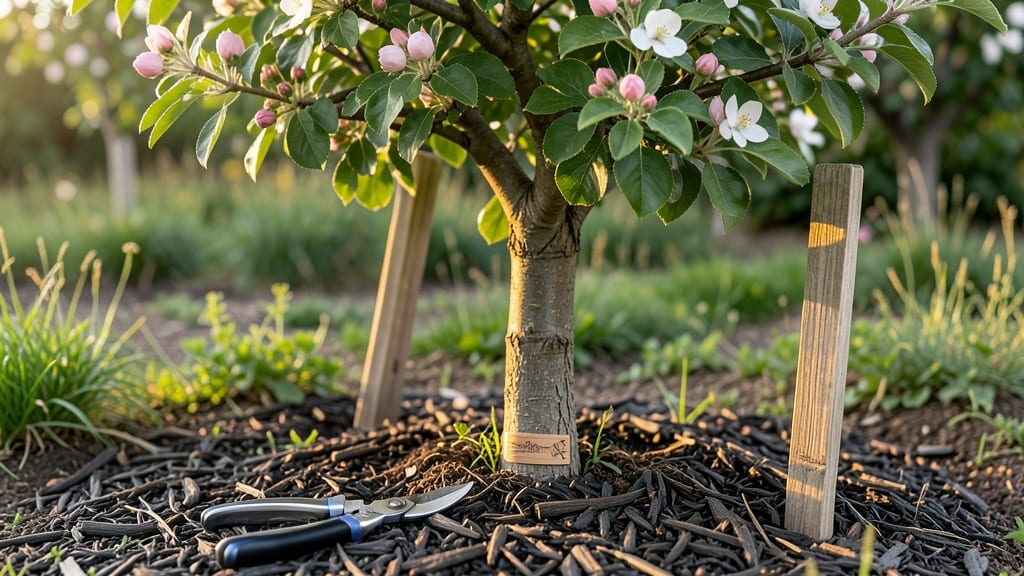
Two fruit varieties on one trunk—imagine that! 🌳 Combination fruit trees let you grow apples and pears, plums and apricots, or cherries and peaches in the same space, doubling your harvest without doubling your yard.
I've seen these trees transform small urban backyards into productive fruit oases, and they're easier to maintain than you'd think.
The magic happens through grafting, where two different scions (young shoots) are fused onto a single rootstock. This creates a single tree with two distinct varieties that fruit at different times, extending your harvest season.
The best part? You save space—ideal for tiny yards, container growing, or even patio planters with dwarf varieties.
By mid-summer, you'll be picking crisp apples alongside sweet pears from the same tree, all while watching bees buzz between blossoms. The trees need standard pruning (just focus on shaping rather than variety-specific techniques) and the same care as regular fruit trees—just with twice the excitement when harvest rolls around.
Perfect for urban gardeners, small-space homesteaders, or anyone tired of choosing between fruit varieties. Here's how to pick the right pairings and get them growing successfully in your climate.
📚 In This Guide
- What you need
- Instructions
- Tips and common mistakes
- Wrapping up and next steps
What you need
- ● Combination fruit tree saplings: 1-3 (choose varieties like apple/pear, plum/apricot, or cherry/plum—ensure they’re grafted for compatibility).
- ● High-quality potting mix: 10-20 lbs (well-draining, organic-rich blend for young trees).
- ● 5-gallon containers or nursery pots: 2-3 (with drainage holes, 12-18 inches deep).
- ● Slow-release fertilizer: 1 lb (balanced 10-10-10 or organic options like composted manure).
- ● Mulch (wood chips or straw): 5-10 lbs (to retain moisture and suppress weeds).
- ● Trowel or hand shovel: 1 (for planting and soil prep).
- ● Pruning shears: 1 pair (sharp, sterilized for cuts).
- ○ Grafting tools (optional): Grafting knife or whip-and-tongue set (if propagating your own grafts).
- ● Watering can or hose with nozzle: 1 (for gentle watering).
- ● Garden gloves: 1 pair (to protect hands from thorns/soil).
- ○ Support stakes (optional): 2-3 (for young trees in windy areas).
- ● Sunlight: Full sun (6-8 hours daily) for optimal growth.
- ● Space: 8-12 feet apart if planting in-ground; adjust for container sizes.
- ● Climate suitability: Check hardiness zones for your chosen fruit varieties.
- ● Water source: Consistent access (drip irrigation or regular watering schedule).
How to plant and care for combination fruit trees
Here’s how to maximize your orchard space while doubling your harvest—just one trunk, two varieties.
🌱 Step 1: Select Compatible Fruit Varieties
Not all fruit trees play well together. Choose varieties that share the same chilling requirements (measured in hours below 45°F) and mature at similar times. For example, a Honeycrisp apple (late season) pairs beautifully with a Fuji apple (early season), while a Bartlett pear and Anjou pear thrive on the same rootstock. Avoid combining apples with stone fruits—their growth habits and nutrient needs differ too much.
Check your local USDA hardiness zone and select varieties labeled for your region. For instance, if you’re in Zone 5, avoid tropical varieties like citrus. I always cross-reference with my county extension service’s fruit tree recommendations to ensure compatibility. This step saves years of frustration down the road.
🪴 Step 2: Purchase Certified Combination Rootstock
Never graft two varieties onto a single tree yourself unless you’re experienced. Instead, buy pre-grafted combination fruit trees from reputable nurseries. These are typically sold as whip-and-tongue grafts or cleft grafts where two scions (young shoots) are joined to a single rootstock. Look for labels specifying the varieties and the rootstock type (e.g., M.9 for dwarf apples or Old Home x Farmingdale for pears).
Inspect the graft union—the point where the two scions meet the rootstock—before purchasing. It should appear swollen but smooth, not cracked or oozing sap. Avoid trees with dieback (dead branches) or suckers (shoots growing below the graft). A healthy combination tree will have two distinct canes emerging from the graft, each with its own set of leaves.
☀️ Step 3: Plant in Full Sun with Proper Spacing
Combination fruit trees need 6-8 hours of direct sunlight daily to produce fruit. Choose a site with well-draining soil—they hate soggy roots. Dig a hole twice as wide as the root ball but only as deep as the root system. If your soil is heavy clay, amend it with 2-3 inches of compost mixed into the bottom of the hole. Avoid fresh manure; it burns young roots.
Space trees 15-20 feet apart to allow airflow, which prevents fungal diseases like apple scab and powdery mildew. Plant in early spring or fall, giving roots 4-6 weeks to establish before extreme temperatures. Water deeply before planting, then backfill with native soil (not amended soil) to avoid disturbing the roots. Tap the soil gently to remove air pockets but don’t compact it.
💧 Step 4: Water and Fertilize for Strong Growth
Water deeply once a week for the first two years, soaking the soil to a depth of 12-18 inches. Use a soil probe to check moisture—if it’s dry at that depth, water again. Drip irrigation is ideal because it delivers water slowly at the base, reducing evaporation and fungal risks. Avoid overhead watering, which can spread diseases like fire blight.
Fertilize in early spring with a balanced 10-10-10 formula, applying ½ pound per inch of trunk diameter. For example, a tree with a 3-inch trunk gets 1.5 pounds of fertilizer. Spread it in a circle 2 feet wider than the canopy, then water thoroughly. Repeat in mid-summer with a low-nitrogen, high-potassium fertilizer (like 5-10-10) to encourage flowering and fruiting. Avoid high-nitrogen fertilizers in late summer—they promote leafy growth at the expense of fruit.
✂️ Step 5: Prune to Encourage Two Canes
Pruning combination trees is critical—you’re shaping two varieties into one structure. In late winter or early spring, remove any suckers (shoots growing below the graft) and dead or crossing branches. Focus on training two main canes (one for each variety) to grow upright and outward. Use hand pruners to make clean cuts just above a bud or branch collar.
Thin out weak, inward-growing branches to improve airflow. Aim for an open-center or central leader shape, depending on the rootstock. For dwarf trees, keep the height under 6 feet for easier harvesting. Prune no more than 25% of the canopy in any one year—over-pruning stresses the tree. After pruning, apply dormant oil spray to prevent pests like aphids and mites from moving in.
Tips & tricks for perfect combination fruit trees
These insider secrets will help you turn your dual-variety tree into a thriving, productive powerhouse.
Variety Pairing Insight: When selecting varieties in Step 1, prioritize those with staggered maturity dates—this extends your harvest season dramatically. For example, pairing a Fuji apple (early season) with a Honeycrisp (late season) gives you fruit from late summer through fall. Cross-check chilling hours using your local extension service's data; even a 50-hour difference can mean one variety fails to fruit while the other thrives. I've seen this firsthand when a Bartlett pear produced abundantly while its Anjou pear partner barely set fruit in the same tree.
Graft Union Inspection: In Step 2, the graft union's health is non-negotiable. Look for a smooth, slightly swollen area where the two scions meet—this indicates proper healing. If you notice any cracks, oozing sap, or dead tissue, return the tree immediately. I learned this the hard way when I planted a tree with a compromised graft that eventually died back completely. Healthy trees will show two distinct canes with their own leaf sets emerging from the graft point—this visual confirmation gives you peace of mind about your investment.
Soil Preparation Strategy: For Step 3's planting, go beyond the basic compost recommendation if your soil is particularly poor. Mix in 2-3 inches of well-aged compost with 1 cup of bone meal (for phosphorus) and 1 cup of kelp meal (for micronutrients) at the bottom of the planting hole. This nutrient boost gives young roots an immediate advantage. The key is to avoid disturbing the root ball when backfilling—gently pat the native soil around the roots to eliminate air pockets without compacting it too much.
Watering Precision: The deep watering schedule in Step 4 requires more attention than it seems. Use a soil probe to verify moisture levels at 12-18 inches—this is often deeper than you'd expect. In my experience, many gardeners water too shallowly, which encourages shallow root growth. For the first two years, consider installing a drip irrigation system on a timer set for 30 minutes once weekly. This ensures consistent moisture without the risk of overhead watering spreading diseases like fire blight.
Pro Tips for Combination Fruit Trees
- These insider secrets will help you turn your dual-variety tree into a thriving, productive powerhouse.
- Variety Pairing Insight: When selecting varieties in Step 1, prioritize those with staggered maturity dates—this extends your harvest season dramatically.
- Graft Union Inspection: In Step 2, the graft union's health is non-negotiable.
Frequently asked questions
Got questions about combination fruit trees? You’re not alone! Here are answers to the most common concerns to help you grow with confidence.
What exactly is a combination fruit tree, and how does it work?
A combination fruit tree is a single trunk that produces two different fruit varieties—like apples and pears or cherries and plums—thanks to grafting. The roots support both fruit types, which grow on separate branches. It’s like having a dual harvest in one compact tree!
How long does it take for a combination fruit tree to bear fruit?
Patience is key! Most combination trees take 3–5 years to produce fruit, depending on the varieties grafted. Dwarf varieties may fruit slightly sooner (2–3 years), while standard sizes can take longer. Prune lightly in early years to encourage growth.
Can I graft my own combination fruit tree at home?
Yes, but it requires skill! Start with a healthy rootstock and compatible scion wood (buds/stems). Use a whip-and-tongue or T-budding method in late winter/early spring. Seal grafts with grafting tape and prune the rootstock above the graft. Pro tip: Sterilize tools with rubbing alcohol to prevent disease!
Do combination trees need special care compared to single-variety trees?
Not much! They thrive with the same care: 6+ hours of sun, well-draining soil, and regular watering. However, watch for uneven ripening—some varieties may fruit earlier than others. Thin fruit clusters to avoid overburdening branches, and fertilize in early spring for balanced growth.
What if one fruit variety doesn’t produce well? Can I replace it?
If one graft fails or underperforms, you can regraft the branch in late winter. Choose a compatible variety and follow the same grafting steps. Just ensure the new scion matches the tree’s rootstock for best results.
Are combination trees suitable for small gardens or containers?
Perfect for space-saving! Dwarf or semi-dwarf combination trees work well in containers (use a 15–20 gallon pot) or tight gardens. Just ensure the container has drainage holes and use a high-quality potting mix. Bonus: Rotate pots occasionally for even growth!
Wrapping up and next steps
Growing combination fruit trees is a game-changer for small gardens or urban spaces—packing double the harvest into one trunk! 🌳🍎🍒 Whether you’re drawn to the convenience of two fruit types or the charm of a dual-purpose tree, these space-saving wonders make gardening smarter and more rewarding.
With the right care, you’ll enjoy a bountiful harvest while keeping your landscape lush and efficient.
Ready to take the next step? Research varieties suited to your climate, pick a healthy sapling, and start planting! Your future self (and your taste buds) will thank you.