
Container Gardens
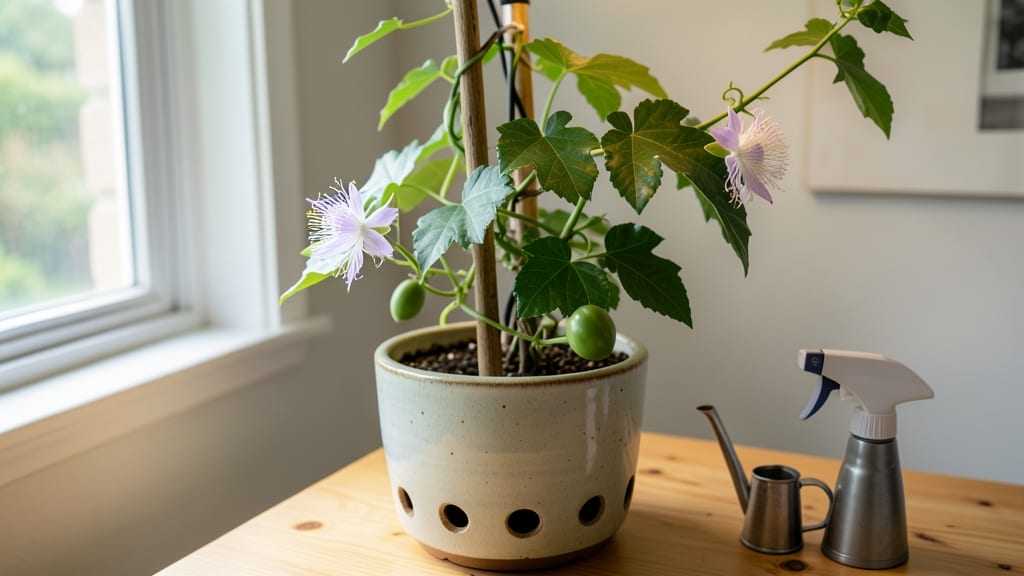
You can grow passion fruit indoors using compact varieties like Passiflora edulis 'Sweetie' or Passiflora coccinea, which thrive with bright indirect light, high humidity (60%+), and consistent warmth (70–80°F). Plant in large pots with drainage, fertilize monthly, and hand-pollinate flowers for fruit development. Expect a 1–2 year wait before harvesting.
Indoor passion fruit cultivation rewards patience with tropical flavors. 🌿 The key to success lies in replicating their natural habitat—bright, indirect sunlight is non-negotiable, so south-facing windows or LED grow lights (12–14 hours/day) are essential.
I've found that maintaining humidity with a pebble tray or humidifier prevents the common issue of leaf curling, while regular pruning encourages bushier growth and more flowers. Since indoor plants often lack natural pollinators, a simple toothbrush pollination method works wonders for fruit set.
For best results, start with disease-resistant dwarf varieties that handle indoor conditions well. These plants aren't just about the fruit—their striking foliage and exotic blooms make them a conversation piece.
Just remember: indoor passion fruit care requires attention to detail, especially when it comes to soil moisture (keep it consistently damp but never soggy) and temperature stability. With the right setup, you can enjoy homegrown passion fruit year-round!
💡 In This Article
- Best Indoor Passion Fruit Varieties and Their Growing Needs
- Indoor Passion Fruit Care: Lighting, Pollination, and Troubleshooting
Best indoor passion fruit varieties and their growing needs
Not all passion fruit varieties thrive indoors—only compact, cold-tolerant species like Passiflora edulis 'Sweetie' or Passiflora coccinea (crimson passion flower) adapt well to container life. These dwarf varieties grow 3–6 feet tall and produce fruit in 1–2 years when given proper care.
The key difference? 'Sweetie' yields edible, grape-sized fruit, while P. coccinea offers stunning ornamental blooms (though its fruit is inedible). Both handle indoor conditions better than tropical giants like Passiflora ligularis, which needs 10+ feet of space.
The real challenge indoors is replicating their tropical needs. These plants demand bright indirect light—south-facing windows provide 6–8 hours of morning sun, but supplement with LED grow lights (4000K–6500K) for 12–14 hours/day if natural light is insufficient.
Without enough light, leaves turn pale and leggy, a sign of etiolation (stretched, weak growth). For soil, use a well-draining mix (60% potting soil + 30% perlite + 10% compost) with a slightly acidic pH (5.5–6.5)—this mimics their native rainforest conditions.
Temperature and humidity are equally critical. Passion fruit plants thrive in 70–80°F ranges but drop leaves below 50°F. Indoors, maintain 60%+ humidity using pebble trays or a humidifier—low humidity causes brown leaf edges. I’ve found that placing pots on elevated saucers with water and misting leaves daily prevents stress.
Overwatering is a common mistake: let the top 1–2 inches of soil dry between waterings to avoid root rot.
Here’s what to watch for: Yellowing leaves often signal overwatering or nutrient deficiency, while dropped buds mean temperature swings or low humidity. Prune leggy stems to 6–8 inches from the base in early spring to encourage bushier growth and more flowers.
The goal is to create a compact, flowering machine—not a towering vine. With the right variety and conditions, you’ll see those iconic 3-inch-wide flowers (and eventually fruit) within 12–18 months.
Pro tip: Rotate your plant quarter-turns weekly to ensure even light exposure. This prevents lopsided growth and keeps the foliage lush. The reward? Homegrown passion fruit with double the flavor of store-bought, plus the satisfaction of growing a tropical plant in your living room.