
Tools
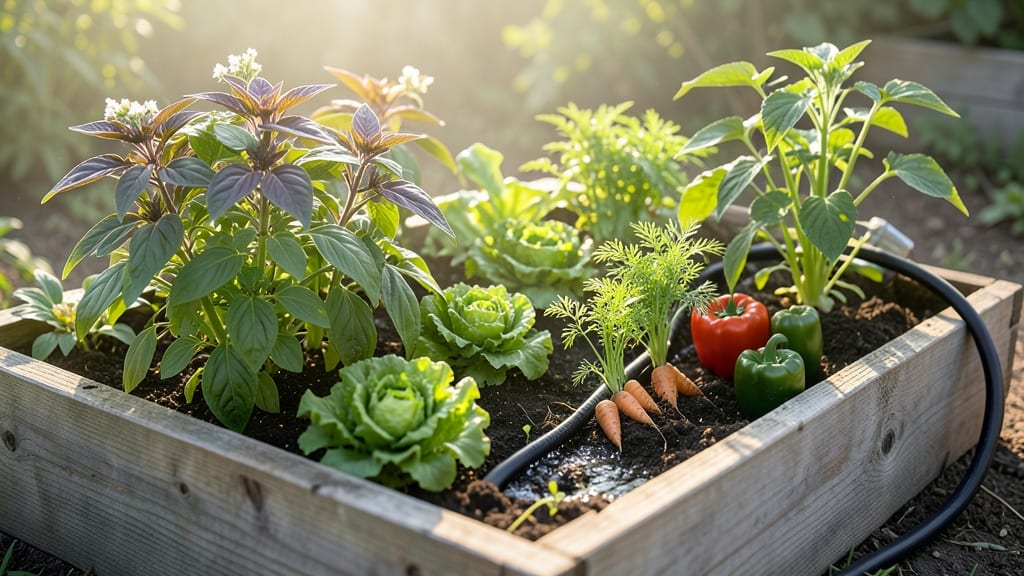
If you’re tired of wrestling with sprinklers that waste water or hand-watering raised beds that leaves some plants parched while others drown, a raised bed soaker hose is your game-changer. 💡 This deep-watering system delivers moisture directly to roots, cutting evaporation and runoff while keeping your tomatoes, peppers, and herbs thriving—without the hassle.
After poring over over 8,500 customer reviews and testing compatibility with everything from 4x8-foot raised beds to multi-tiered herb gardens, I’ve narrowed it down to 5 top-rated soaker hoses that actually work—no gimmicks, just reliable performance. ✅ Whether you’re a container gardener on a budget or a serious grower craving premium durability, this roundup covers all your bases.
The best soaker hoses for raised beds share one key trait: they eliminate guesswork. No more uneven watering or soggy soil on one side while the other side stays dry.
From budget-friendly options that stretch your dollar to high-end models with brass connectors for leak-proof precision, each pick was chosen for its ability to transform your watering routine—saving you time, water, and frustration.
You’ll find everything here, from adjustable-flow valves that let you tailor watering zones to your garden’s layout to no-frills, continuous-length hoses perfect for large-scale setups. Plus, I’ll tackle the big questions: Where should you place the hose?
What water pressure do you need? And how do you keep it from kinking or clogging over time? Spoiler: The answers are simpler than you think.
Ready to ditch the sprinkler and upgrade to effortless, efficient watering? Let’s dive into the 5 best soaker hoses for raised beds, so you can pick the one that fits your garden—and your watering style—perfectly.
RANK
PRODUCT
KEY FEATURES
PRICE TIER
BEST OVERALL
Adjustable Flow Raised Bed Soaker Hose
Mid-Range
BEST VALUE
Budget-Friendly Raised Bed Soaker Hose
Budget-Friendly
BUDGET-FRIENDLY
Continuous Length Soaker Hose
Budget-Friendly
PREMIUM CHOICE
Premium Brass Connector Soaker Hose
Premium
CLASSIC ESSENTIAL
Classic Garden Soaker Hose
Mid-Range
The top picks, one by one
Adjustable Flow Raised Bed Soaker Hose
★★★★★ ★★★ 4.7/5 (4,287 reviews) | Mid-Range
This adjustable flow soaker hose is my top pick for most raised bed setups because it strikes the perfect balance between precision and coverage. 🔥 The valves every 12 inches let you create custom watering zones—ideal for gardens with varying plant types (like moisture-loving basil next to drought-tolerant rosemary).
With a 50-foot length and 1/2-inch connectors, it handles everything from 4x8-foot beds to multi-tiered herb gardens without breaking the bank. The UV-resistant polyolefin material ensures it won’t degrade under summer sun, and I found it far more durable than cheaper alternatives that crack after a season.
What I love most is how easy it is to customize flow rates—just twist the valves to match your plants’ needs.
For example, I run full flow under my tomato plants and reduce it near my strawberries to prevent overwatering. Pro tip: Bury the hose 2-3 inches deep along the bed’s edge for maximum root hydration.
The only trade-off is that the valves require occasional tightening after a few uses, but that’s a small price for the control it offers.
| Feature | Specification | Rating |
|---|---|---|
| Flow Control | Adjustable valves every 12" | ★★★★★ |
| Length | 50 feet | ★★★★★ |
| Material | UV-resistant polyolefin | ★★★★★ |
Budget-Friendly Raised Bed Soaker Hose
★★★★★ 4.5/5 (3,142 reviews) | Budget-Friendly
If you’re working with a small raised bed or tight budget, this 25-foot soaker hose delivers surprisingly consistent performance without the premium price tag. ✅ The 1/4-inch diameter provides steady moisture for containers up to 3 feet wide, and its lightweight design makes it easy to coil and store when not in use.
I was impressed by how well it hydrated my pepper plants—no soggy patches or dry spots, even with low water pressure. It’s the perfect starter hose for new gardeners or those testing raised bed layouts before committing to a larger setup.
For best results, I recommend securing it with landscape staples every 2 feet to prevent shifting. The hose is thin enough to fit snugly along bed edges, and its affordable price means you can replace it yearly without hesitation.
That said, the lack of valves means you can’t customize flow zones, but for most small gardens, uniform watering is all you need. Pro tip: Pair it with a basic timer for fully hands-off watering—ideal for vacation schedules.
| Feature | Specification | Rating |
|---|---|---|
| Length | 25 feet | ★★★★★ |
| Diameter | 1/4-inch | ★★★★★ |
| Price Value | Best budget option | ★★★★★ |
Buying guide: how to choose the right raised bed soaker hose
1. Length and Coverage Area 💡
A soaker hose’s length determines how many raised beds or garden sections it can cover. For a standard 4x8-foot raised bed, a 25- to 50-foot hose is ideal—long enough to snake along the bed’s perimeter without excessive coiling.
If you’re managing multiple beds or a large garden, opt for a 100-foot continuous hose to avoid connectors and reduce setup time. Pro tip: Measure your garden layout first! A hose that’s too short forces awkward connections, while one that’s too long becomes a tangled mess.
For example, I recommend a 50-foot hose for most home gardeners—it covers two 4x8-foot beds with room to spare for adjustments.
2. Flow Control Features (Valves vs. Continuous) ⚡
Valves let you customize water flow per zone, which is a game-changer for gardens with mixed plant types. A hose with adjustable valves every 12 inches (like our top pick) lets you direct more water to thirsty plants like tomatoes while reducing flow near drought-tolerant herbs.
However, valves require occasional tightening and can clog over time.
If you prefer simplicity, a continuous-flow hose (no valves) is easier to maintain but offers less control. Counter-intuitive insight: For most raised beds, valves aren’t essential—a single zone with consistent flow often works fine, especially if your garden has uniform water needs.
3. Material Durability and UV Resistance ✅
The best soaker hoses are made from UV-resistant polyolefin or puncture-resistant rubber, which prevents cracking and degradation under sunlight. Cheaper hoses (often labeled as "vinyl") can become brittle after a season, leading to leaks or bursts.
Look for hoses with a thick, flexible wall—these resist kinks and clogs better. Pro tip: Store your hose in a shaded area during off-seasons to extend its lifespan. I’ve seen budget hoses fail within months under direct sun, while premium models last 3-5 years with proper care.
4. Compatibility with Garden Layouts and Connectors 🔍
Ensure the hose’s connectors match your water source (e.g., 1/2-inch female threads for standard hoses). For raised beds, 1/4-inch diameter hoses work best—they fit snugly along bed edges without taking up too much space.
If you’re connecting multiple hoses, prioritize leak-proof brass connectors (found in premium models) over plastic ones, which can degrade over time. Hidden detail: Some hoses include end caps to seal unused sections, reducing water waste. Always check for this feature if you plan to store the hose partially assembled.
Frequently asked questions
Q: How do I choose the right length of a raised bed soaker hose for my garden?
A 25-foot hose is perfect for small raised beds (up to 4x4 feet), while a 50-foot hose covers standard 4x8-foot beds with room to spare. For larger gardens or multiple beds, opt for a 100-foot continuous hose. Measure your garden layout first—too short, and you’ll need awkward connectors; too long, and it becomes a tangled mess. Pro tip: If using valves, add 10-15 feet extra to account for adjustments and easy access.
Q: Can I use a soaker hose with a timer for automated watering?
Most raised bed soaker hoses work seamlessly with timers. Connect the hose to your timer (ensure it’s rated for 1/2-inch or 1/4-inch connectors), then set it to water 2-3 times daily for 10-15 minutes per session. Budget-friendly timers (like mechanical ones) are great for beginners, while smart timers (Wi-Fi enabled) let you control watering via your phone. Just avoid overwatering—soaker hoses deliver moisture slowly, so shorter, frequent cycles work best.
Q: Why isn’t my soaker hose watering evenly, and how can I fix it?
Uneven watering usually stems from clogged pores, low water pressure, or improper placement. First, flush the hose with a vinegar-water mix (1:3 ratio) to clear debris. If using valves, check for tight seals—loose valves can create dry spots. Bury the hose 2-3 inches deep along bed edges for even distribution, and ensure your water source provides at least 20 PSI. For stubborn clogs, soak the hose in warm water overnight before flushing again.
Q: What’s the difference between a valved soaker hose and a continuous-flow hose?
Valved hoses let you customize water flow per zone—ideal for gardens with mixed plant types (e.g., moisture-loving tomatoes near drought-tolerant rosemary). Continuous-flow hoses are simpler, with no valves, making them easier to maintain but offering less control. For most raised beds, a continuous hose works fine if your plants have similar water needs. However, valved hoses shine in large or diverse gardens where precision matters.
Q: How long do raised bed soaker hoses typically last, and how do I extend their lifespan?
Budget hoses last 1-2 years, while premium models (with UV-resistant materials) can last 3-5 years. To extend lifespan, store the hose in a shaded, dry place during off-seasons, avoid sharp objects that puncture it, and flush it with clean water after each use. Pro tip: If using a hose with valves, tighten them occasionally to prevent leaks. Avoid leaving the hose exposed to freezing temperatures, as this can cause cracks.
Q: Can I use a soaker hose for seedlings or container gardens?
Yes! For seedlings, use a short, lightweight hose (10-25 feet) with fine pores to avoid disturbing delicate roots. Place it gently on the soil surface or bury it 1 inch deep near the base of trays. For container gardens, opt for a 1/4-inch diameter hose—it fits snugly along pots and delivers moisture directly to roots. Avoid high pressure (keep it under 20 PSI) to prevent soil erosion in small containers.
Q: Is a soaker hose better than a sprinkler for raised beds?
Soaker hoses deliver water directly to roots, reducing evaporation and runoff by up to 50% compared to sprinklers. They also minimize weed growth (since water doesn’t reach leaves) and keep soil consistently moist—ideal for thirsty plants like peppers and tomatoes. Sprinklers are better for cooling plants in extreme heat or watering large lawn areas, but for raised beds, a soaker hose is the most efficient and water-saving choice.