
Companion Plants
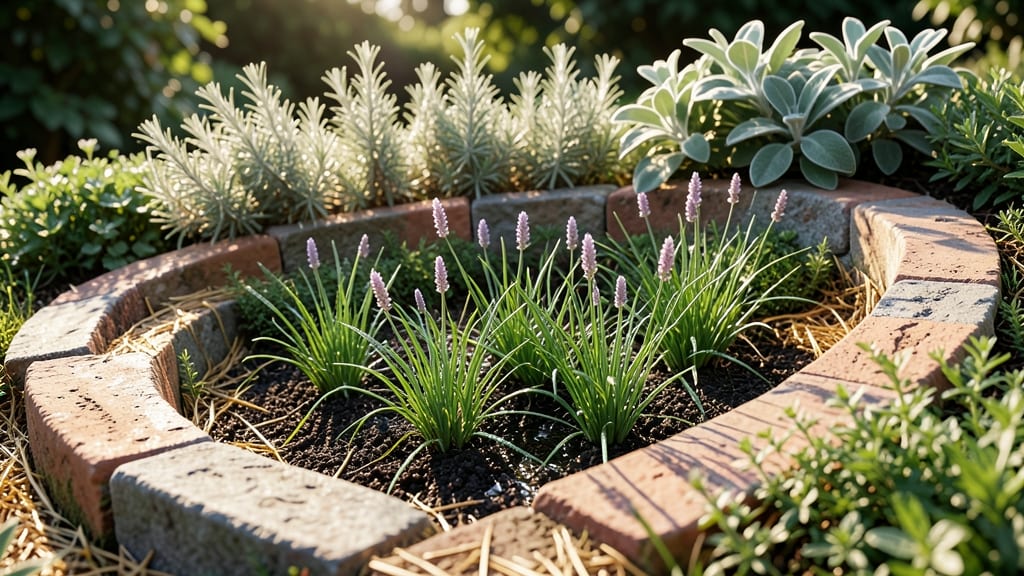
Struggling to fit the most productivity into small garden spaces? These 10 raised bed companion planting layouts prove that smart plant pairings can dramatically increase yields while naturally repelling pests and boosting growth—perfect for urban gardeners and homesteaders alike.
Three Sisters Garden Layout
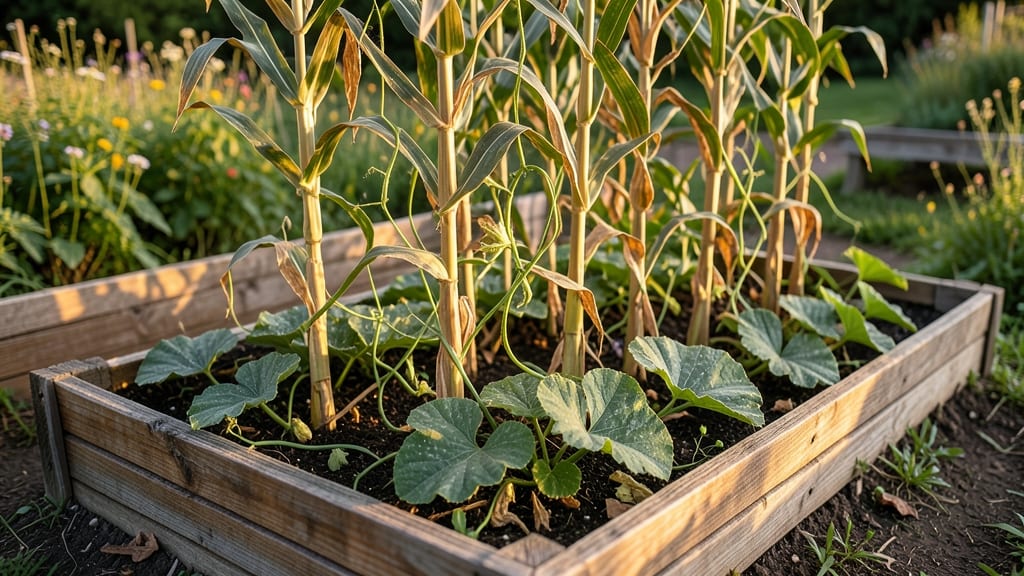
Looking for a low-maintenance garden layout that yields big results with minimal effort? The Three Sisters method—inspired by Native American traditions—combines corn, beans, and squash in a symbiotic trio that thrives together while naturally suppressing weeds and pests.
Plant corn first as the vertical support for pole beans, which fix nitrogen in the soil, feeding both the corn and sprawling summer squash or pumpkins. The squash’s large leaves act as living mulch, retaining moisture and blocking weeds. This layout works perfectly in a 4x4-foot raised bed, making it ideal for small spaces or beginners.
With just one planting, you’ll harvest ears of corn, fresh beans, and squash—all while improving soil fertility. It’s the ultimate self-sustaining garden that rewards patience with abundant yields. 🌱
Mediterranean Herb and Tomato Tower
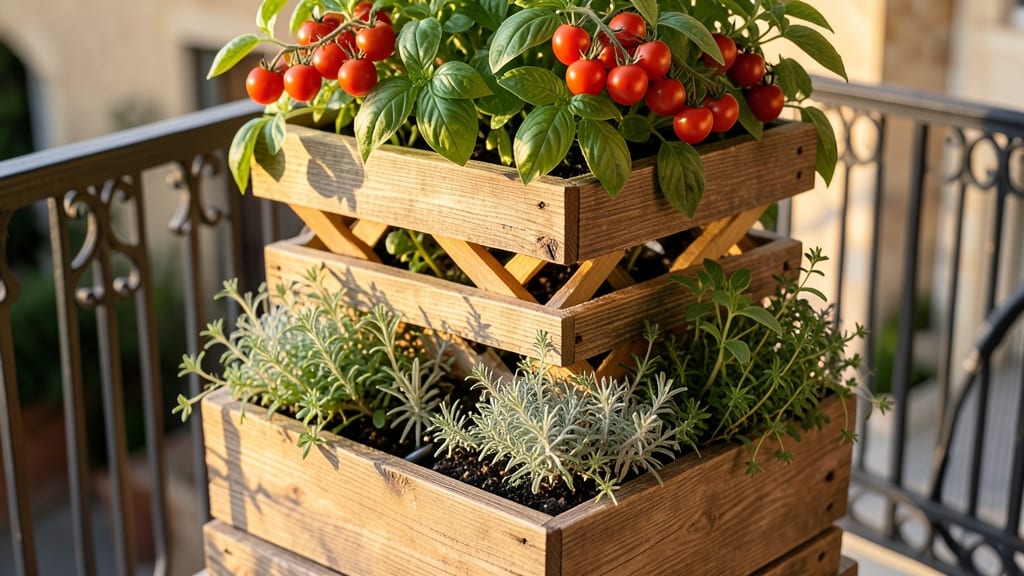
Turn your balcony into a flavor-packed Mediterranean paradise with a vertical herb and tomato tower—where every inch of space works for you. This tiered design lets you grow cherry tomatoes at the top, basil in the middle, and oregano/thyme at the base, all while creating a natural pest-deterrent system that boosts tomato productivity.
Start by building a 3-tier wooden or fabric pocket planter (or use stacked containers) with well-draining soil. Plant tomatoes at the top where they’ll get 6+ hours of sun, then nestle basil in the middle tier—its strong scent repels whiteflies and enhances tomato flavor. Fill the bottom with oregano and thyme, which deter aphids and attract pollinators. Water from the top to ensure even moisture distribution.
This layout is a game-changer for urban gardeners or anyone with limited space—it’s compact, productive, and doubles as a living pest-control system. Plus, you’ll harvest fresh herbs and tomatoes within weeks! 🌱
Pest-Repellent Cabbage Family Bed
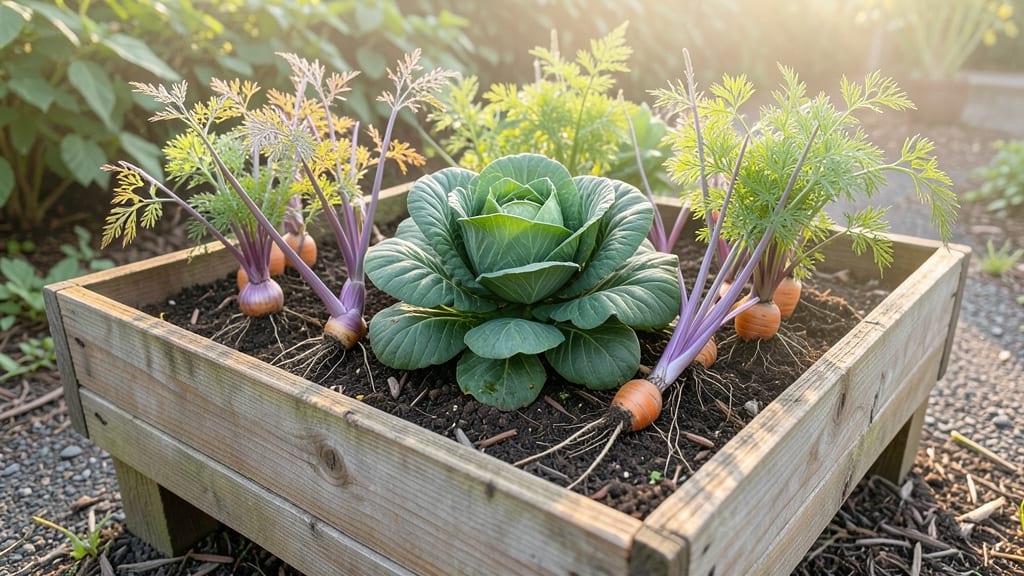
Tired of losing your cabbage harvests to cabbage moths and aphids? This pest-repellent bed combines three powerhouse vegetables that work together to protect each other while improving your soil's long-term health.
Plant cabbage in the center of your raised bed, surrounded by onions and carrots. The strong scent of onions confuses cabbage moths, while carrots deter aphids with their natural compounds. All three plants share similar growing conditions—full sun to partial shade and well-draining soil—making this layout effortless to maintain. For best results, space cabbage heads 18 inches apart, onions 6 inches apart, and carrots 2-3 inches apart in rows.
This layout is a game-changer for organic gardeners who want to reduce chemical pesticides. The improved soil structure from these deep-rooted plants also means healthier harvests year after year. 🌱
Square Foot Salad and Flower Pollinator Bed
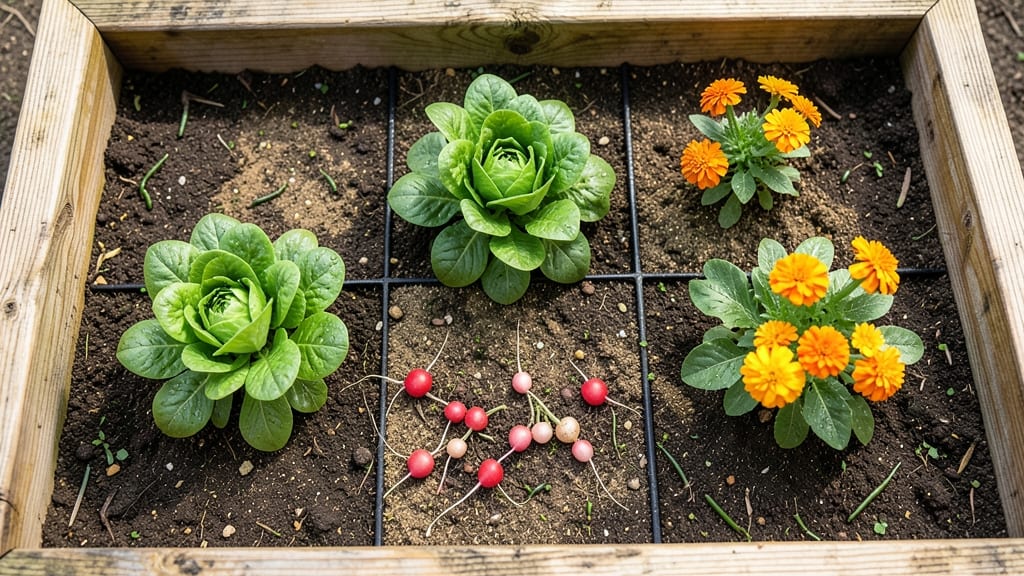
Want a salad bed that feeds both you and the bees? This square foot pollinator garden combines crisp lettuce, peppery radishes, and fragrant marigolds in a 12-inch grid—creating a triple win for harvest, pest control, and pollinator support.
Start by dividing your raised bed into 12-inch squares. Plant 4 lettuce seedlings (like buttercrunch or romaine) in each square, then add 4 radish seeds around the edges. Tuck 1-2 marigold plants in the center—their bright blooms attract ladybugs and bees while repelling aphids. Succession plant radishes every 2 weeks for continuous harvests, while the marigolds provide year-round color and pest protection.
This layout is perfect for urban gardeners with limited space or beginners practicing succession planting. You’ll enjoy fresh greens while supporting local ecosystems—no pesticides required! 🌻
Peppers and Strawberries Companion Layout
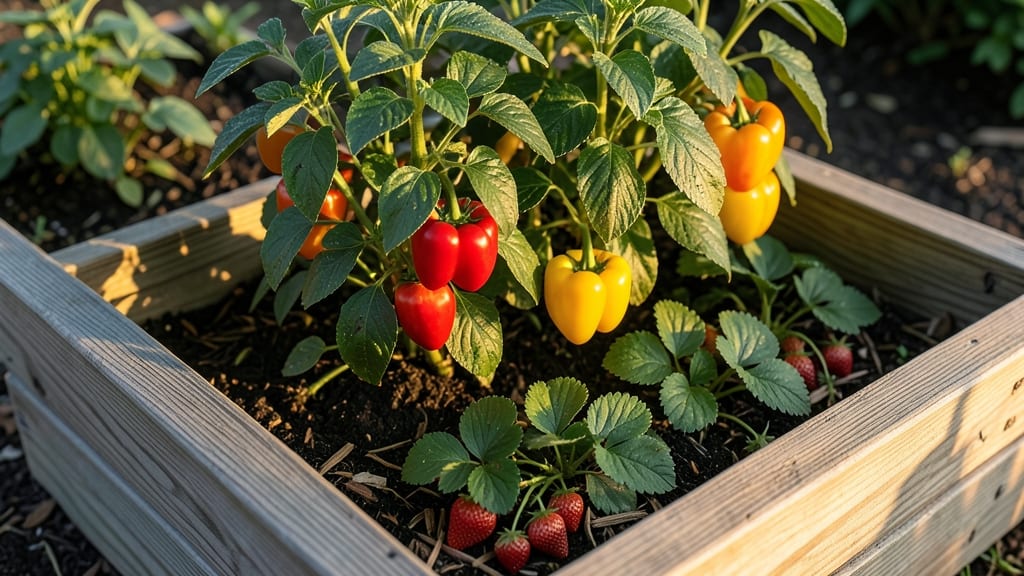
If you're working with limited space but still want a high-yield, low-maintenance garden, try pairing peppers and strawberries—a dynamic duo that maximizes vertical and horizontal real estate. The peppers provide shade for the strawberries while their strong scent naturally deters slugs and other pests, protecting your berries without chemicals.
Start by planting bell peppers or jalapeños along the edges of your raised bed or container, allowing them to grow 12-18 inches tall. Beneath their foliage, tuck in strawberry plants with their runners trailing outward. This setup works especially well in 4-foot-wide raised beds or even large containers, where peppers act as a living trellis for the sprawling berries. Mulch with straw to retain moisture and suppress weeds, and harvest strawberries as they ripen while the peppers mature overhead.
This layout is ideal for urban gardeners, balcony growers, or anyone with limited space who wants both sweet and spicy harvests. The peppers’ shade also protects strawberries from scorching in hot afternoons, making this combo a win for small-scale, high-productivity gardens. 🌱
Potato and Garlic Pest-Defense System
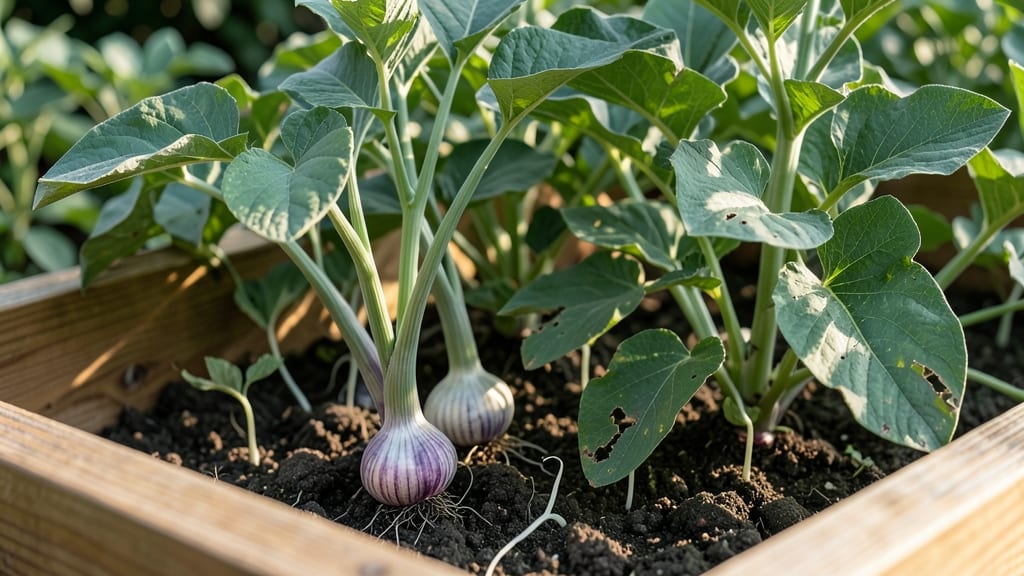
Tired of battling Colorado potato beetles ruining your harvest? Planting garlic alongside your potatoes creates a natural pest-repellent duo that also enhances flavor—no chemicals required. This dynamic pairing works especially well in cool-season gardens where potatoes thrive.
Start by planting garlic cloves around the perimeter of your potato bed or interspersing them every 12 inches. The strong aroma of garlic confuses beetles while its sulfur compounds improve the potatoes' taste. For best results, choose hardneck garlic varieties that mature early, aligning with potato harvest times. This method also suppresses fungal diseases like blight, giving you healthier tubers.
Northern climate gardeners will love this low-maintenance solution—it’s perfect for raised beds where you can easily control spacing and soil conditions. Try it this spring for a pest-free, flavor-packed harvest. 🌱
Cucumber and Nasturtium Trellis Bed
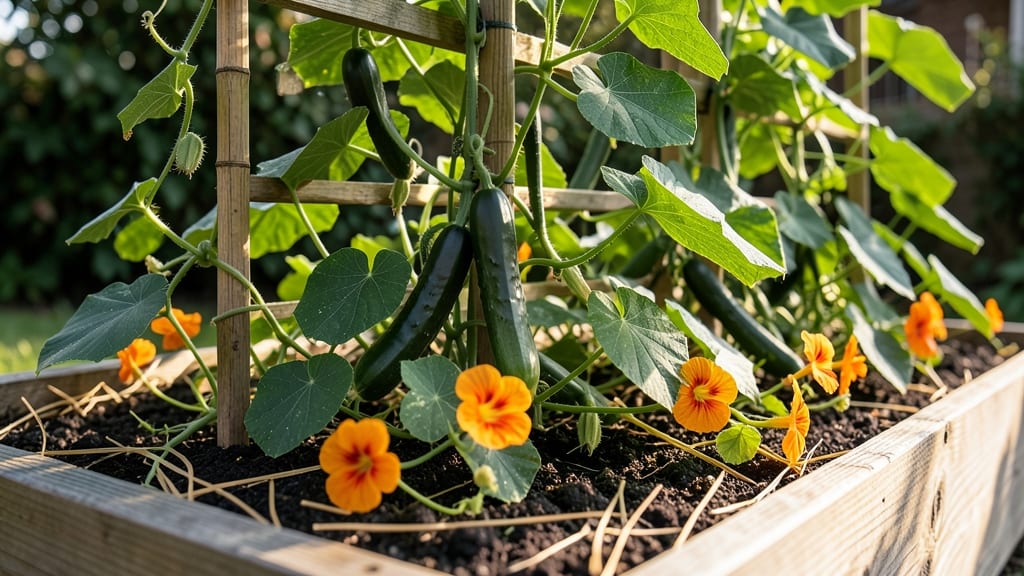
Want to grow more cucumbers in less space while keeping pests at bay? A cucumber and nasturtium trellis bed combines vertical growing with natural pest control—no chemicals needed. The bright orange nasturtiums act as a trap crop, luring aphids away from your cucumbers while adding edible flowers to your harvest.
Install a 6-foot vertical trellis along one side of your raised bed, planting bush or vining cucumbers at the base. Interplant nasturtiums around the cucumber roots—their peppery leaves deter pests, and their trailing vines create a living mulch. This setup maximizes vertical space, allowing you to grow 2-3 times more cucumbers in the same footprint while reducing aphid damage by up to 70%.
Perfect for small urban gardens or balcony containers, this layout is especially great for gardeners who want high yields without sprawling vines. Just remember to harvest nasturtiums regularly to keep them producing! 🌿
Onion and Carrot Root Protection Bed
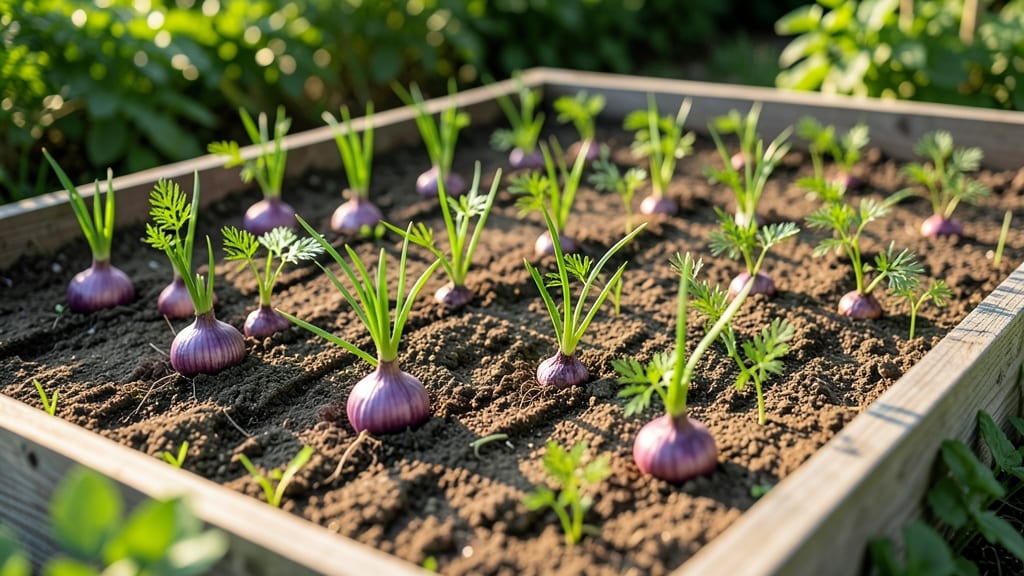
Struggling with carrot fly infestations ruining your harvest? This clever onion-carrot duo solves the problem while doubling your yield in the same space—no pesticides needed.
Plant onion sets every 6 inches alongside carrot seeds in loose, well-draining soil. The strong onion scent confuses carrot flies, reducing damage by up to 90%. Both plants thrive in full sun and share similar watering needs, making maintenance effortless. For best results, harvest onions first (after 10-12 weeks) to give carrots more room to mature.
This layout is ideal for urban gardeners with limited space or anyone wanting to simplify pest control. You’ll enjoy two harvests from one bed while improving soil structure through their complementary root systems. 🌱
Basil and Tomato Flavor-Boosting Bed
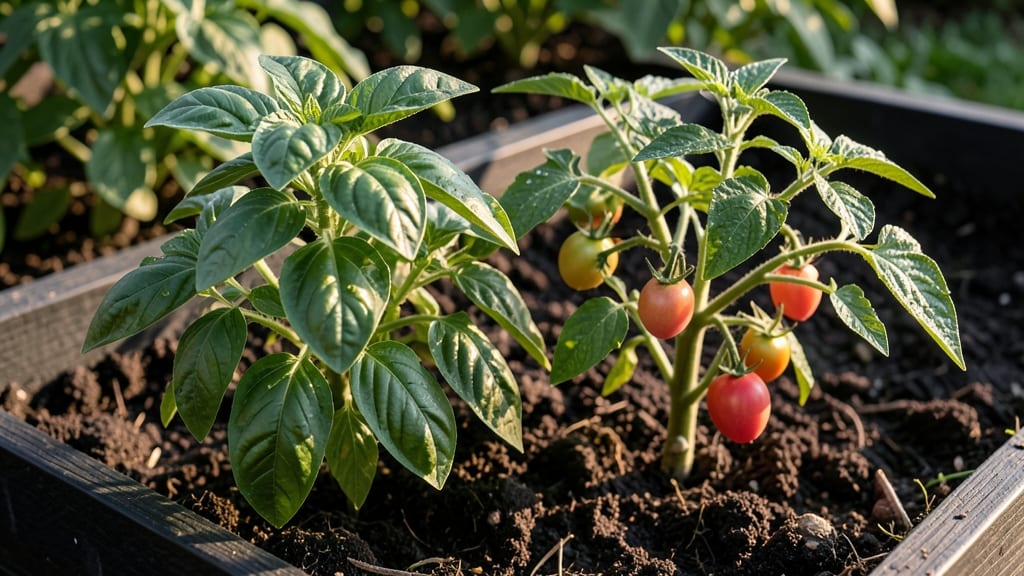
Want tomatoes that taste like they came straight from a gourmet garden? Planting basil directly alongside your tomato plants isn’t just a culinary trick—it’s a flavor-boosting, pest-repelling powerhouse. The aromatic oils in basil enhance tomato flavor while naturally deterring whiteflies, making this the ultimate compact companion pairing.
Start by planting bush or dwarf tomato varieties (like 'Tiny Tim' or 'Patio Princess') in a 2x2-foot raised bed or container, then nestle basil plants around the base. Space tomatoes 12-18 inches apart and basil 6-8 inches apart for optimal airflow. Both thrive in full sun (6-8 hours daily) and well-draining soil, making this combo effortless to maintain. Pinch off basil flowers to encourage leaf growth, and harvest regularly to promote bushier plants.
This layout is perfect for urban gardeners, balcony growers, or anyone with limited space who wants restaurant-quality tomatoes without the sprawl. The basil’s pest-repelling properties also mean fewer chemicals and healthier plants—just plant, water, and enjoy the flavor explosion! 💚
Herb Spiral for Year-Round Productivity

Ready to create a low-maintenance, year-round herb garden that thrives with minimal effort? A herb spiral transforms a small space into a productive, self-sustaining bed where rosemary, sage, and chives flourish in their own microclimates—dry at the top, moist in the middle, and shaded at the bottom.
Start by shaping your spiral on a slight slope, using stones or bricks to create the raised edges. Place drought-tolerant herbs like rosemary and thyme at the top where they’ll get the most sun and airflow, while moisture-loving chives and parsley thrive in the shadier, damper center. The spiral’s design naturally channels water to where it’s needed most, reducing irrigation needs by up to 50%. Add a layer of compost-rich soil and mulch with straw to retain moisture and suppress weeds.
This design is a permaculture dream for gardeners who want year-round access to fresh herbs with almost no maintenance. Perfect for small yards, urban balconies, or even container gardens, it’s the ultimate space-saving solution for those who love cooking with homegrown flavors. 💚