
Container Gardens
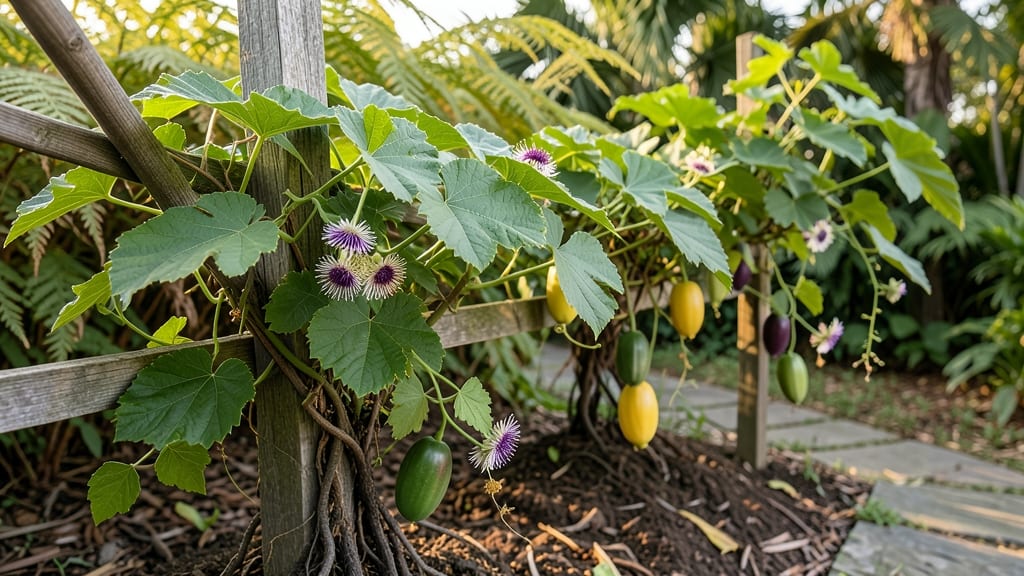
Passion fruit grows best in USDA Hardiness Zones 8 through 11, where frost-free winters and warm temperatures create perfect conditions for vigorous vines and abundant fruiting. Cooler climates demand special care like container growing or winter protection.
The tropical nature of passion fruit explains why Zones 8-11 are ideal—these regions provide the consistent warmth and humidity the plant craves. 🌿 Without frost risk, vines can grow year-round, producing fruit continuously. Outside these zones, even a single cold snap can damage tender leaves or kill the plant entirely.
I've seen gardeners in Zones 7 and below succeed by using insulated containers or moving plants indoors during winter, which mimics the tropical conditions passion fruit loves.
What sets passion fruit apart is its sensitivity to temperature shifts. Unlike many tropical plants, it can't tolerate even brief cold snaps below 30°F. That's why I always recommend checking your local frost dates before planting—if your area gets chilly nights, container growing with winter wraps becomes essential.
The right setup can turn a marginal climate into a thriving passion fruit garden!
💡 In This Article
- Understanding Passion Fruit Climate Requirements
- Adapting Passion Fruit Cultivation to Non-Ideal Zones
Understanding passion fruit climate requirements
Passion fruit's tropical origins demand specific climate conditions that explain why USDA Zones 8-11 are optimal. The plant's native habitat in South America's warm, humid regions translates directly to its agricultural needs. Here, temperatures consistently stay above 60°F year-round, with summer highs often reaching 90°F or higher.
This warmth triggers continuous vine growth and flowering - a process that slows dramatically below 50°F, where new leaves yellow and growth halts.
The real damage comes from frost. Passion fruit vines can't tolerate temperatures below 30°F, where ice crystals form in plant cells and cause irreversible damage. Even light freezes (32°F) blacken leaves and stress the plant, reducing next year's fruit production by up to 40%.
In ideal zones, the plant's natural dormancy cycle aligns with summer's heat and winter's mildness, creating perfect conditions for 2-3 harvests annually.
The high humidity (60-80%) in these zones also prevents the plant's thick leaves from drying out, which is crucial since passion fruit loses water rapidly through its large surface area.
Sunlight requirements further explain the zone limitations. Passion fruit needs 6-8 hours of direct sunlight daily, which becomes challenging in cooler climates where shorter daylight hours and cloud cover reduce light exposure.
In Zones 8-11, the longer growing season allows vines to reach their 20-30 foot mature height while producing fruit continuously.
The combination of warmth, humidity, and sunlight creates the perfect storm for passion fruit's rapid growth rate - vines can grow 12 inches per week during peak season when conditions are ideal.
Soil conditions play a supporting role in these zones. Passion fruit thrives in well-draining, slightly acidic soil (pH 6.0-7.0) that retains moisture without becoming waterlogged. The warm climate helps maintain consistent soil temperatures, which is critical since passion fruit roots are sensitive to cold soil.
In cooler zones, soil temperatures often drop below 55°F in spring, shocking the roots and delaying growth by 3-4 weeks compared to ideal climates. This delay disrupts the plant's natural flowering cycle, often resulting in sparse fruit production.
What most gardeners don't realize is how humidity interacts with these other factors. The tropical climate's consistent moisture prevents the plant's characteristic "woody" growth that occurs when passion fruit experiences dry periods. In arid conditions (common in some Zone 10 areas), vines become tough and less productive.
The ideal balance of warmth, humidity, and sunlight creates the lush, productive vines that yield those 1-2 inch tropical fruits we know and love. 🌿