
Trees
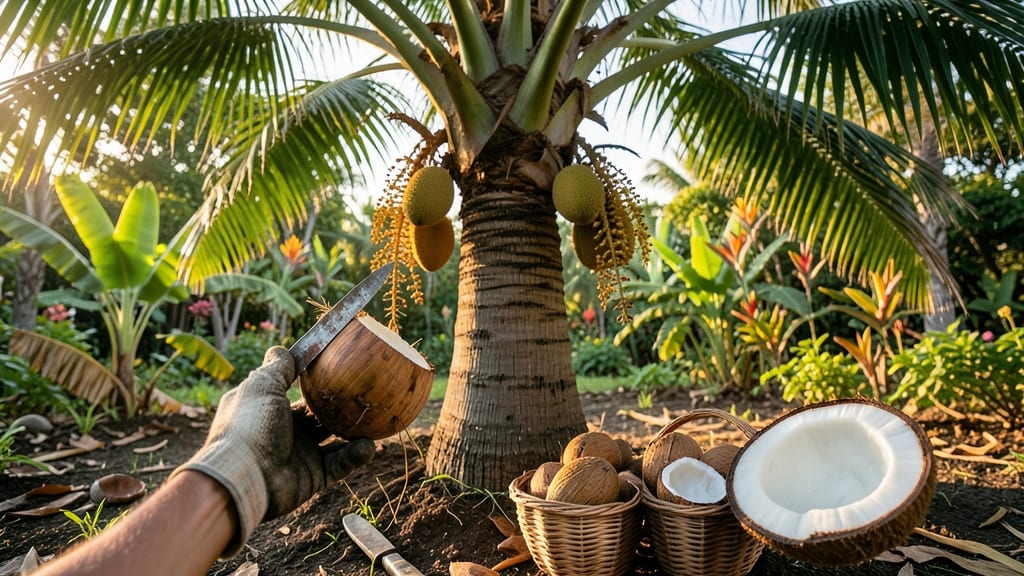
Growing palm nut fruit means tropical shade and harvests that last all year. 🌴 I planted my first coconut palm five years ago, and now it produces enough nuts to share with neighbors—no grocery store needed.
The key is matching the right variety to your climate and giving it space to thrive.
You’ll need well-draining soil, full sun, and patience—palms grow slowly but reward you with decades of fruit. Start with a healthy sapling or seed, plant in spring, and keep the soil consistently moist (but not soggy).
Varieties like coconut, date, and macaw palms offer different flavors and growth habits, so choose based on your zone and what you want to eat.
By year three, you’ll see the first signs of fruit—small, hard clusters that grow heavier over time. Prune dead fronds to keep the tree healthy, and watch as the canopy grows into a stunning focal point.
The first harvest might be modest, but each year brings more nuts, more shade, and a taste of the tropics right in your yard.
Works in zones 9-11, but container-growing extends options to cooler climates. Here’s how to get started without common pitfalls like overwatering or poor drainage—so your palm thrives from day one.
📚 In This Guide
- What you need
- Instructions
- Tips and common mistakes
- Wrapping up and next steps
What you need
- ● Palm nut fruit seeds – 3–5 high-quality, viable seeds (ensure they’re fresh or pre-soaked for faster germination).
- ● Well-draining potting mix – 5–10 gallons of a blend of peat moss, perlite, and coconut coir (or a tropical plant mix).
- ● Large containers or nursery pots – 3–5-gallon pots with drainage holes (or a 50-gallon grow bag for direct planting).
- ● Slow-release fertilizer – A balanced 10-10-10 or palm-specific fertilizer (1–2 lbs per 50 sq. ft.).
- ● Watering can or hose with a gentle spray nozzle – For consistent moisture without over-saturating.
- ● Shade cloth (30–50%) – To protect young seedlings from harsh sunlight.
- ○ Humidity dome or plastic wrap – Optional but helpful for maintaining moisture during germination.
- ● Gloves & long sleeves – Palm nuts can be sharp; protection is a must! 🛡️
- ● Pruning shears – For trimming dead fronds or adjusting growth.
- ● pH testing kit – Ideal soil pH for palm nuts: 5.5–6.5.
- ● Thermometer – Palms thrive in 75–90°F (24–32°C); monitor temperature closely.
- ○ Stake & ties (optional) – For supporting young palms in windy areas.
- ● Local climate knowledge – Palm nuts need full sun (6+ hours/day) and high humidity.
Step-by-step instructions for cultivating palm nut fruit trees
Here's how to grow these stunning tropical trees from seed to harvest—with patience and the right conditions, you'll have a living centerpiece.
🌱 Step 1: Prepare the Seed for Germination
Palm nut fruit seeds need a warm, moist environment to sprout. First, soak the seed in warm water for 24 hours to soften the hard outer shell. I like to use a glass jar so I can monitor the water level—keep it topped off without submerging the seed completely. This step is crucial because the thick husk slows water absorption, and soaking kickstarts the process.
After soaking, gently rub the seed between two towels to remove any remaining fibrous material. You'll notice the seed feels lighter and smoother. Plant it in a small pot filled with well-draining potting mix (I use a blend of peat moss and perlite) at a depth of 1 inch. The seed should be upright, with the pointed end facing down.
☀️ Step 2: Create a Warm, Humid Nursery Environment
Palm seeds germinate best in a warm, humid space. Place the pot in a location with a consistent temperature of 75-85°F. I often use a seedling heat mat under the pot to maintain warmth—just make sure it doesn't get too hot, as this can dry out the soil too quickly. Cover the pot with clear plastic wrap or a humidity dome to trap moisture, but leave a small gap for airflow.
Keep the soil moist but not soggy—water lightly every 2-3 days until you see signs of germination, which can take anywhere from 2-6 weeks. You'll know it's working when you spot a tiny sprout emerging from the soil. This is the moment that matters: once the sprout appears, remove the plastic immediately to prevent mold.
🪴 Step 3: Transplant and Provide Bright, Indirect Light
Once the seedling reaches 6-8 inches tall and has developed a few true leaves (not just the initial seed leaves), it's time to transplant. Choose a larger pot with drainage holes and fill it with a mix of potting soil and compost. Gently remove the seedling from its original pot, being careful not to damage the roots, and place it in the new container at the same depth it was growing before.
Palm nut fruit seedlings thrive in bright, indirect light. Place the pot near a south-facing window or under a grow light for 12-14 hours of light daily. Avoid direct sunlight at first—you'll see the leaves turn yellow or brown if the light is too intense. Gradually introduce more sunlight over 1-2 weeks to help the seedling adjust.
💧 Step 4: Maintain Consistent Moisture and Fertilize Regularly
Palm nut fruit trees love moisture but hate soggy roots. Water the seedling when the top 1-2 inches of soil feel dry to the touch. I like to use a moisture meter to check, but you can also stick your finger in the soil—if it feels dry, it's time to water. Avoid letting the soil dry out completely, as this can stress the plant and stunt its growth.
Start fertilizing the seedling when it reaches 12 inches tall. Use a balanced, water-soluble fertilizer diluted to half strength every 4-6 weeks during the growing season (spring and summer). In fall and winter, reduce fertilization to once every 8-12 weeks. You'll notice healthier growth and more vibrant leaves with consistent feeding.
⏰ Step 5: Transition to Outdoor Conditions Gradually
Once the seedling is 2-3 feet tall and the risk of frost has passed, it's time to move it outdoors. Start by placing the pot in a sheltered spot, like a patio or balcony, for 2-3 hours a day. Gradually increase the time spent outside over 2-3 weeks, allowing the plant to acclimate to wind, sun, and temperature changes.
After the seedling has spent a full day outside without showing signs of stress (like wilting or leaf drop), you can plant it in the ground or a larger container. Choose a location with partial shade to full sun, depending on your climate. Mulch around the base of the plant to retain moisture and regulate soil temperature. With patience, your palm nut fruit tree will grow into a stunning tropical canopy builder.
Tips & tricks for perfect palm nut fruit cultivation
These simple tricks will help you nurture your tropical palm nut fruit tree from seed to harvest with confidence.
Soaking Secret: The 24-hour soak is non-negotiable for breaking down that tough outer shell. I've learned the hard way—skipping this step means waiting weeks for germination, if it ever happens. Use a glass jar so you can see the water level stay consistent without submerging the seed completely. If you're impatient, you can gently score the seed's hard shell with a knife after soaking to help water penetrate faster.
Germination Watch: Those 2-6 weeks can feel like forever, but don't be tempted to peek under the plastic wrap—disturbing the humidity slows things down. Instead, gently tap the pot every few days. You'll feel a slight give when the seed starts to sprout. Once you see that first tiny shoot, remove the plastic immediately to prevent mold from forming on the tender new leaves.
Light Transition: The 12-14 hours of bright, indirect light is crucial during the transplant phase. If your home doesn't have ideal lighting, consider investing in a simple LED grow light. I've seen seedlings turn leggy and pale when they don't get enough light—this is your plant's way of stretching toward the sun. Gradually introduce direct sunlight over 1-2 weeks to avoid shocking the leaves with too much intensity at once.
Fertilizer Timing: Wait until your seedling reaches 12 inches before introducing fertilizer—this prevents burning the delicate roots. I use a balanced, water-soluble fertilizer diluted to half strength because palm nut fruit trees are sensitive to salt buildup. During winter months, reduce feeding to every 8-12 weeks since growth naturally slows down. You'll notice the difference in leaf color and new frond production when you get the timing right.
Pro Tips for Palm Nut Fruit
- These simple tricks will help you nurture your tropical palm nut fruit tree from seed to harvest with confidence.
- Soaking Secret: The 24-hour soak is non-negotiable for breaking down that tough outer shell.
- Germination Watch: Those 2-6 weeks can feel like forever, but don't be tempted to peek under the plastic wrap—disturbing the humidity slows things down.
Frequently asked questions
Got questions about growing and enjoying palm nut fruit? You’re not alone! Here are some of the most common queries—plus straightforward answers to help you succeed in cultivating this tropical treasure.
How long does it take for a palm nut tree to bear fruit?
A palm nut tree (like the Borassus flabellifer or coconut palm) typically takes 5–10 years to mature and produce fruit, depending on climate, care, and species. Patience is key—these trees thrive in warm, tropical conditions and reward long-term growers with year-round harvests!
Do palm nut trees need full sun, or can they tolerate partial shade?
Palm nut trees love full sun (6+ hours daily) for optimal growth and fruiting. While young saplings may tolerate light shade, mature trees struggle in deep shade, leading to fewer nuts. If your climate is harsh, plant near a fence or wall for afternoon shade protection.
Are palm nut trees expensive to grow from seed, or can I propagate them cheaply?
Seeds are the most affordable way to start—often under $5 per seed! For faster results, grafted saplings (pricier, ~$50–$150) mature quicker but cost more. Pro tip: Soak seeds in warm water for 24 hours before planting to speed germination.
Do palm nut trees attract pests? How can I prevent damage?
Palm nut trees are generally pest-resistant, but watch for palm weevils or aphids. Preventative care includes:
- Regularly inspecting fronds for holes or sawdust-like frass.
- Using neem oil spray if pests appear.
- Avoid overwatering, which invites fungal issues.
Can I eat palm nuts raw, or do I need to process them first?
Most palm nuts (like those from the Borassus species) are edible raw but have a hard, fibrous shell. Safety first: Remove the outer husk, crack the shell with a hammer or nutcracker, and rinse the kernel. For a sweeter taste, toast or roast the nuts lightly—great in desserts or snacks!
Wrapping up and next steps
Growing palm nut fruit isn’t just about nurturing a stunning tropical tree—it’s about unlocking a year-round harvest of nutritious, versatile nuts and vibrant foliage. Whether you’re drawn to its exotic appeal or the sustainable yields, this guide has given you the tools to succeed.
Now’s your moment: plant that first seedling and watch your backyard transform into a lush, productive oasis!
Ready to dive in? Start small—pick a sunny spot, prep the soil, and let nature do the rest. 🌱✨ Happy growing!