
Tools
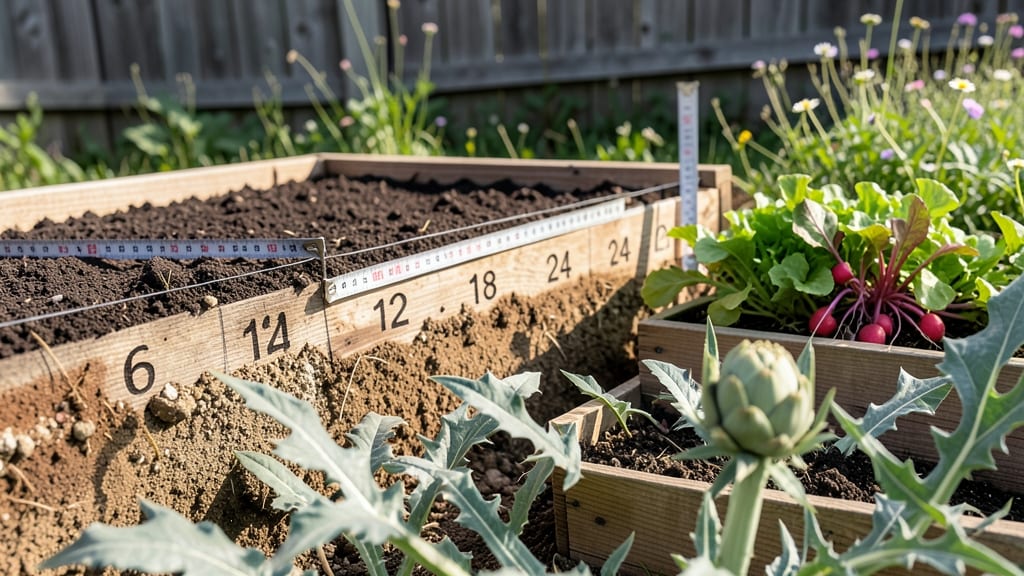
The optimal raised garden bed depth for most vegetables is 6 to 12 inches, balancing root space with soil health by preventing compaction and moisture loss. Deeper beds (12–18 inches) are ideal for root crops like carrots, while shallow beds (4–6 inches) work best for herbs and leafy greens.
Getting the right depth isn't just about fitting plants—it's about their growth habits. 🌱 Shallow-rooted plants like lettuce or basil thrive in 4–6 inch beds because they don't need deep soil, while deep-rooted crops like potatoes or tomatoes demand 12–18 inches to develop fully.
The middle range (6–12 inches) covers most vegetables, but soil type matters too: sandy soils may need extra depth to retain moisture, while clay soils benefit from deeper beds to improve drainage.
Here's what I've learned from experience: layering your bed materials (like compost and topsoil) gives you flexibility to adjust depth for different plants without rebuilding the entire bed. For example, you could plant shallow herbs in the front and deeper root crops in the back of the same bed.
This approach also helps prevent soil compaction over time, which can stunt root growth.
💡 In This Article
- How Root Systems Influence Raised Bed Depth Requirements
- Plant-Specific Raised Bed Depth Guidelines for Common Vegetables
How root systems influence raised bed depth requirements
Plants develop two main root types that dictate their depth needs: taproots and fibrous roots.
Taproots—like those of carrots or radishes—grow deep (often 12+ inches) to access water and nutrients below the surface, while fibrous roots (common in lettuce or onions) spread horizontally in the top 6 inches of soil.
This structural difference explains why a carrot needs 18-inch depth to mature fully, while basil thrives in just 4 inches of loose, nutrient-rich soil.
The science gets even more interesting when you consider soil aeration and moisture retention. Deeper beds (12+ inches) improve aeration for taproots by preventing soil compaction, but they also dry out faster unless amended with organic matter.
Shallow beds (6 inches) retain moisture better, which is ideal for fibrous-rooted plants that prefer consistently damp conditions. For example, strawberries—with their shallow, spreading roots—often rot if planted too deep, while parsnips (a deep taproot) struggle in beds shallower than 12 inches.
Nutrient access plays a critical role too. Deeper beds allow roots to explore more soil volume, accessing minerals like phosphorus that often accumulate deeper. However, this benefit diminishes if the lower layers lack organic matter.
I've seen 18-inch beds fail for potatoes when the bottom half contained only compacted native soil—adding compost in layers solves this. Conversely, shallow beds force plants to concentrate their roots in the topsoil, which is why they require richer amendments like worm castings or compost tea.
Another key factor is plant stability. Deep-rooted crops like tomatoes develop stronger stems because their roots anchor into deeper soil layers, reducing wind damage. Shallow-rooted plants, however, rely on quick access to surface moisture and nutrients, making them more sensitive to drought or poor soil structure.
This is why 6-inch beds work for herbs but fail for tomatoes unless you add support stakes.
Soil type further complicates the equation. In sandy soils, deeper beds help retain moisture for taproots, while clay-heavy soils benefit from extra depth to improve drainage. For instance, a 12-inch bed in clay might prevent waterlogging for carrots, whereas the same depth in sand could lead to rapid drying.
The solution? Test your soil's drainage first—if water pools after 30 minutes, you likely need deeper beds or better amendments.
Here's a pro tip: Layer your beds strategically. Start with 6 inches of compost at the bottom (for nutrient-rich lower layers), then add 6 inches of topsoil. This creates a 12-inch total depth that works for most vegetables while allowing you to adjust for specific plants.
For example, plant lettuce in the top 4 inches and tomatoes deeper in the same bed—both get what they need without rebuilding.