
Pruning
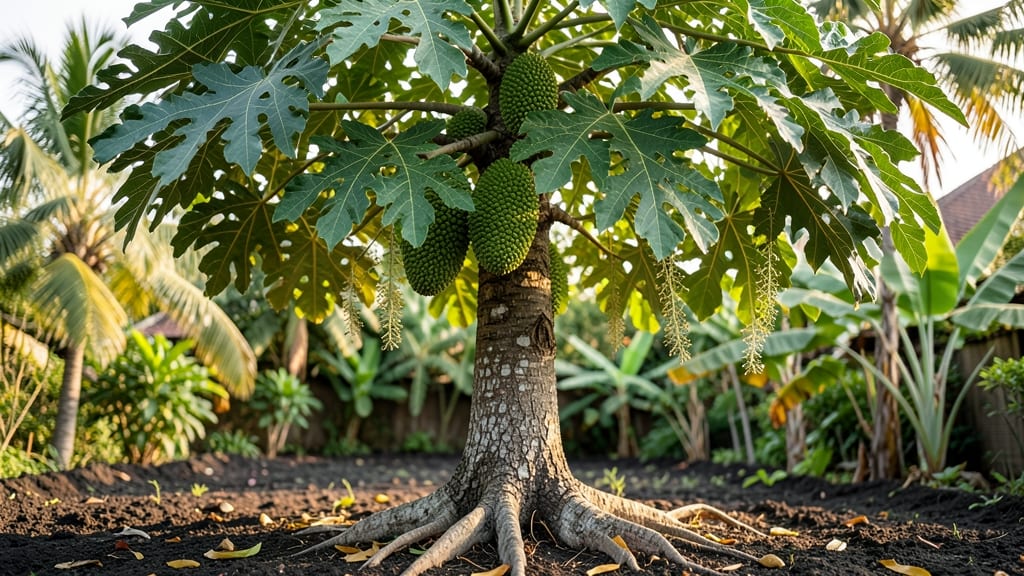
The Spanish name for jackfruit is jacote or jacá in most Latin American regions, though fruta de pan (breadfruit) sometimes causes confusion. Pronunciation varies—jacote is pronounced ha-KO-teh in Mexico, while jacá sounds like ha-KAH in Central America.
The Spanish name for jackfruit isn't uniform across Latin America, reflecting regional linguistic quirks. 🌎 In Mexico, jacote dominates, while Central American countries often use jacá, both derived from indigenous roots.
The term fruta de pan (literally "breadfruit") occasionally appears due to jackfruit's starchy texture, but it's technically incorrect—breadfruit is a separate species. What's fascinating is how these names evolved from Nahuatl (nanche) and Mayan languages, showing how colonial Spanish blended with local traditions.
Pronunciation differences highlight the diversity: the soft "c" in jacote sounds like "h" in English, while jacá has a sharper "ah" ending. 🔊 This can trip up non-Spanish speakers, especially when ordering in markets where vendors might use either term interchangeably.
For example, in Oaxaca, you might hear nanche from indigenous communities, adding another layer to the linguistic puzzle.
💡 In This Article
- Spanish Jackfruit Names Across Latin America
- Pronunciation Guide for Non-Spanish Speakers
Spanish jackfruit names across Latin America
The Spanish names for jackfruit reveal a fascinating tapestry of linguistic history and regional identity. In Mexico, jacote is the most common term, derived from the Nahuatl word nanche, which refers specifically to the jackfruit's large, spiky exterior.
This name dominates in central and southern Mexico, where jackfruit is widely cultivated in states like Oaxaca and Veracruz. Meanwhile, in Central America, jacá takes precedence, with roots in Mayan languages—this variation reflects the colonial Spanish adaptation of indigenous terminology.
What makes this even more interesting is how some regions blend indigenous and Spanish influences. For example, in El Salvador, you might hear chicozapote, a term that literally means "small sapodilla" but has been repurposed for jackfruit due to its similar appearance when unripe.
This linguistic crossover highlights how tropical fruits often get rebranded based on local preferences or market availability. The term fruta de pan (breadfruit) occasionally appears due to jackfruit's dense, starchy flesh, but it's a misnomer—breadfruit (Artocarpus altilis) is a distinct species with a completely different botanical structure.
The naming patterns also reflect agricultural practices. In Mexico's Yucatán Peninsula, jackfruit is often called jacote in Spanish but referred to as nanche in local Maya communities, showing how language evolves alongside cultural exchange. This dual naming system isn't just about semantics—it impacts how the fruit is marketed.
Vendors in Mexico City might label jackfruit as jacote, while in Guatemala, the same fruit would be jacá, creating potential confusion for travelers or chefs unfamiliar with regional variations.
Climate and growing conditions play a role too. Jackfruit thrives in tropical lowlands, and its cultivation has expanded from indigenous gardens to commercial orchards.
In Costa Rica, for instance, jacá is the standard term, but you might find older generations using fruta de pan out of habit, even though botanists distinguish the two clearly.
This blend of tradition and adaptation makes the naming of jackfruit a living example of how language evolves in response to agriculture and trade.
For those curious about the fruit's cultural significance, the name jacote or jacá carries historical weight. These terms connect modern Latin America to pre-Columbian trade routes, where jackfruit was valued for its versatility—used in everything from sweet desserts to savory stews.
The variation in names isn't just regional; it's a testament to the fruit's deep integration into daily life across the continent.