
Landscaping
Small yards don’t mean small harvests—these 10 creative herb garden bed ideas maximize flavor and fragrance in limited spaces while keeping maintenance simple and efficient.
Vertical Hanging Pocket Planters for Walls
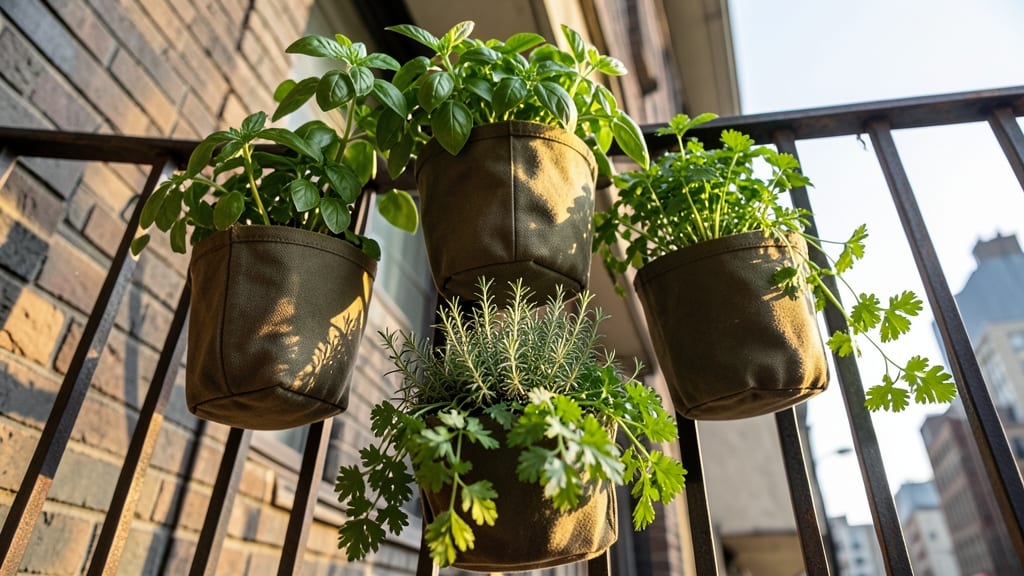
Turn your urban balcony or fence into a fragrant herb haven with vertical hanging pocket planters. This space-saving solution lets you grow basil, thyme, and parsley upward instead of outward, perfect for small yards where every inch counts.
These fabric pockets attach directly to walls or railings, requiring only 6-8 hours of sun daily. Simply fill each pocket with well-draining potting mix, plant your herbs, and water from below—no messy spills or overwatering. The upward growth keeps leaves and stems within arm's reach, making harvesting a breeze while maximizing your balcony's potential.
City dwellers and renters will love this low-maintenance, high-yield option that adds greenery without sacrificing square footage. 🌱
Square Foot Grid Herb Box Layout
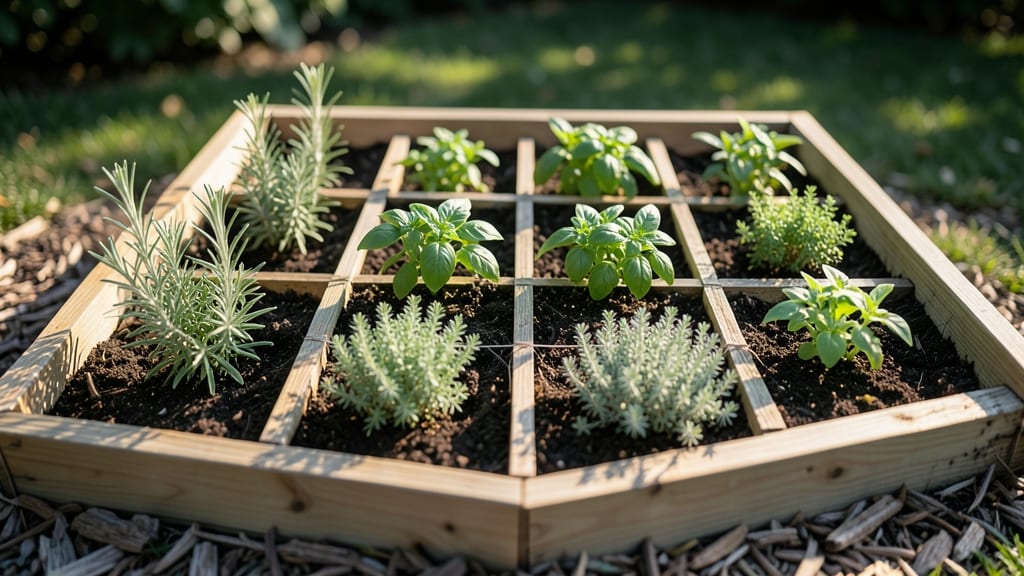
Tired of guessing how far apart to space your herbs? The square foot grid system turns gardening into a precise, stress-free puzzle—perfect for beginners who love order. This modular approach divides a 4x4-foot bed into 16 one-foot squares, each housing one herb plant with ideal spacing from day one.
Start by marking your grid with wooden stakes or landscape fabric. Plant one herb per square (e.g., 4 basil plants, 4 thyme, 4 parsley) based on their mature size—no overcrowding, no wasted space. The system even accounts for companion planting: pair rosemary (which needs room) with chives (compact) in adjacent squares. A 1-inch layer of mulch keeps weeds at bay and retains moisture, reducing watering by up to 30%.
This layout thrives in partial to full sun and works for containers too—just shrink the grid to 4x4 squares in a 4-foot-wide planter. Beginners will love the zero-guesswork approach, while urban gardeners can adapt it to balconies or patios. 💚
Tiered Wooden Herb Planter Tower
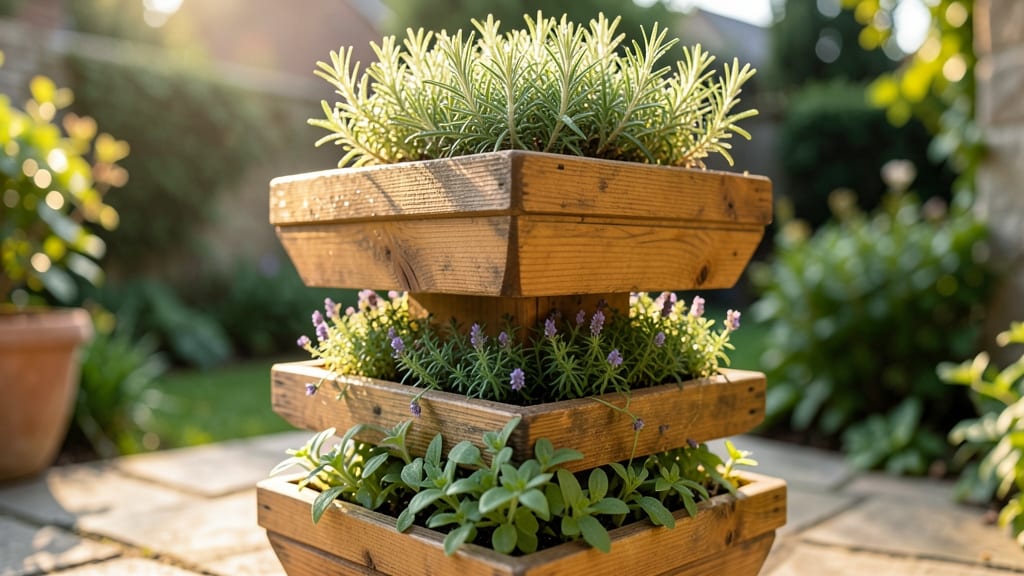
A tiered wooden herb planter tower turns limited patio space into a fragrant, sun-drenched herb haven without sacrificing your yard’s charm. This vertical design lets you grow drought-tolerant favorites like oregano, thyme, and rosemary in a compact footprint while adding rustic texture to your outdoor decor.
Each level provides individual drainage holes and airflow, preventing root rot while mimicking the natural layered growth of Mediterranean herbs. Place it in 6+ hours of sun for maximum flavor, and use untreated cedar or redwood for natural pest resistance. The top tier is perfect for fast-growing herbs like basil, while the bottom holds hardier perennials like lavender.
Ideal for urban gardeners, renters, or anyone with a small balcony, this planter combines functionality with curb appeal—no green thumb required. 🌿
Window Box Herb Garden with Drip Irrigation
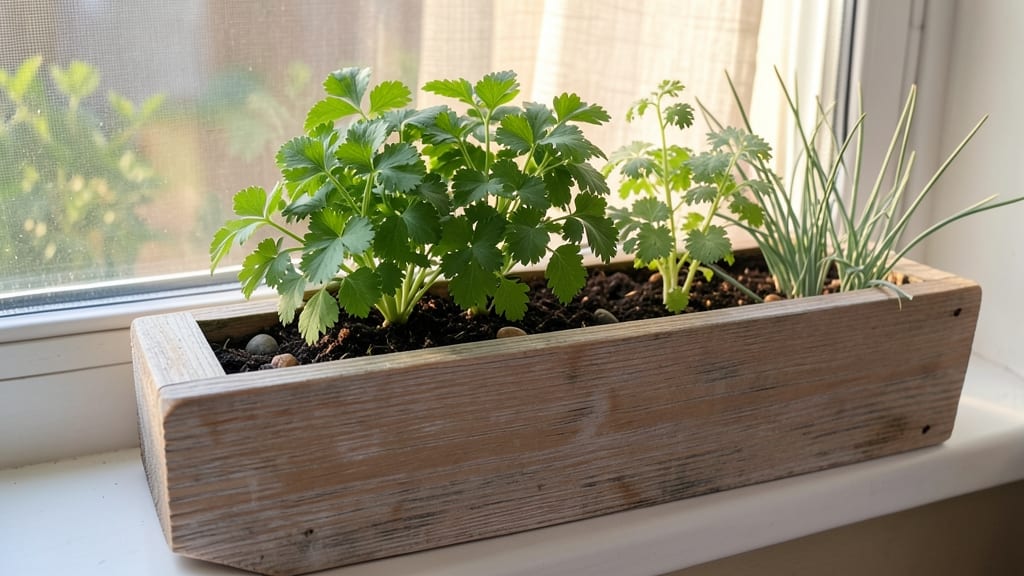
Turn an empty windowsill into a culinary herb powerhouse with a window box garden that grows parsley, cilantro, and chives—even in partial shade. This setup is perfect for city apartments, cozy kitchens, or sunrooms where space is tight but light is available.
Start with a shallow, wide window box (at least 12 inches deep) filled with well-draining potting mix. Install a low-volume drip irrigation system (like a simple micro-drip kit) to deliver water directly to roots, preventing overwatering and ensuring herbs like cilantro—which bolts in heat—stay lush. Place the box where it gets 3-6 hours of morning sun or filtered light all day, ideal for shade-loving herbs.
This system is ideal for urban gardeners, renters, or anyone with limited outdoor space. Plus, the fresh herbs are just steps away from your kitchen, making it the ultimate low-maintenance, high-reward gardening solution. 🌿
Spiral Herb Garden Bed for Microclimates
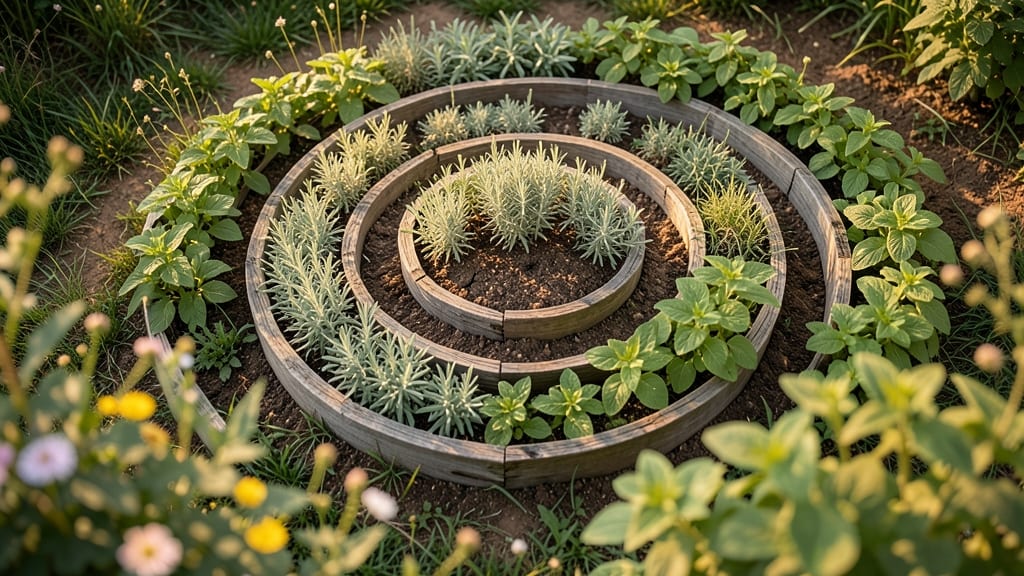
Tired of herbs struggling because of uneven sunlight? A spiral herb garden bed solves this by creating a natural sun-to-shade gradient in just a few square feet, perfect for herbs like lemon balm (shade-tolerant) and sage (sun-loving). The circular design mimics how herbs grow in the wild, with the center receiving full sun and the outer edges offering dappled shade.
Build yours by shaping a raised bed in a spiral, filling the center with well-draining soil and placing sun-loving herbs (like rosemary) closest to the middle. As you move outward, add herbs that prefer partial shade (like mint or chives). The spiral’s design also promotes self-watering—watering at the center allows moisture to wick outward, reducing evaporation and keeping roots consistently hydrated.
This design is ideal for urban gardeners with limited space or anyone wanting a low-maintenance, visually striking herb garden. Plus, the compact size makes it perfect for patios, balconies, or even as a centerpiece in a small yard. 🌿
Pallet Wood Herb Raised Bed
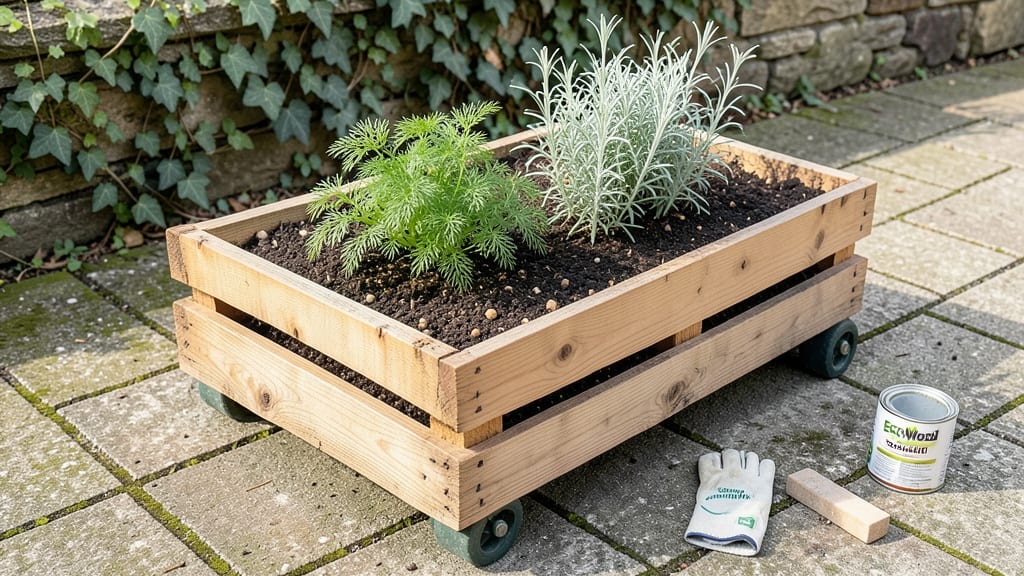
Turn an old wooden pallet into a portable herb haven without breaking the bank or the planet. This lightweight, recycled raised bed is perfect for renters or small patios, letting you grow flavorful herbs like dill and tarragon without permanent installation.
Start by sanding and sealing the pallet to prevent splinters and weather damage. Line the bottom with landscape fabric to block weeds, then fill with a mix of well-draining potting soil and compost. Place it on a gravel base for drainage, and you’ll have a mobile garden that follows the sun or moves indoors during cold snaps.
This eco-friendly solution is ideal for urban gardeners or anyone who wants zero-waste gardening with maximum flexibility. Your fresh herbs will be within arm’s reach—no matter where you live. 🌱
Hanging Macramé Herb Baskets
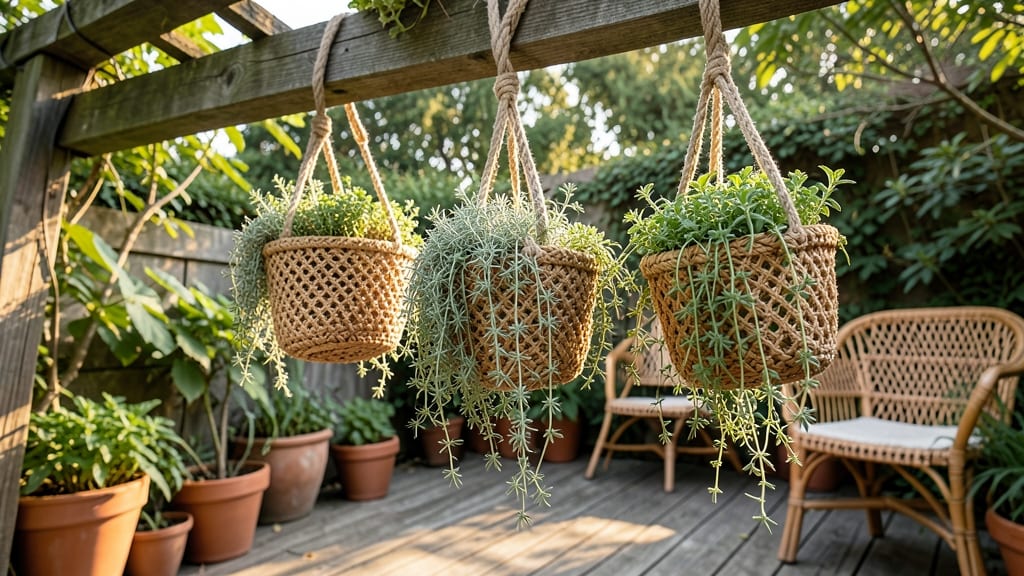
Transform your patio into a fragrant, boho-inspired herb garden with hanging macramé baskets—the perfect solution for growing trailing herbs like thyme and creeping oregano without sacrificing floor space. These stylish, handwoven containers add texture and charm while keeping your herbs within easy reach for harvesting fresh leaves.
Choose baskets with well-draining holes and fill them with a lightweight herb-specific potting mix to prevent root rot. Suspend them from deck railings or pergolas where they’ll receive at least 6 hours of sun daily, ideal for herbs that thrive in warmth. For extra growth, trim back leggy stems occasionally to encourage bushier, more aromatic foliage.
This design is ideal for renters, urban gardeners, or anyone craving a low-maintenance yet visually stunning herb garden. The cascading greenery creates a lush, layered look that’s both functional and decorative. 🌿
Underground Herb Planter for Shady Spots
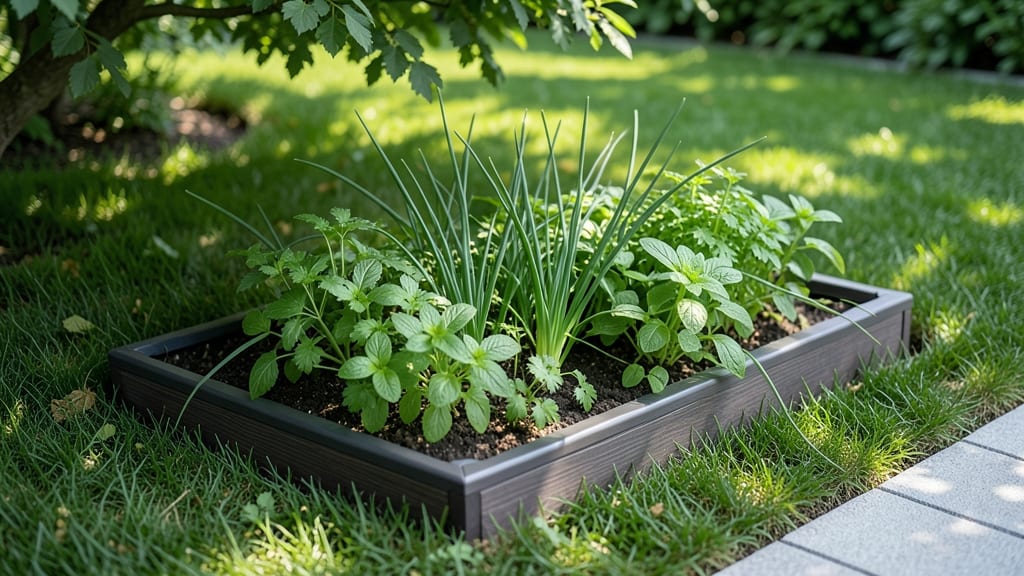
Tired of sacrificing your herb garden to shady corners? An underground herb planter keeps chives, mint, and parsley thriving where sunlight barely reaches. These sunken containers blend seamlessly into lawns or pathways, offering a low-profile, high-yield solution for urban or shaded yards.
Simply dig a shallow hole (6–12 inches deep), line it with a sturdy container, and fill with well-draining soil. Mint and chives love the cooler, moist conditions underground, while parsley benefits from the natural shade. Add a mulch layer on top to keep weeds at bay and retain moisture—ideal for busy gardeners.
Perfect for renters, small spaces, or areas with HOA restrictions, this design keeps your herbs accessible yet hidden. No more sacrificing greenery to sunlight constraints! 🌱
Compost Tea Herb Bed with Companion Planting
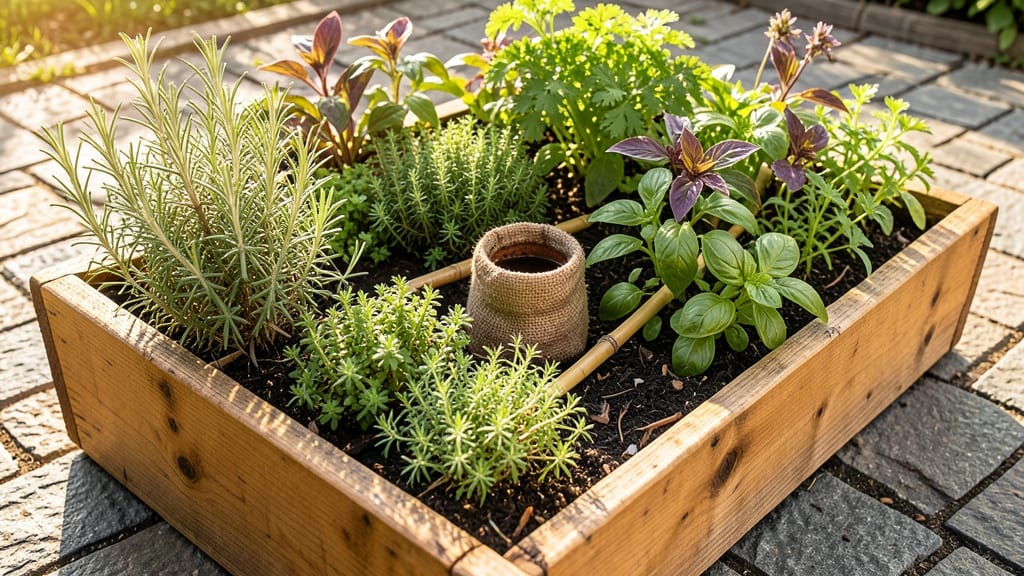
Want a herb garden that thrives without synthetic fertilizers or pest sprays? A compost tea herb bed paired with companion planting delivers lush, flavorful growth while naturally deterring pests—all in a space-efficient design. This method transforms a small bed into a powerhouse of productivity by feeding plants with nutrient-rich liquid fertilizer and strategically pairing them with allies like basil and tomatoes.
Start by brewing compost tea (steep finished compost in water for 24-48 hours) and use it to water your bed weekly. Plant basil alongside tomatoes—the basil’s scent repels tomato hornworms, while the tomatoes provide shade for heat-sensitive herbs like cilantro. Add marigolds at the edges to further confuse pests with their strong fragrance. This compact setup works in 4x4-foot beds or even smaller, making it ideal for urban gardeners or those with limited space.
Perfect for organic gardeners or anyone tired of chemical inputs, this approach boosts harvests while reducing maintenance. Your herbs will grow faster, taste stronger, and stay healthier—all without the fuss. 💚
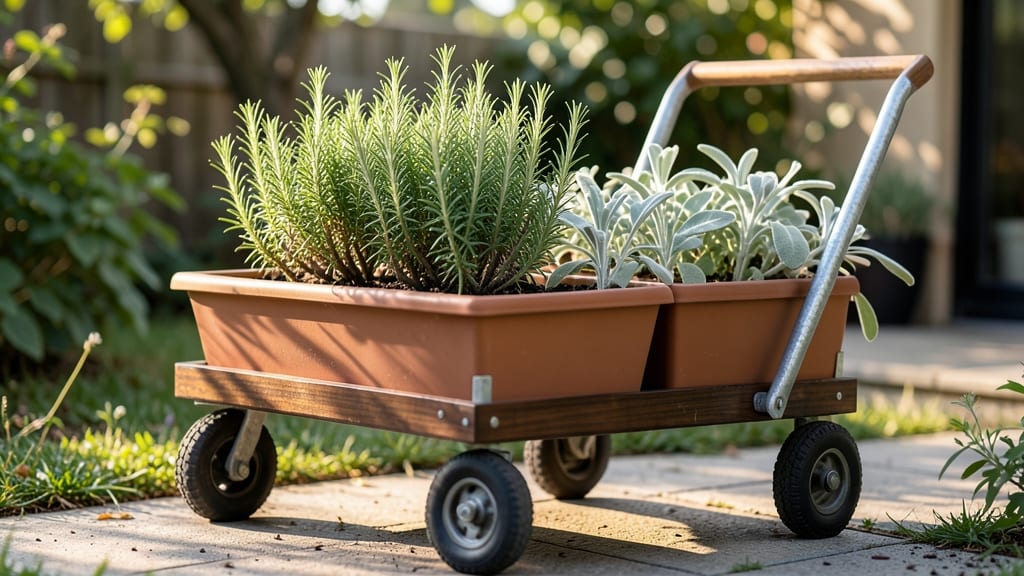
Portable Herb Garden Cart on Wheels

Struggling to give your sun-loving herbs like rosemary and sage the perfect spot? A portable herb garden cart on wheels solves this problem by letting you move your entire garden to follow the sun—or roll it indoors before frost.
These mobile carts typically feature deep containers (ideal for drought-tolerant herbs) and four sturdy wheels for easy maneuvering. Place them on a brick patio or gravel path where they won’t sink into soil, and use the cart’s height to create visual interest while keeping herbs accessible. The mobility also lets you rotate plants for even sun exposure, preventing leggy growth.
Perfect for renters, small balconies, or gardeners with unpredictable sunlight patterns, this solution gives you the flexibility to maximize growth without sacrificing space. 🌻