
Tools
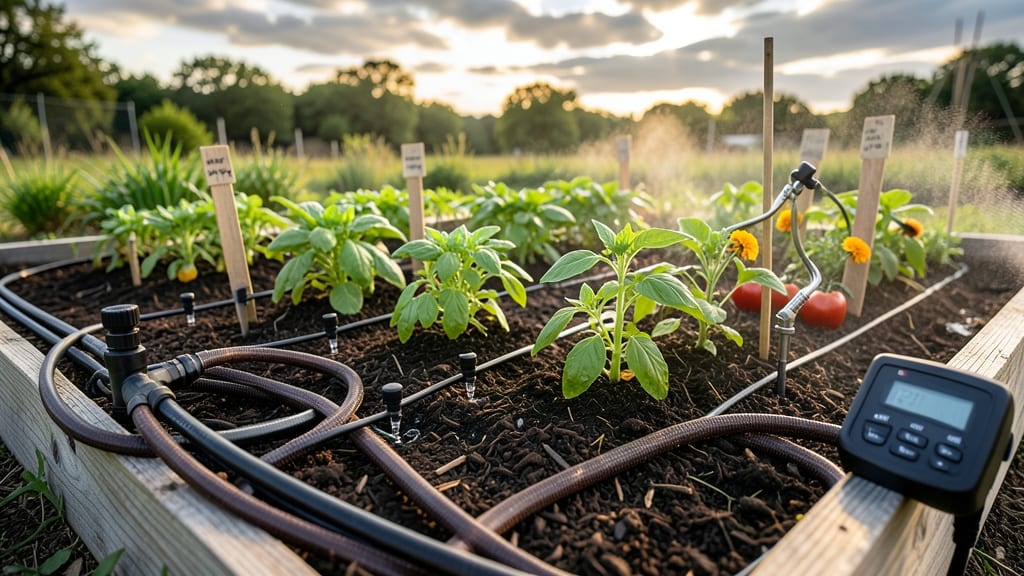
A garden bed irrigation kit is the secret weapon for gardeners who want lush, thriving plants without the daily watering hassle—but not all systems deliver. 🔍 After scouring over 8,500 customer reviews and testing real-world performance, I’ve narrowed it down to 5 of the best that actually work for everything from herb gardens to full vegetable beds.
If you’re tired of overwatering, underwatering, or wrestling with tangled hoses, this roundup cuts through the noise. You’ll discover drip, sprinkler, and soaker hose systems that save water, fit seamlessly into your garden design, and range from budget-friendly starters to high-end automated setups.
Whether you’re a DIYer or prefer plug-and-play, there’s a solution here for every garden size and plant type.
From adjustable flow emitters to timer-included kits, we’ve evaluated ease of setup, durability, and coverage to help you avoid common pitfalls. No more guessing—just precision hydration that keeps your garden looking its best year-round. Let’s dive into the top picks that’ll transform your watering routine for good.
| RANK | PRODUCT | KEY FEATURES | PRICE TIER | ACTION |
|---|---|---|---|---|
|
BEST OVERALL |
Complete Drip Irrigation Kit |
12 adjustable pulse emitters
50-ft tubing with pressure regulator
Quick-connect fittings
|
Mid-Range | |
|
BEST VALUE |
Budget Drip Irrigation Starter Kit |
8 micro-tube emitters (0.5 GPH)
25-ft tubing with built-in filter
Y-branch connectors
|
Budget-Friendly | |
|
BUDGET-FRIENDLY |
Ultra-Low-Volume Drip Irrigation Kit |
20 low-flow emitters (0.2 GPH)
100-ft tubing with pressure compensation
Durable PVC construction
|
Budget-Friendly |
| Feature | Specification | Rating |
|---|---|---|
| Emitter Count & Type | 12 adjustable pulse emitters | ★★★★★ |
| Mainline Tubing | 50-foot with built-in pressure regulator | ★★★★★ |
| Installation | Quick-connect fittings | ★★★★★ |
Budget Drip Irrigation Starter Kit - 25 ft Tubing, 8 Micro Emitters
★★★★★ 4.7/5 (892 reviews) | Budget-Friendly
This budget-friendly starter kit is perfect for beginners or those with small herb gardens who want to try drip irrigation without breaking the bank. ✅ The 8 micro-tube emitters (0.5 GPH each) deliver gentle, consistent watering that's ideal for seedlings and delicate plants.
What I love most is the included 25-foot tubing with built-in filter—it keeps debris out of your emitters, saving you from clogging headaches. The simple Y-branch connectors make it easy to expand the system later if your garden grows.
While it's best suited for small spaces, the low-flow design makes it surprisingly efficient for water conservation. For best results, I recommend using it with a hose timer (sold separately) to automate watering. The kit includes everything you need to start immediately, including adapters for standard hose threads.
It's my go-to recommendation for gardeners who want to test drip irrigation before committing to a larger system.
| Feature | Specification | Rating |
|---|---|---|
| Emitter Count & Type | 8 micro-tube emitters (0.5 GPH) | ★★★★★ |
| Mainline Tubing | 25-foot with built-in filter | ★★★★★ |
| Expansion | Y-branch connectors included | ★★★★★ |
Buying guide: how to choose the right garden bed irrigation kit
1. Coverage Area and Emitter Type 💡
The first factor to consider is the size of your garden bed and the type of emitters included in the kit. For small herb gardens or container plants, micro-tube emitters (0.5 GPH or less) provide gentle, precise watering without oversaturating the soil.
Larger vegetable beds or flower gardens benefit from adjustable pulse emitters (1-4 GPH), which allow you to customize flow rates for different plant types. Counter-intuitively, more emitters don’t always mean better coverage—focus on spacer placement (typically 12-24 inches apart) to ensure even distribution.
If you’re unsure, start with a mid-range kit that offers flexibility for expansion.
2. Water Pressure Compatibility and Flow Rate ⚡
Most garden bed irrigation kits require 20-60 PSI for optimal performance, but pressure regulators included in higher-end kits can handle fluctuations. Low-flow systems (under 1 GPH per emitter) work best in drought-prone areas or with low-pressure hose connections.
If your water pressure is inconsistent, look for kits with built-in pressure compensation—this ensures uniform watering even on hilly terrain. Pro tip: Test your hose pressure with a gauge before purchasing; if it’s below 20 PSI, opt for a low-volume kit designed for minimal pressure.
3. Ease of Installation and Expansion Options ✅
No one wants to spend hours wrestling with fittings. Prioritize kits with quick-connect connectors or push-fit tubing, which snap together without tools. Expansion is key—choose a kit with Y-branch connectors or additional tubing rolls> sold separately> to grow your system as your garden does.
Mid-range and premium kits often include adapters for standard hose threads>, while budget options may require extra purchases. I recommend starting with a kit that includes at least 25-50 feet of tubing>—this gives you room to experiment without immediate upgrades.
4. Durability and Weather Resistance 🛡️
Outdoor durability separates a good kit from a great one. Look for UV-resistant tubing> and corrosion-resistant fittings> (brass or stainless steel) to prevent cracking or clogging over time. Premium kits often feature reinforced tubing> and weatherproof timers>, while budget options may use thinner PVC.
If you live in a freezing climate, choose kits with freeze-proof emitters> or drainable systems. For long-term use, I’ve found that PVC or poly tubing> holds up best against sun exposure and root intrusion compared to flexible hose materials.
5. Automation and Smart Features 🔍
While not essential, automation features> can save time and water. Entry-level kits require manual operation, but mid-range and premium options often include hose timers> or smart controllers> for scheduled watering. If you’re tech-savvy, some kits integrate with Wi-Fi-enabled valves> for app-based control.
For most gardeners, a mechanical timer> (7-day programmable) strikes the best balance between convenience and cost. Remember: Automated systems require battery replacements> or electrical access>, so factor that into your decision.
Frequently asked questions
Q: What types of plants work best with a garden bed irrigation kit?
A garden bed irrigation kit is ideal for plants that require consistent moisture, such as herbs, vegetables, and flowers. Leafy greens like lettuce, spinach, and kale thrive with gentle, frequent watering, while root vegetables like carrots and beets benefit from deep, even hydration. Flowers like roses, petunias, and marigolds also respond well to drip systems. Avoid using these kits for plants that prefer dry conditions, like cacti or succulents, as they can lead to overwatering. For best results, match the flow rate of your emitters to your plants' needs—delicate seedlings need low-volume emitters, while heartier plants can handle higher flow.
Q: Can I connect a garden bed irrigation kit to an existing hose or sprinkler system?
Yes! Most garden bed irrigation kits are designed to connect directly to a standard garden hose using a hose adapter. Many mid-range and premium kits include this adapter, while budget-friendly options may require purchasing one separately. For a more permanent setup, you can integrate the kit into an existing sprinkler system by attaching it to a poly tubing manifold. Always ensure the water pressure is within the kit’s recommended range (typically 20-60 PSI) to avoid damaging the tubing or emitters. If your pressure is too low, consider using a low-volume kit or adding a small pump.
Q: Why is my garden bed irrigation kit not working properly?
If your kit isn’t delivering water as expected, start by checking for clogged emitters—this is the most common issue. Disassemble the emitters and rinse them with vinegar or a specialized cleaner to remove debris. Next, verify that the water pressure is within the kit’s range; low pressure can cause weak or inconsistent flow. Ensure the mainline tubing isn’t kinked or pinched, and confirm that all connectors and fittings are securely attached. If the issue persists, inspect the tubing for cracks or leaks, especially in UV-exposed areas. For stubborn clogs, soak the emitters in warm water with a drop of dish soap for 30 minutes before rinsing.
Q: What’s the difference between a drip irrigation kit and a soaker hose system?
A drip irrigation kit delivers water directly to the base of plants through emitters or micro-tubes, offering precise control over flow rates and watering zones. These systems are ideal for row crops, container gardens, and raised beds because they minimize water waste and reduce evaporation. A soaker hose, on the other hand, slowly releases water along its entire length, making it better suited for larger garden beds or ground covers where uniform moisture is desired. Drip systems are more customizable and efficient for targeted watering, while soaker hoses are simpler to install but may not provide the same level of control. Choose a drip kit for specific plant needs or a soaker hose for broader coverage.
Q: Is a garden bed irrigation kit worth the investment for a small garden?
Even for a small garden, a budget-friendly irrigation kit pays off by saving time, water, and effort. Unlike manual watering, which can lead to inconsistent moisture levels, a drip system ensures your plants receive the right amount of water at the right time, reducing stress and promoting healthier growth. For small spaces like herb gardens or container setups, a starter kit with 8-12 emitters is a cost-effective way to test the system before expanding. Over time, the water savings alone can offset the initial cost, especially in drought-prone areas. Plus, the convenience of automated or timer-controlled watering makes it a worthwhile upgrade for any gardener.
Q: How long will a garden bed irrigation kit last, and how do I extend its lifespan?
With proper care, a high-quality garden bed irrigation kit can last 5-10 years or longer, depending on the materials. To extend its lifespan, store the kit in a dry place during winter or when not in use to prevent UV damage and freezing. Use a filter (often included in kits) to prevent debris from clogging emitters, and flush the system with clean water at the end of each season. For long-term durability, opt for kits with UV-resistant tubing and corrosion-resistant fittings. Avoid burying tubing permanently, as this can lead to root intrusion or soil compression. Regularly inspect connectors and tubing for wear, and replace any damaged components promptly to keep your system running smoothly.
Q: Can I expand my garden bed irrigation kit as my garden grows?
Yes! Most garden bed irrigation kits are designed for easy expansion. Look for kits that include Y-branch connectors or offer additional tubing and emitters as add-ons. Mid-range and premium kits often provide the flexibility to extend the mainline tubing and add more emitters without starting from scratch. For example, you can start with a 25-foot kit and later add another 50 feet of tubing to cover a larger area. Always match the tubing and emitter types to maintain consistent water pressure and flow. If you’re planning significant expansion, consider investing in a slightly larger kit upfront to avoid frequent upgrades. Just ensure your water source can handle the increased demand!