
Landscaping
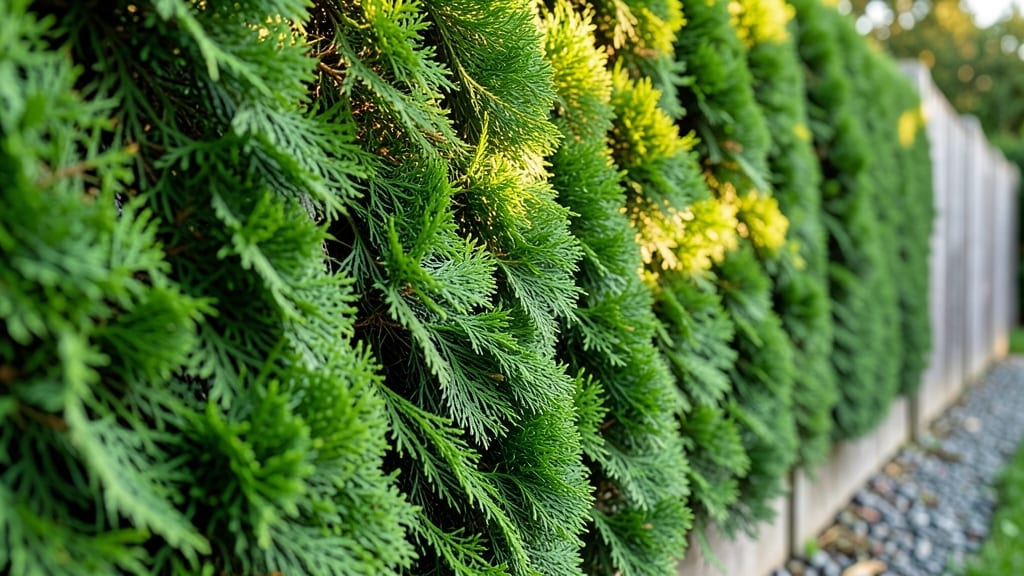
Transforming a plain fence into a vibrant, functional flower bed adds privacy, beauty, and value to your property. These ten climate-adaptive designs combine hardy perennials, seasonal blooms, and strategic planting techniques to create low-maintenance yet stunning privacy screens that thrive year-round.
Lavender and Rosemary Living Privacy Screen
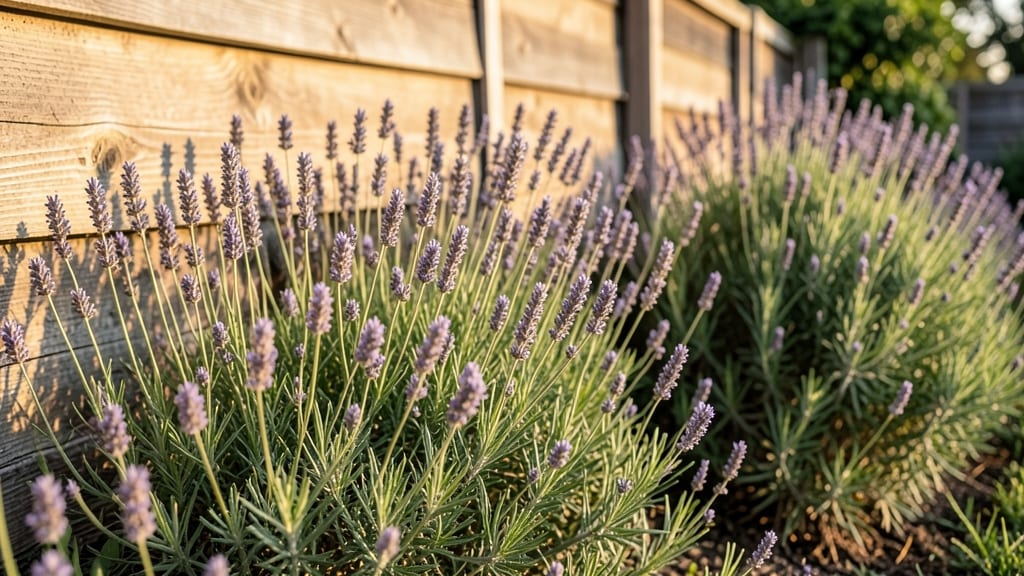
Skip the high-maintenance hedges—this lavender and rosemary combo creates a fragrant, pest-repelling privacy screen that thrives on neglect. Both Mediterranean natives demand minimal water once established, making them perfect for dry climates or water-conscious gardeners.
Plant lavender (English or French varieties) for its silvery foliage and purple blooms, while rosemary adds upright structure with needle-like leaves and aromatic flowers. Space plants 18-24 inches apart for dense growth, and prune lightly after flowering to maintain shape. The dual benefits? Natural pest deterrence (deer and rabbits avoid both) and a soothing scent that lingers in your outdoor space.
Ideal for urban gardens, small yards, or drought-prone regions, this screen offers year-round interest with minimal effort. Perfect for beginners or busy gardeners craving beauty without the upkeep. 🌿
Sun-Loving Coneflower and Black-Eyed Susan Mix
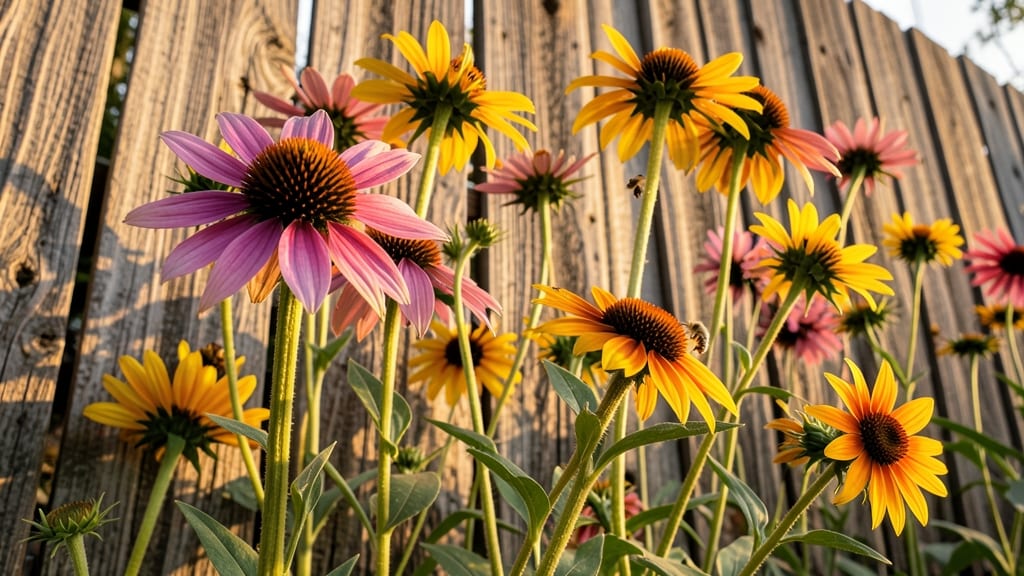
Turn your fence into a buzzing pollinator paradise with a sun-loving mix of coneflowers (Echinacea) and Black-Eyed Susans (Rudbeckia). These native perennials don’t just look stunning—they work hard to support local ecosystems while adding bold vertical interest with their towering, daisy-like blooms in gold, pink, and purple.
Plant them in full sun (6+ hours daily) for maximum impact, and watch as their tall stems (3-5 feet) create a natural privacy screen that thrives on neglect. The drought-tolerant varieties require minimal watering once established, and their late-summer to fall blooms provide color when many gardens fade. Plus, their seed heads offer winter interest for birds and texture.
Perfect for beginner gardeners and eco-conscious landscapers, this mix adds both beauty and function to your fence line while keeping maintenance simple. 🌻
Evergreen Boxwood and Holly Border
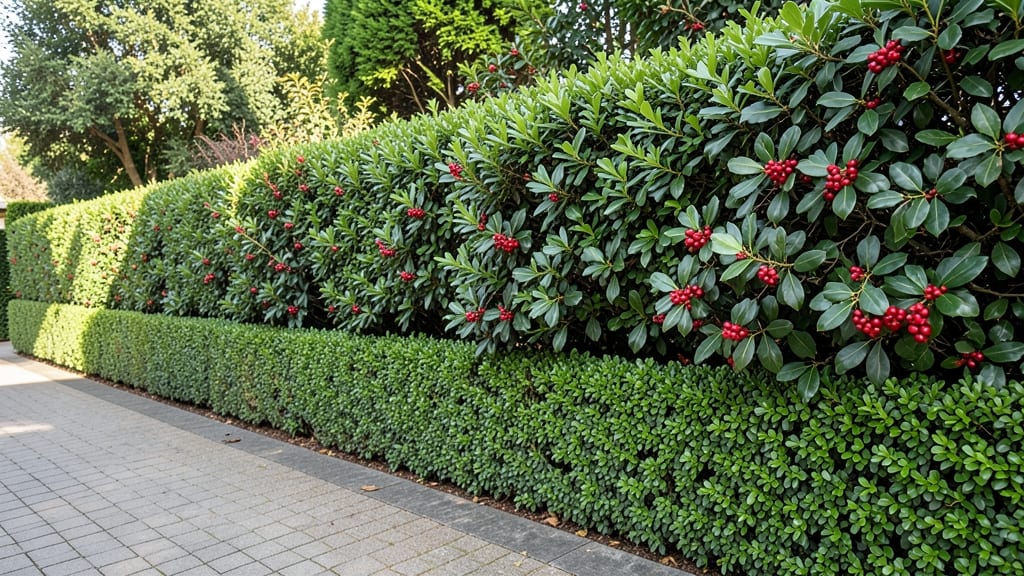
For a timeless, structured privacy screen that requires minimal seasonal updates, pair boxwood with holly for a classic evergreen border. This combination delivers year-round density and a polished look perfect for formal gardens or high-traffic areas like driveways or patios.
Start by planting boxwood (Buxus spp.) every 12-18 inches for a tight, uniform hedge base, then intersperse holly (Ilex spp.) every 24 inches for height variation and winter interest. Both thrive in full sun to partial shade and tolerate most soil types, though well-draining conditions prevent root rot. Prune lightly in late spring to maintain shape—boxwood’s glossy leaves and holly’s red berries create visual contrast while offering wildlife benefits.
This design is ideal for homeowners seeking low-maintenance elegance with year-round structure. The slow growth rate means less frequent pruning, and the dense foliage blocks views while requiring no seasonal color changes. 🌿
Shade-Tolerant Fern and Hostas Combination
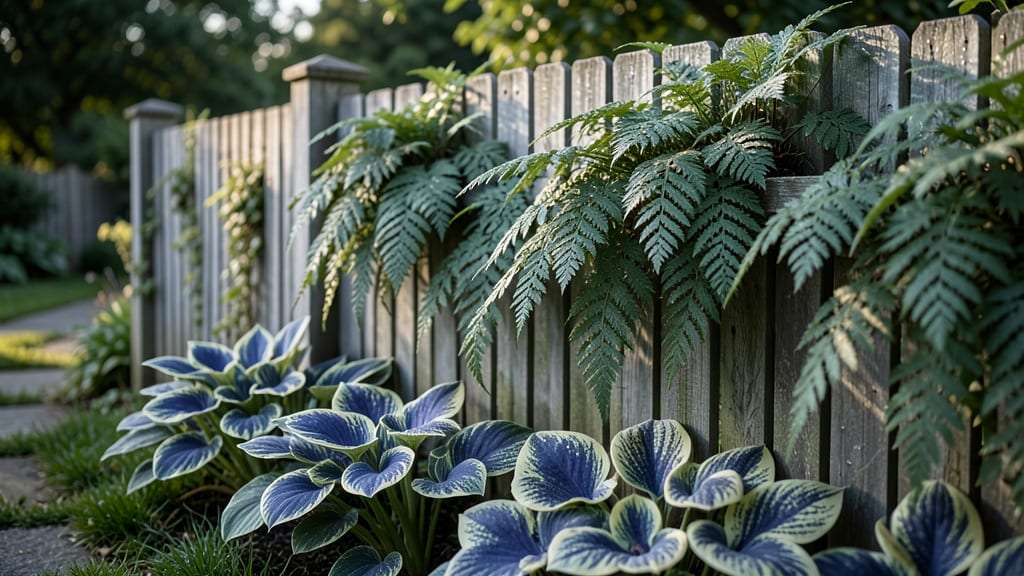
Turn that dark, neglected north-facing fence into a lush green oasis with a shade-tolerant duo that thrives where others fail. The secret? Pairing delicate Japanese painted ferns with variegated hostas like 'Blue Angel' or 'Halcyon' creates a cascading curtain of texture that softens harsh lines and adds depth to your landscape.
Plant hostas in the front row (12-18 inches apart) for their broad, heart-shaped leaves, then tuck fern crowns (18-24 inches apart) behind them for vertical movement. Both love moist, well-draining soil—ideal for shady spots—and benefit from a 2-inch layer of mulch to retain humidity. For extra drama, add white-variegated hostas to contrast with deep green ferns, creating a three-dimensional effect that catches the eye.
This combination is perfect for urban gardeners with limited sunlight or beginner gardeners who want low-maintenance foliage. The ferns add movement while hostas provide structure—together, they create a year-round privacy screen that feels like a secret garden. 🌿
Climbing Roses and Clematis Vertical Garden
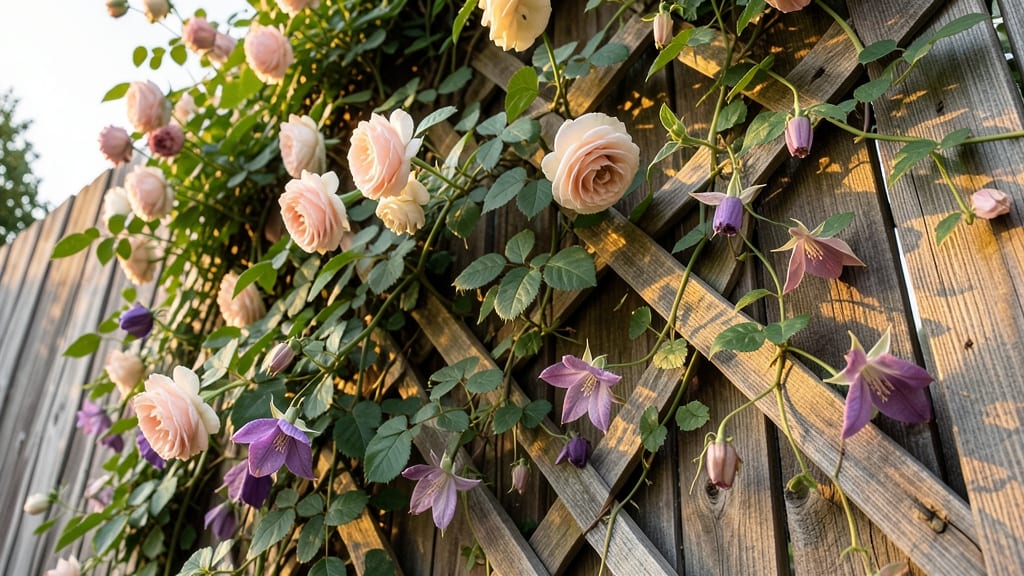
Craft a dreamy, fragrant privacy screen that blooms from spring to fall with a climbing rose and clematis trellis. This romantic duo thrives together—disease-resistant roses provide sturdy growth, while clematis adds cascading blooms in shades of purple, pink, and white, creating a living tapestry that softens any fence line.
Start by installing a strong trellis or arbor along the fence, ensuring it can support 15-20 feet of growth. Plant climbing roses (like 'New Dawn' or 'Blaze') at the base of the trellis, and weave clematis (such as 'Jackmanii' or 'Niobe') through the roses as they grow. Water deeply once a week, and prune roses in late winter while clematis gets its haircut in early spring. The roses' fragrance and clematis' vibrant blooms will keep your fence looking lush and inviting all season long.
This design is perfect for gardeners who love seasonal color and texture without the high maintenance of annuals. The fragrant blooms also create a natural privacy screen that’s far more charming than a plain fence. 🌷
Dwarf Bamboo and Ornamental Grasses Screen
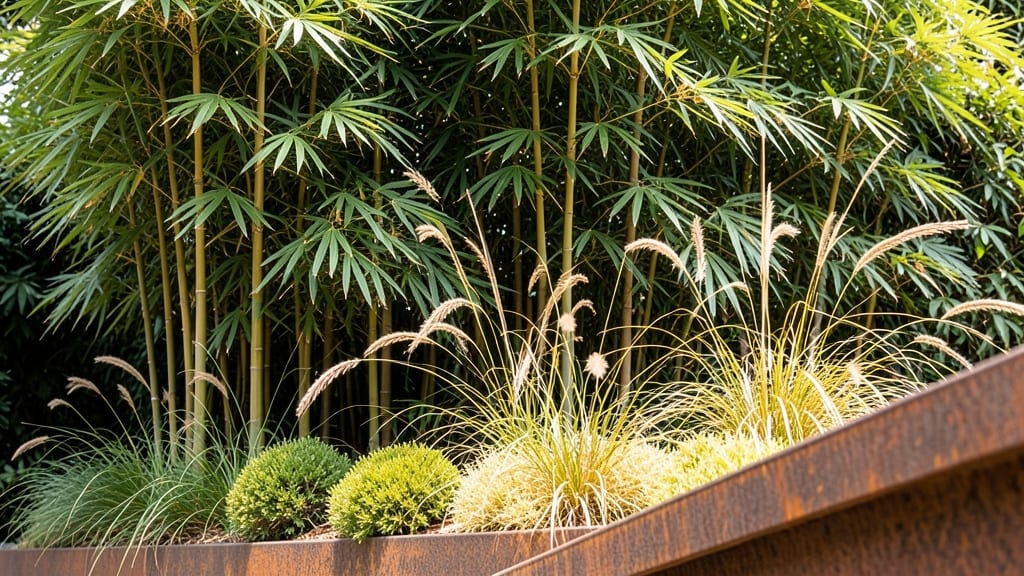
Want a modern privacy screen that grows fast but stays contained? Dwarf bamboo and ornamental grasses deliver both height and texture without the invasive spread of traditional bamboo. This combo creates a sleek, low-maintenance solution perfect for urban gardens or tight spaces.
Start with clumping bamboo varieties like Bambusa multiplex or Fargesia robusta, which stay rooted in place. Pair them with fountain grasses such as Pennisetum alopecuroides for soft, swaying movement and golden hues in fall. These plants thrive in full sun to partial shade and tolerate most soil types, making them ideal for beginners or busy gardeners.
This design requires minimal pruning—just trim back dead fronds in early spring—and provides year-round interest. Urban gardeners and small-space owners will love how it adds height without overwhelming the landscape. 💡
Seasonal Bulb Tunnel with Tulips and Daffodils
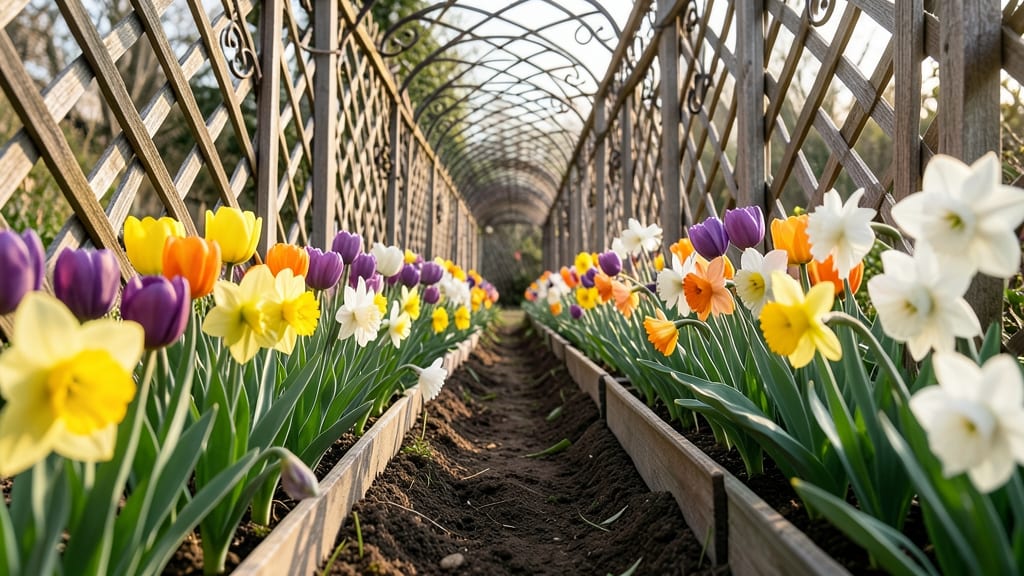
Turn your fence into a springtime surprise with a bulb tunnel that blooms before most gardens even wake up. By planting tulips and daffodils in underground planters beneath a decorative fence or trellis, you create a hidden, colorful privacy screen that emerges when you need it most.
Start by installing long, narrow planters (like wooden boxes or fabric grow bags) along the fence line, filling them with well-draining soil and spring-blooming bulbs like Darwin tulips (tall and sturdy) or Jonquil daffodils (fragrant and prolific). Space bulbs 4-6 inches apart for a dense display, and place the planters 6-8 inches below ground level so the stems can push through the fence slats. Water thoroughly after planting, then let nature do the rest—these bulbs need minimal care once established.
This low-maintenance design is perfect for urban gardeners with limited space or renters who want seasonal color without long-term commitment. Plus, the temporary privacy it offers is ideal for patios, pool areas, or backyard gatherings. 🌷
Native Wildflower Meadow Border
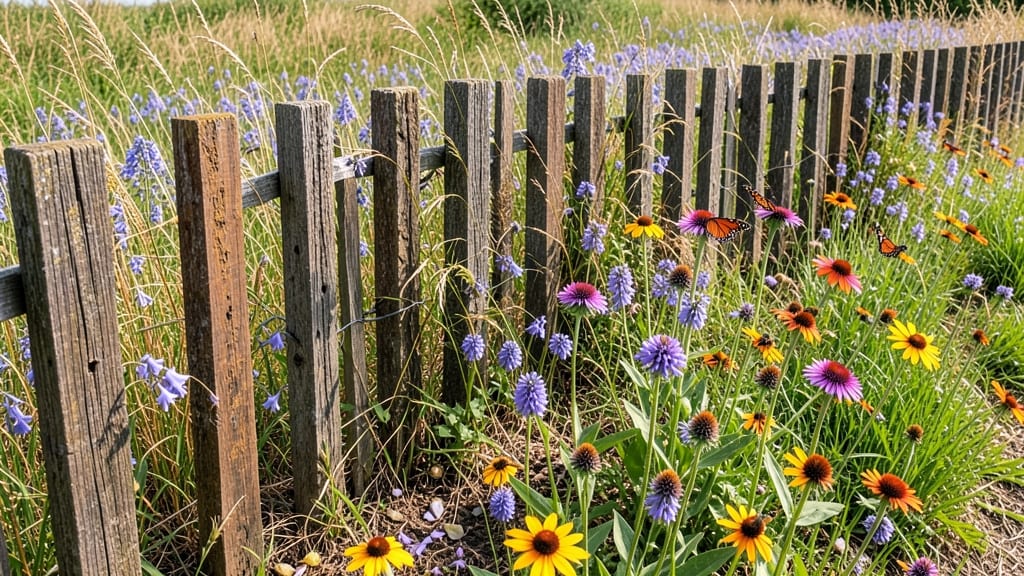
Skip the high-maintenance hedge—native wildflower meadows transform your fence line into a buzzing, colorful ecosystem that thrives with almost no effort. These low-maintenance mixes establish in just one growing season, offering year-round interest from early spring blooms like bluebells to late-summer goldenrod.
Choose a pre-mixed blend tailored to your region (check local native plant nurseries) and scatter seeds directly onto prepared soil—no digging required. Once established, these pollinator magnets need only occasional watering and zero pruning. They’ll attract bees, butterflies, and hummingbirds while suppressing weeds naturally. Perfect for eco-conscious gardeners or anyone tired of mowing.
This is the ultimate solution for urban gardeners with limited time or space—beautiful, functional, and good for the planet. 🌻
Privacy-Tall Sunflowers and Zinnias
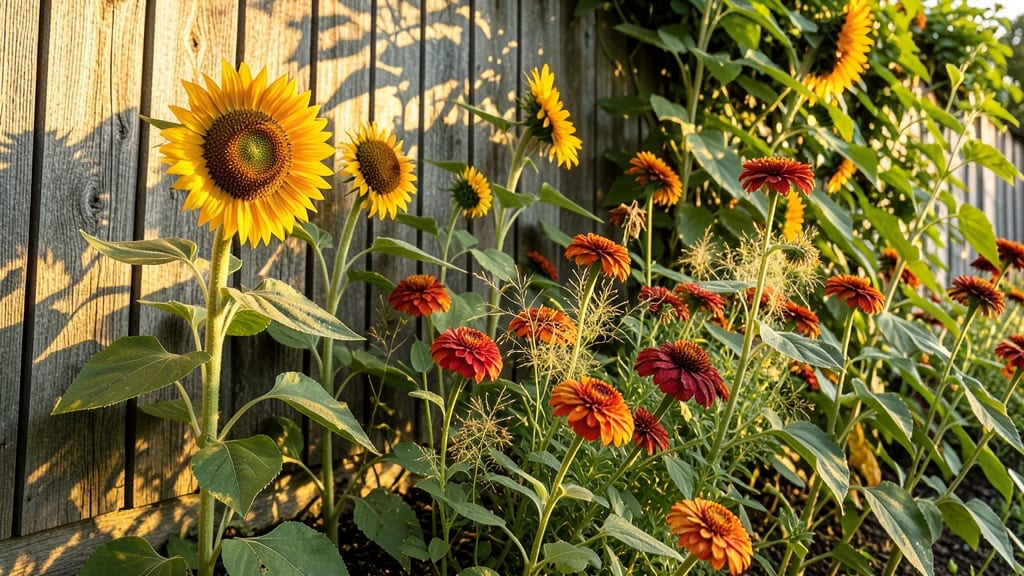
Need a summer privacy screen that grows faster than weeds? Tall sunflowers (like 'Mammoth' or 'Autumn Beauty') and zinnias (such as 'Benary's Giant' or 'Profusion') shoot up to 6-8 feet in just 60-90 days, turning a bare fence into a cheerful, sun-drenched barrier by July.
Plant seeds directly in well-draining soil after the last frost, spacing sunflowers 12-18 inches apart and zinnias 8-12 inches apart for a dense, blooming curtain. Both thrive in full sun (6+ hours daily) and tolerate poor soil—ideal for urban spaces or neglected corners. Deadhead zinnias regularly to encourage nonstop blooms, and save sunflower seeds for next year’s instant privacy. Their vibrant hues (yellows, oranges, reds) also attract pollinators while blocking views.
Perfect for renters, small yards, or temporary privacy, these annuals deliver maximum impact with minimal effort. Just replant yearly—no pruning, no fuss, just summer-long color and height. 🌻
Evergreen Arborvitae and Juniper Hedge

Tired of seasonal color changes that leave your fence looking dull in winter? Arborvitae and juniper hedges deliver year-round privacy with their dense, evergreen foliage that stays vibrant through all four seasons. Unlike flowering plants that fade, these conifers maintain their rich green hues, creating a lush backdrop that softens views year after round.
Plant Thuja occidentalis (arborvitae) for its soft, feathery needles and Juniperus spp. for its sharp, aromatic foliage—both grow densely when spaced 2-3 feet apart. They thrive in full sun to partial shade and tolerate most soil types, though well-draining conditions prevent root rot. Prune lightly in late spring to maintain shape, but expect minimal upkeep compared to flowering hedges.
This combination is perfect for homeowners seeking low-maintenance elegance with permanent privacy. The fresh pine scent of arborvitae and juniper’s silvery-blue tones add sensory appeal while blocking views with minimal effort. Ideal for formal gardens, driveways, or any space needing a clean, evergreen screen. ✨