
Planting
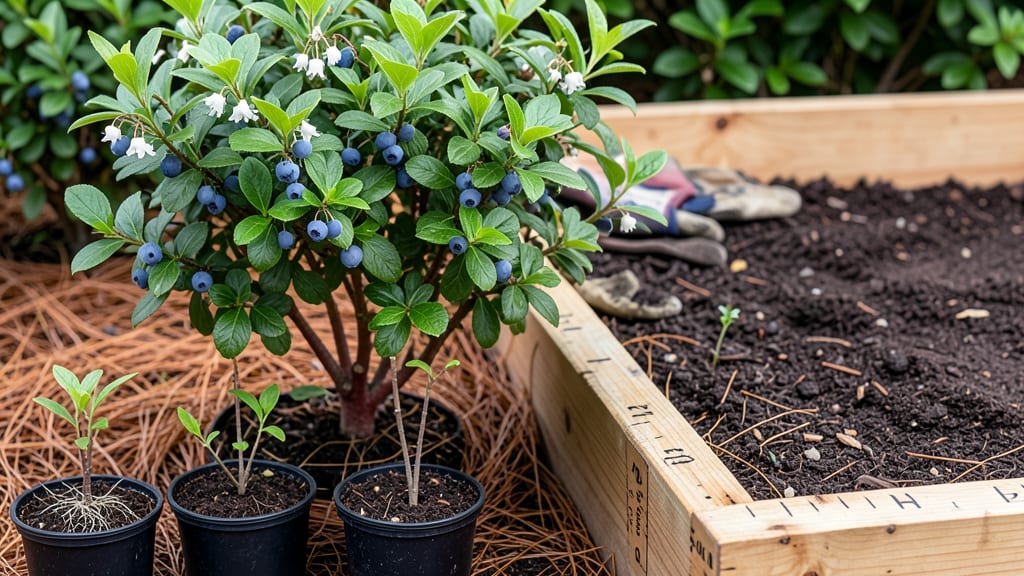
Blueberry raised bed spacing requires 18–24 inches between plants for dwarf varieties and 4–6 feet apart for standard bushes to ensure proper airflow, sunlight exposure, and root development. Proper spacing prevents disease and maximizes berry yield.
Getting the spacing right in your raised beds directly impacts how well your blueberries grow and produce fruit. 🌱 Dwarf varieties need less room because their roots and canopies stay compact, while standard bushes spread wider and taller, requiring more space to avoid crowding.
I’ve found that proper spacing isn’t just about fitting more plants—it’s about giving each bush room to breathe, which reduces competition for nutrients and water while keeping pests and diseases at bay.
For small gardens, you can maximize space by arranging plants in a staggered pattern rather than a grid, which mimics natural growth habits. Adding companion plants like thyme or clover between rows can also improve soil health and deter weeds.
If you’re working with containers, reduce spacing slightly to 12–18 inches for dwarf varieties, but always prioritize airflow over density.
💡 In This Article
- How Blueberry Spacing Affects Growth and Fruit Production
- Blueberry Raised Bed Layout Tips for Small Gardens
How blueberry spacing affects growth and fruit production
Blueberry bushes compete for three critical resources: sunlight, water, and nutrients. When plants are spaced too closely, their canopies shade each other, reducing photosynthesis by up to 30% in the lower leaves. This happens because blueberry leaves need direct sunlight for 6-8 hours daily to produce energy through chlorophyll.
The result? Smaller leaves, weaker stems, and fewer flowers—which directly translates to lower fruit production. 🌿
The root systems of blueberries also play a key role. Dwarf varieties develop roots that spread about 2-3 feet wide, while standard bushes can reach 4-5 feet or more. When roots overlap, they compete for moisture and nutrients in the soil, leading to stunted growth.
Studies show that crowded blueberries experience 25% less root mass compared to properly spaced plants, which means less water and nutrient uptake during critical fruiting periods.
Airflow is another critical factor—crowded plants trap moisture, creating ideal conditions for fungal diseases like botrytis (gray mold) and powdery mildew. These pathogens thrive in humid, shaded environments where air circulation is poor.
Proper spacing increases airflow by 40-50%, reducing disease pressure and allowing the foliage to dry quickly after rain. This is why organic growers often recommend wider spacing even in humid climates.
Variety-specific spacing makes a huge difference in long-term health. Dwarf varieties like 'Top Hat' or 'Peach Sorbet' stay under 3 feet tall and benefit from 18-24 inches between plants.
Standard bushes like 'Duke' or 'Bluecrop' can reach 5-6 feet tall with 5-6 foot wide canopies, requiring 4-6 feet of space to prevent branch rubbing and disease spread. The key is matching spacing to the mature plant size listed on the nursery tag.
One often-overlooked factor is the "three-year rule." Blueberries planted too closely may appear fine for the first few years, but by year three, you'll notice competition effects as canopies fill in.
This is when you'll see reduced berry size, increased pest pressure, and more frequent disease outbreaks. Proper spacing from day one prevents these issues and ensures consistent yields for decades. 🌱
Consider this real-world example: A 4' x 8' raised bed can fit 4 dwarf blueberries spaced 2 feet apart in a square pattern, but only 3 standard bushes spaced 4 feet apart.
The difference in yield potential over five years? The properly spaced standard bushes can produce 2-3 times more berries due to reduced competition and better air circulation.