
Landscaping
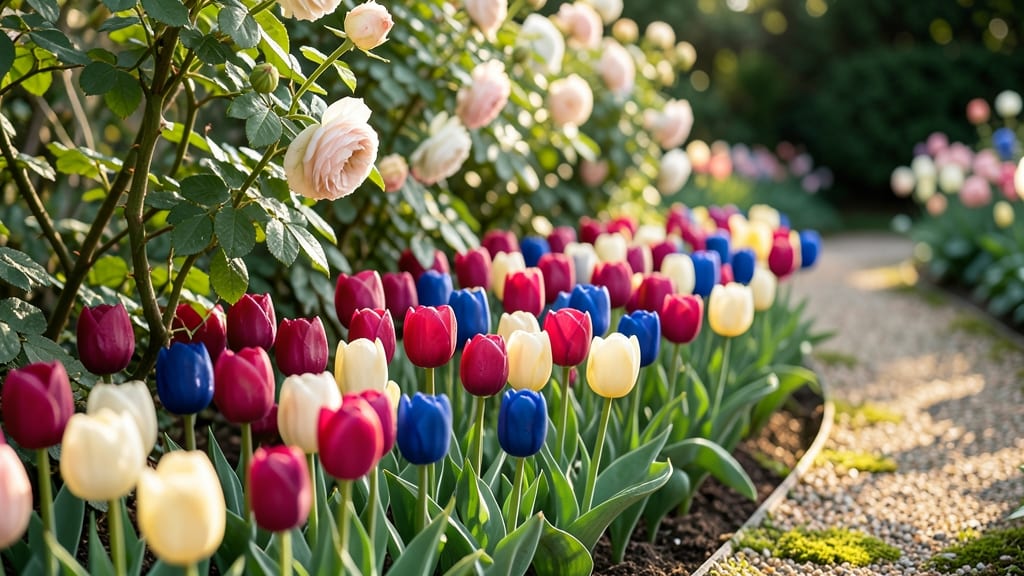
Transform your garden into a vibrant springtime showcase with these 10 low-maintenance tulip flower bed ideas. Perfect for beginners or busy gardeners, these designs blend seasonal color with easy planting techniques that minimize fuss while maximizing impact.
Classic Monochromatic Tulip Borders
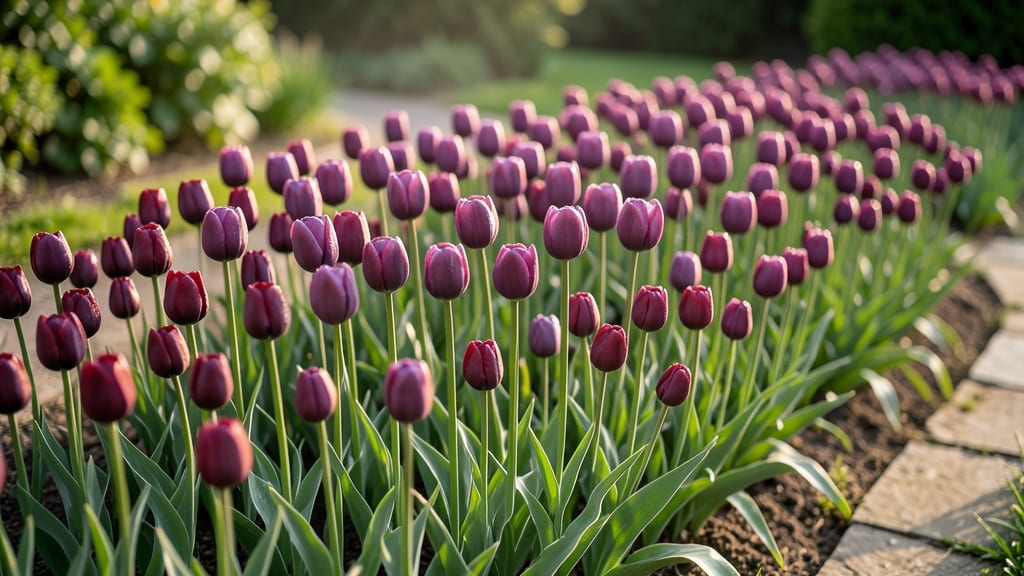
Craving a garden that feels like stepping into a Botanical Garden Magazine spread? Monochromatic tulip borders deliver that polished, professional look with just one color—no rainbow required. The secret lies in arranging tulips by height, creating a cascading effect that draws the eye while keeping maintenance simple.
Start by selecting three tulip varieties in your chosen hue, differing by height (tall, medium, short). Plant the tallest in the back, medium in the middle, and shortest at the front, spacing bulbs 4-6 inches apart for a lush, continuous edge. Use a single-color mulch like cocoa bean or dark gravel to unify the look and suppress weeds. This design thrives in full sun and works beautifully along driveways, sidewalks, or as a lawn border.
Perfect for minimalist landscapes or formal gardens, this approach requires minimal upkeep while delivering maximum impact—ideal for gardeners who love clean lines and timeless elegance. 🌻
Wildflower-Inspired Tulip Meadow
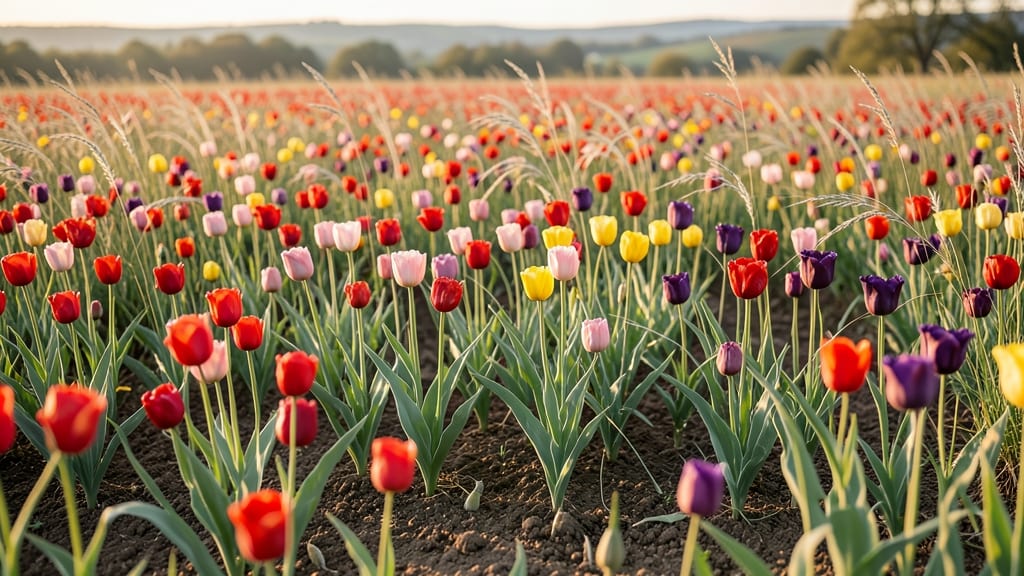
Skip the rigid rows and embrace the charm of a wildflower-inspired tulip meadow—where loose clusters of tulips spill naturally alongside native grasses for a look that feels untamed yet intentional. This design thrives in sunny, open spaces with minimal upkeep, making it perfect for cottage gardens or eco-conscious gardeners who want to support pollinators.
Start by mixing 3-5 tulip varieties in soft, complementary hues (think peach, pink, and yellow) with clumping grasses like little bluestem or switchgrass for texture. Plant bulbs in clusters of 5–7 for a natural drift, spacing them 4–6 inches apart. Let the grasses grow taller than the tulips to create movement and frame the blooms. Mulch lightly with straw to suppress weeds while keeping the meadow’s organic feel intact.
This bed requires almost no pruning—just let the tulips fade naturally and the grasses sway in the breeze. It’s ideal for gardeners who love low-maintenance beauty and want to attract bees and butterflies. 🌻
Geometric Tulip Patterns With Mulch
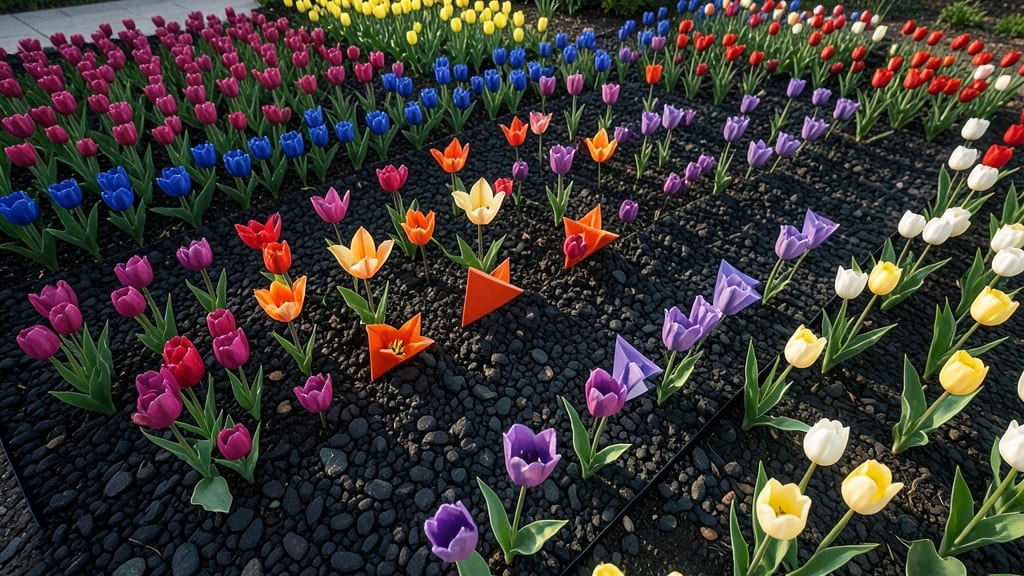
Turn your urban garden into a modern art piece with geometric tulip patterns that make a bold statement. This design transforms limited spaces into high-impact displays using clean lines—think squares, triangles, or zigzag arrangements—paired with contrasting mulch colors like black volcanic rock or white gravel for a crisp, contemporary look.
Start by sketching your design on paper, then use edging materials like metal or plastic strips to create precise borders. Plant tulip bulbs in tight clusters (about 3-4 inches apart) for dense blooms, choosing varieties with similar bloom times to ensure uniformity. For mulch, opt for dark colors like charcoal or deep red to make the flowers pop against the background.
This approach works perfectly for small balconies, courtyard gardens, or narrow side yards, offering big visual rewards with minimal space. Urban gardeners will love how this design maximizes every inch while keeping maintenance simple. ✨
Tulip And Daisy Layered Beds
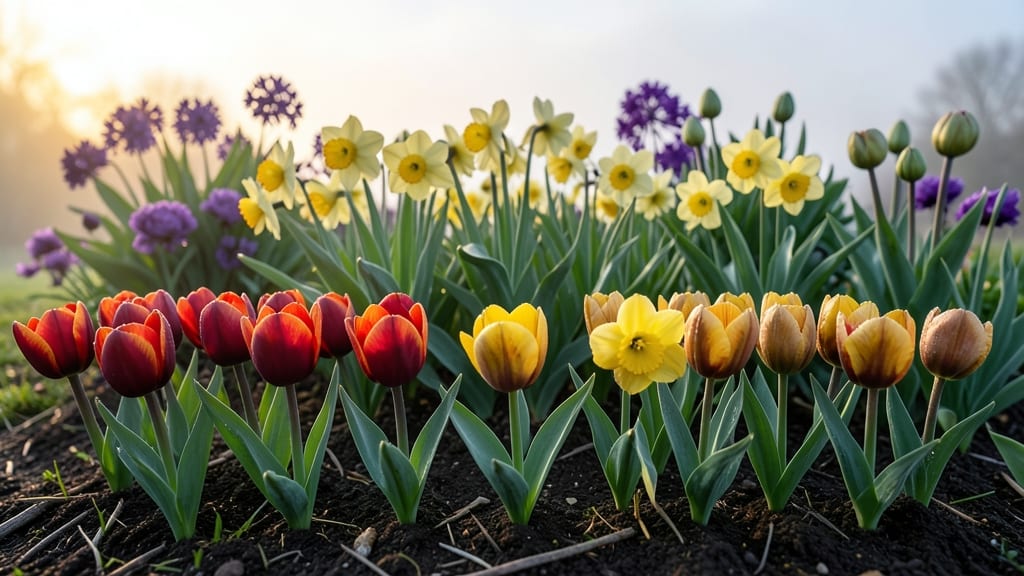
Tired of tulips fading too quickly? A layered bed combining early-blooming tulips with daffodils and late-season perennials keeps your garden vibrant from March through June without replanting every year.
Start with early tulips (like 'Darwin Hybrid' or 'Fosteriana') planted in front, followed by daffodils (such as 'Tête-à-Tête' or 'Ice Follies') for mid-spring color. Add late-blooming perennials like catmint or Russian sage in the back—they’ll emerge after tulips fade, ensuring continuous interest. This trio thrives in full sun and well-draining soil, making it ideal for most climates.
Perfect for gardeners who love low-maintenance beauty but hate seasonal gaps, this design works in borders, containers, or large beds. Just mulch after planting to retain moisture and deter weeds. 🌻
Vertical Tulip Garden On Trellis
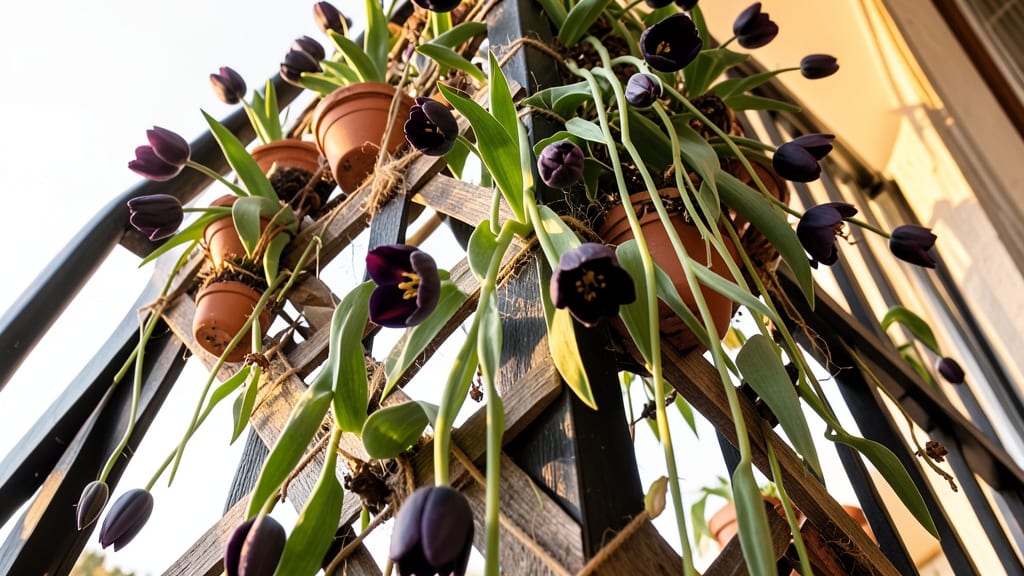
Turn your tiny balcony or patio into a stunning tulip display with a vertical tulip garden—no yard required! This clever approach lets you grow climbing tulip varieties like Tulipa 'Queen of Night' or trailing types on sturdy trellises, saving precious ground space while adding drama to small areas.
Start by selecting a trellis or obelisk (at least 4 feet tall) and plant bulbs in hanging planters or deep containers near the base. Use well-draining soil and position the trellis where it gets 6 hours of sun daily. For extra flair, mix in fast-growing vines like sweet peas or clematis to fill gaps as tulips fade. Water consistently until blooming begins, then reduce to prevent bulb rot.
This idea is a game-changer for urban gardeners and renters—just swap containers when moving. The vertical display creates a focal point that draws eyes upward, making even the smallest space feel lush and intentional. 🌻
Tulip And Hostas Contrast Beds
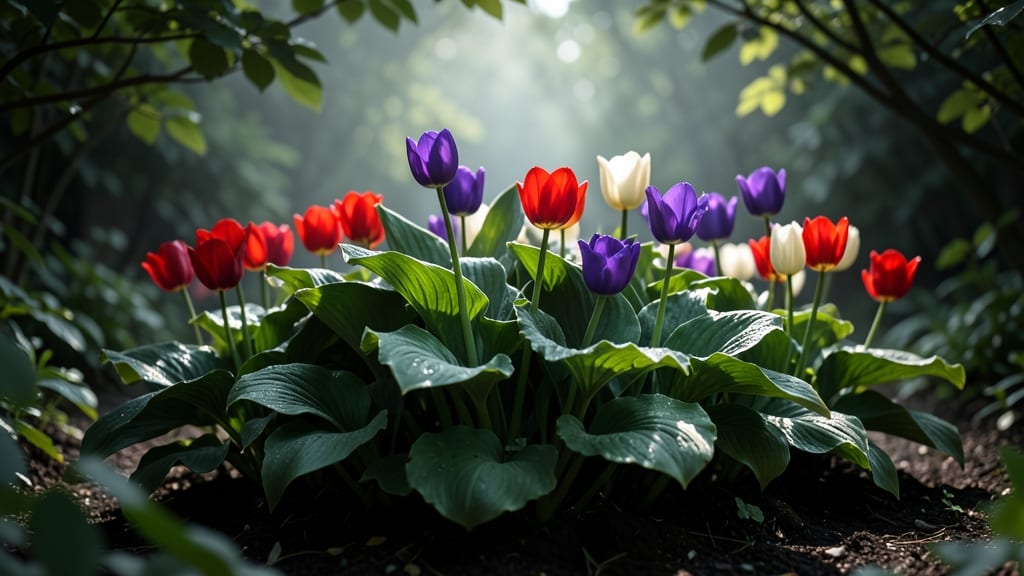
Want to turn a shady corner into a showstopper without sacrificing color? Pairing tulips with hostas creates a bold, high-impact bed that thrives in partial shade. The deep green foliage of hostas acts as a perfect backdrop, making even small clusters of tulips pop like fireworks against the dark canvas.
Plant tulip bulbs in the fall (6 inches deep) surrounded by hosta crowns spaced 12-18 inches apart. Choose early-blooming tulips like 'Queen of Night' or 'Purple Prince' for maximum contrast, and opt for hosta varieties like 'Blue Angel' or 'Patriot' for striking foliage. This combo requires minimal maintenance—hostas suppress weeds naturally while tulips provide seasonal color.
This design is perfect for gardeners who love drama with minimal upkeep, especially those with shaded spots that struggle to support sun-loving plants. The contrast creates a focal point that feels luxurious yet effortless. 💚
Tulip Container Garden Ideas
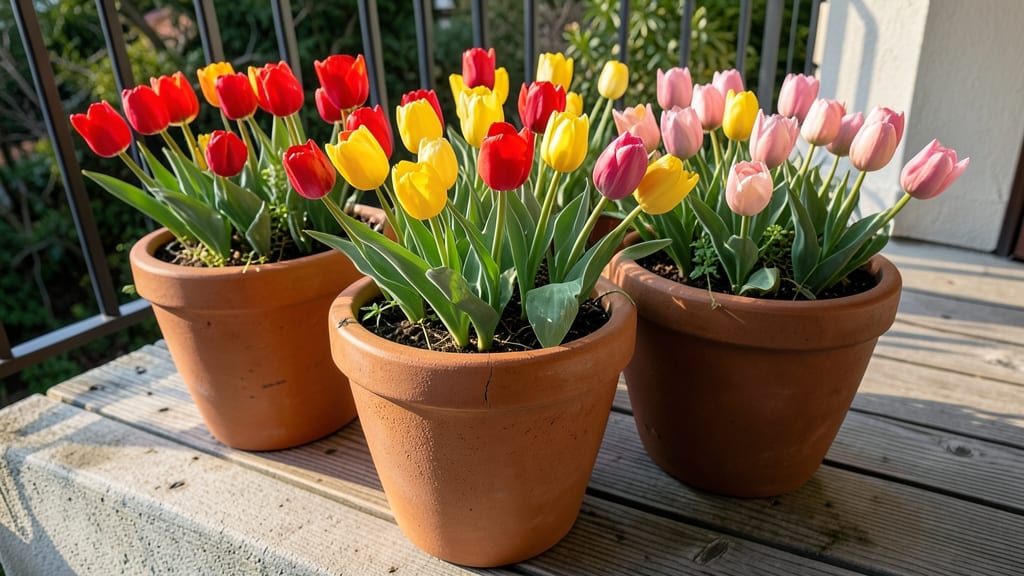
Skip the permanent flower bed and bring spring's brightest colors to any space with tulip container gardens. These portable displays let you create vibrant focal points on balconies, patios, or even apartment doorsteps—no permanent planting required!
Start with large containers (at least 12 inches deep) to accommodate tulip bulbs planted 6-8 inches deep. Choose cascading varieties like 'Darwin Hybrid' tulips paired with trailing fillers such as ivy or sweet alyssum for a lush, overflowing look. Add a slow-release bulb fertilizer at planting time for long-lasting blooms, and place containers in full sun (6+ hours daily) for best results.
This approach is ideal for renters, urban dwellers, or anyone wanting seasonal flexibility. Swap out containers between seasons or move them to follow the sun—your spring color show stays mobile and adaptable! 🌻
Tulip And Bulb Underplanting Scheme
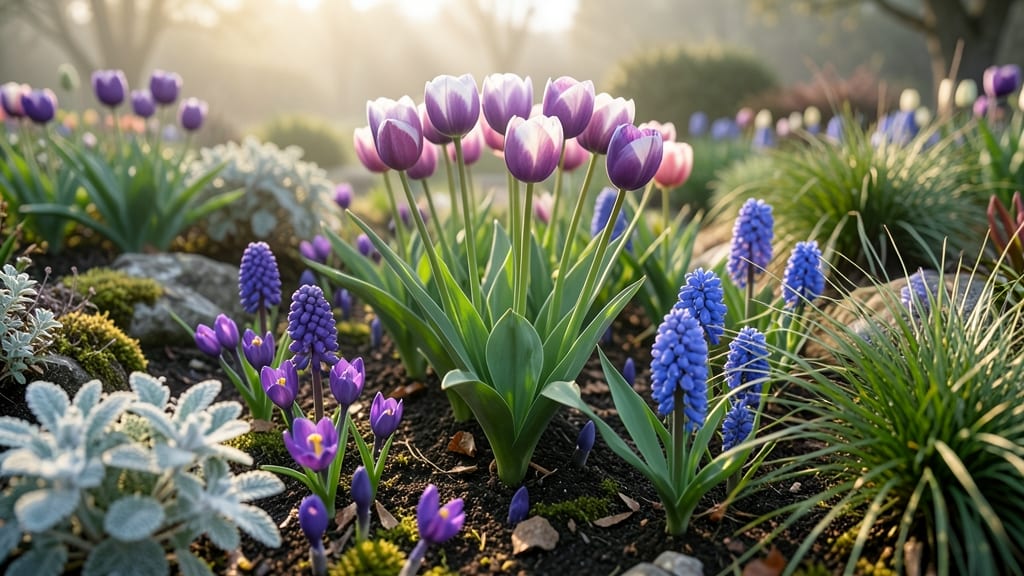
Want a garden that bursts with color from early spring through summer without replanting every year? A tulip and bulb underplanting scheme delivers year-round visual appeal by stacking crocus and hyacinths beneath tulips, then tucking in perennials for late-season flair.
Start by planting crocus and hyacinth bulbs in fall (they bloom first in early spring), then add tulip bulbs 2–4 inches deeper on top. Choose late-blooming tulips (like 'Darwin Hybrid' or 'Parrot' varieties) to emerge after the smaller bulbs fade. Finally, fill gaps with perennials like catmint, salvia, or ornamental grasses—they’ll grow up through the tulip foliage by summer, creating seamless transitions.
This method works beautifully in sunny borders or containers, offering low-maintenance beauty for gardeners who crave extended seasonality. Just mulch lightly after planting to retain moisture and deter weeds. 💚
Tulip Moon Garden With Silver Foliage
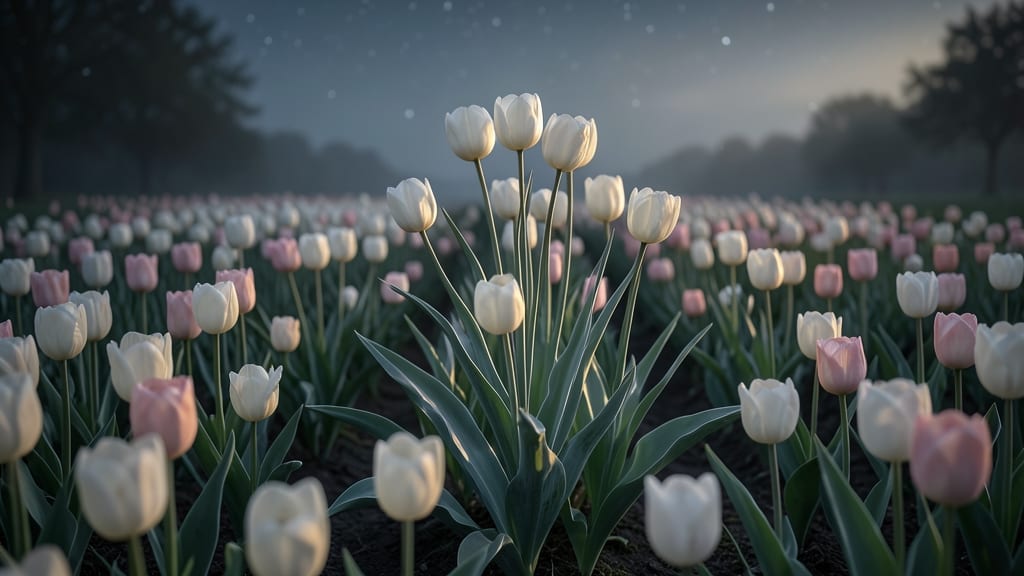
Create a magical evening retreat with a Tulip Moon Garden, where soft white and pale tulips glow against silvery foliage under moonlight. This design transforms your garden into a serene nighttime sanctuary, perfect for gardeners who love the quiet beauty of twilight hours.
Start with white tulips like 'White Dream' or 'Ice Queen' paired with silvery plants such as lamb's ear (Stachys byzantina) or silver sage (Salvia argentea). Plant bulbs in well-draining soil in late fall, spacing them 4-6 inches apart, and add a layer of light-colored gravel mulch to enhance the luminous effect. For extra ambiance, string solar-powered fairy lights overhead to highlight the silvery foliage and tulip blooms as dusk falls.
This design thrives in full to partial sun and requires minimal upkeep—just deadhead spent blooms and water occasionally. It’s ideal for gardeners who want to create a peaceful, ethereal space that sparkles after dark, making evenings feel like a dream. ✨
Tulip And Rose Companion Planting

Create a romantic garden retreat that blooms from spring to summer with the perfect pairing: tulips at the base of climbing roses. This classic combo extends your garden’s beauty while filling the air with intoxicating fragrance—tulips provide early spring color, while roses take over as they fade, creating a seamless transition.
Start by planting tulip bulbs in early fall (6 inches deep) beneath your rose bush, choosing varieties like 'Pink Parrot' or 'Queen of Night' for bold contrast. Select a climbing rose variety (such as 'Blaze' or 'New Dawn') that blooms in late spring or summer, ensuring their canes will arch gracefully over the tulips. Add a layer of mulch to retain moisture and suppress weeds, and water deeply after planting. This pairing thrives in full sun to partial shade and well-draining soil.
This design is ideal for gardeners who love fragrant, low-maintenance beds that evolve naturally throughout the season. The tulips’ vibrant blooms will draw pollinators, while the roses provide long-lasting color and a touch of old-world charm. 🌷