
Landscaping
Transforming a sloped yard into a stunning flower bed doesn’t require heavy machinery. These 10 natural terracing solutions use plants, rocks, and organic materials to control erosion while creating breathtaking layered gardens that thrive year-round.
Natural Stone Retaining Walls with Wildflowers
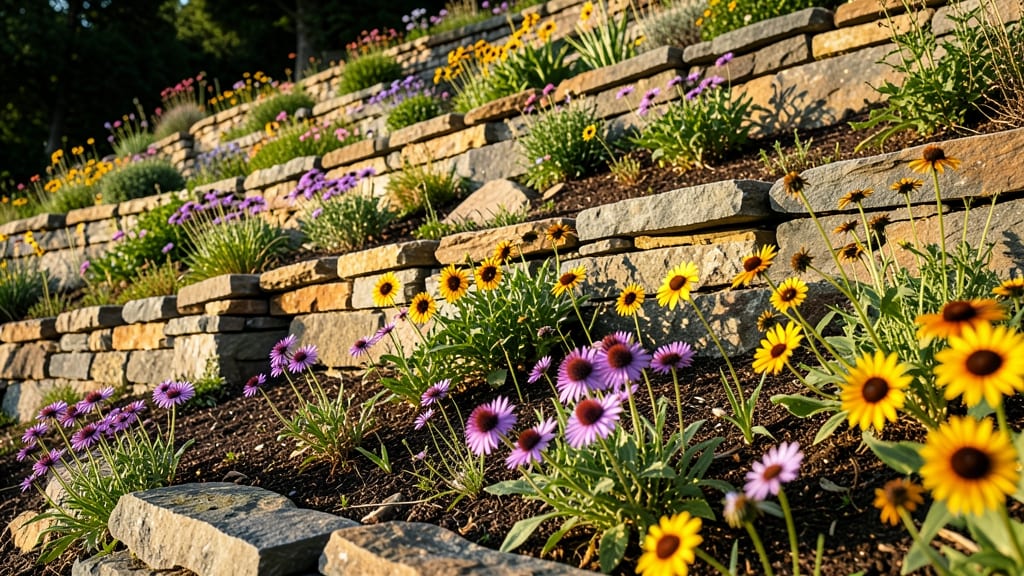
Turn your steepest slopes into a pollinator paradise with natural stone retaining walls that double as erosion barriers. These timeless structures create stable pockets perfect for drought-resistant wildflowers like coneflowers and black-eyed Susans, which thrive with minimal watering once established.
Start by selecting irregularly shaped stones (fieldstone or river rock) to create staggered layers that mimic natural terrain. Leave gaps between stones to plant wildflower seeds or plugs—these native perennials will spread over time while their deep roots bind soil. For extra stability, weave in native grasses like little bluestem between stones. This method works beautifully on slopes up to 45 degrees and requires no irrigation once the plants are established.
Perfect for gardeners who want both beauty and function, these walls blend seamlessly into natural landscapes while supporting local ecosystems. The best part? You’ll spend less time maintaining and more time enjoying your thriving pollinator haven. 🌻
Wood Chip Terraces with Perennial Borders
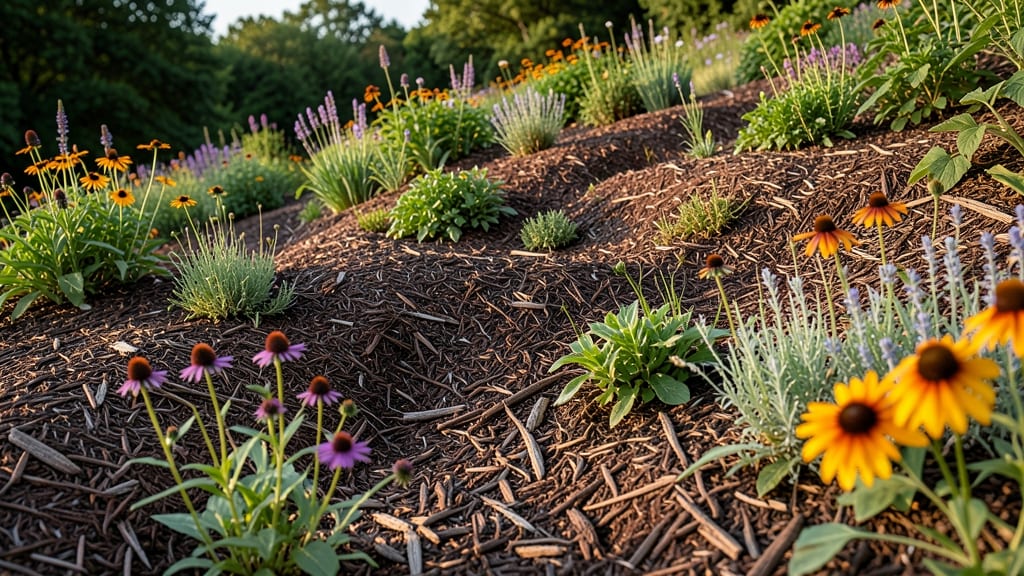
If your yard has a gentle slope but you’re tired of soil washing away every spring, wood chip terraces are your secret weapon. This organic approach combines the weed-blocking power of wood chips with the beauty of layered perennials, creating a self-sustaining system that stabilizes soil while adding texture and color.
Start by shaping shallow, curved terraces (about 6–12 inches deep) along the slope, spacing them 2–3 feet apart. Fill each layer with 3–4 inches of wood chips (cedar or hardwood works best) to smother weeds and retain moisture. Then, plant hostas for lush foliage and sedum for drought tolerance at the edges—these perennials will spread over time, knitting the terraces together naturally. The wood chips break down slowly, replenishing the soil with nutrients.
This method is ideal for beginners or busy gardeners who want low-maintenance beauty without the upkeep of stone walls or concrete. Plus, the layered design softens the slope’s appearance while creating cozy microclimates for pollinators. 🌿
Grass and Clover Living Sod Terraces
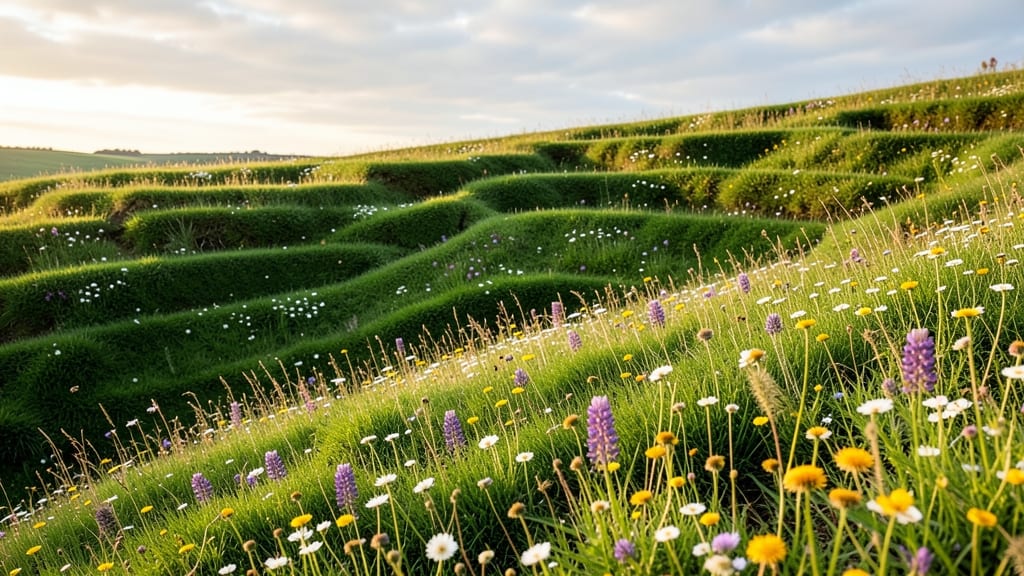
Want a pollinator-friendly lawn that also controls erosion on your moderate slope? Grass and clover living sod terraces blend the best of both worlds—dense, erosion-resistant ground cover with pockets for wildflowers. This approach works beautifully where stone walls feel too heavy or wood chips might wash away.
Start by mixing fine fescue (for durability) with white Dutch clover (for nitrogen fixation and blooms). Plant the sod in staggered terraces along the slope, then tuck in wildflower plugs like blue flax or black-eyed Susans in small clusters. The clover’s shallow roots bind soil while providing nectar for bees, and the fescue handles foot traffic better than pure clover.
This method is perfect for suburban gardeners who want a low-maintenance, eco-conscious lawn that doubles as a pollinator magnet. Plus, it’s easier to install than stone terraces and far more sustainable than synthetic solutions. 🌿
Bamboo Fascine Erosion Control with Ferns

Struggling with a steep slope that refuses to stay put? Bamboo fascines offer a biodegradable, temporary solution that lets nature take the lead while you establish permanent plantings. These bundles of bamboo stakes create flexible barriers that slow water flow, giving roots time to grip the soil.
Pair them with ferns like maidenhair or astilbe—both thrive in shade and spread quickly to form a living erosion shield. The bamboo breaks down over 1-2 years, while the ferns take over as the primary stabilizers. This method is perfect for shady, steep banks where traditional terraces would be too labor-intensive.
Ideal for gardeners who want a low-cost, eco-friendly approach with minimal upkeep, this technique transforms problem slopes into lush, layered plantings without heavy machinery. 🌿
Cascading Succulent Steps with Gravel Mulch

Turn your sunbaked slope into a drought-proof masterpiece with cascading succulent steps—a low-water, high-impact solution that thrives where other plants wilt. The secret? Combining sedum and echeveria in tiered layers, separated by gravel mulch that drains excess water while preventing erosion.
Start by creating shallow, wide terraces (12-18 inches deep) along the slope, spacing them 18-24 inches apart. Fill each with a fast-draining mix of cactus soil and coarse sand, then plant sedum (for trailing texture) and echeveria (for rosette drama). Top with pebble gravel—it reflects heat, suppresses weeds, and mimics the natural habitat of these water-wise stars.
This design is perfect for urban gardeners or anyone with a sunny, dry slope—it requires zero irrigation once established and blooms with minimal care. Plus, the minimalist aesthetic works in modern or desert-style gardens. 🌻
Willow Whitethroat Root Barriers for Wet Slopes
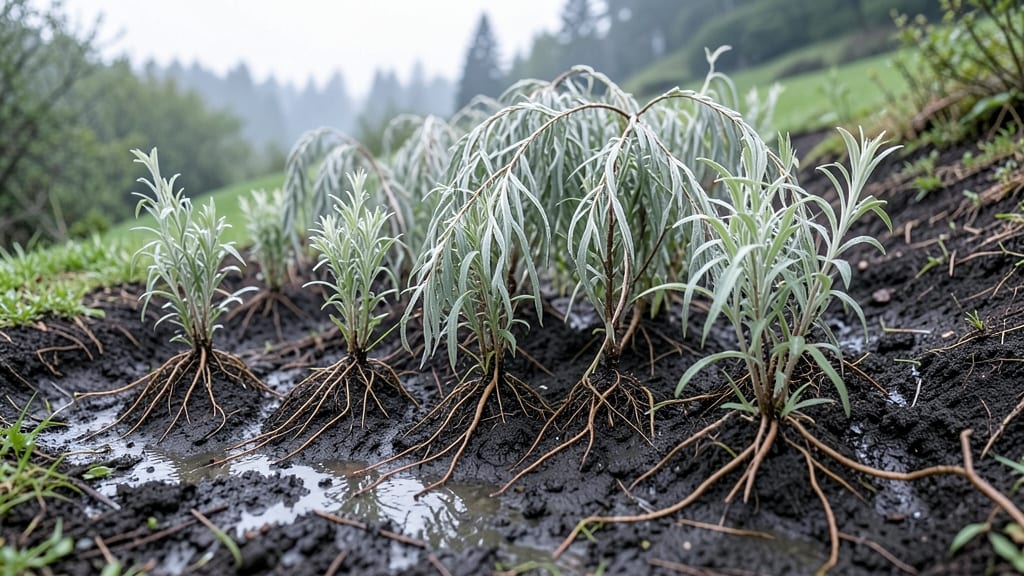
Turn soggy slopes into lush, stable gardens with willow whitethroat—a fast-growing, water-loving plant that creates natural root barriers within weeks. Unlike rigid materials, its flexible branches weave through wet soil, holding it in place while adding organic texture to your landscape.
Plant 6-inch cuttings directly into waterlogged areas in early spring, spacing them 12-18 inches apart. Pair them with moisture-loving companions like asters and lobelia to create a thriving wetland garden. The roots spread quickly, forming a living dam that reduces erosion while supporting biodiversity.
This method is perfect for gardeners with poor-drainage slopes who want a low-maintenance, eco-friendly solution. The willow’s dramatic growth and soft foliage also add a natural, wild charm to your garden. 🌿
Raised Wooden Boxes with Herbs and Thyme
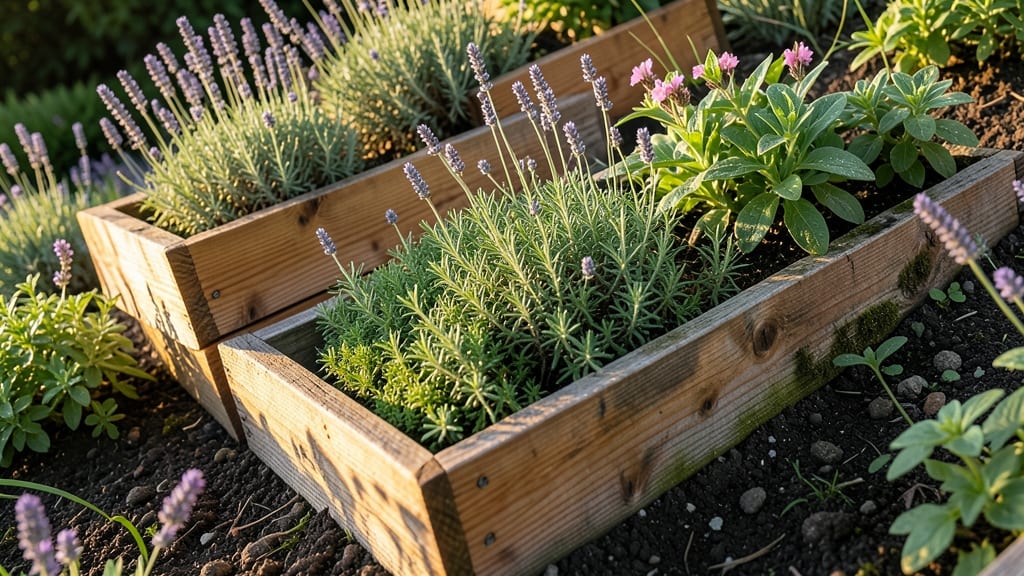
Turn a tricky small slope into a fragrant, functional terrace without breaking the bank. Raised wooden boxes filled with thyme, oregano, and lavender create defined layers that stop soil runoff while adding sensory appeal to your garden.
Use untreated cedar or redwood boxes (lasting 5-7 years) and space them 12-18 inches apart to allow water drainage between layers. Plant thyme and oregano at the edges for erosion control—their sprawling growth naturally holds soil, while lavender adds height and fragrance. These herbs thrive in full sun and need minimal water once established, making them perfect for slopes with poor soil.
This solution is ideal for urban gardeners with limited space or beginners who want a low-maintenance, aromatic garden that doubles as erosion control. The rustic charm of wooden boxes also adds character to cottage-style gardens. 🌿
Mulch and Log Steps with Shade-Loving Plants
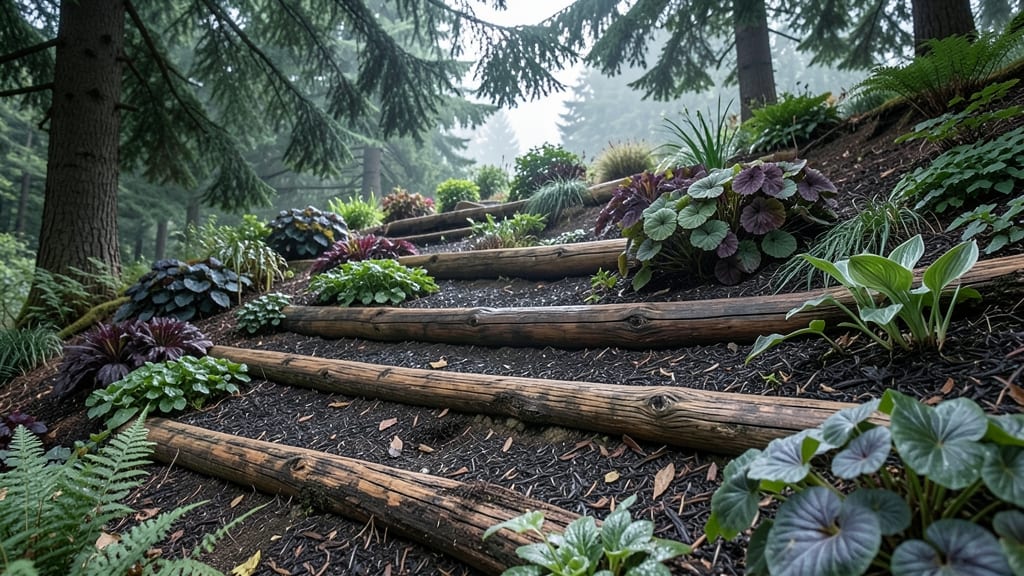
Turn your shady, erosion-prone slope into a thriving garden oasis with mulch and log steps—a perfect solution for north-facing slopes where sunlight is scarce. This method transforms bare, unstable soil into lush terraces that support heuchera, lungwort, and other shade-loving plants while keeping erosion at bay.
Start by placing stacked logs horizontally across the slope, creating natural steps. Fill the gaps between logs with thick layers of mulch (wood chips or shredded bark work best) to suppress weeds and retain moisture. Plant heuchera for bold foliage or lungwort for delicate blooms—both thrive in partial to full shade and add texture to the layered design.
This approach is ideal for beginners or gardeners with limited space, as it requires minimal tools and maintenance. The logs provide structure, while the mulch protects roots and prevents soil from washing away during rain. 💚
Hugelkultur Mounds with Ornamental Grasses
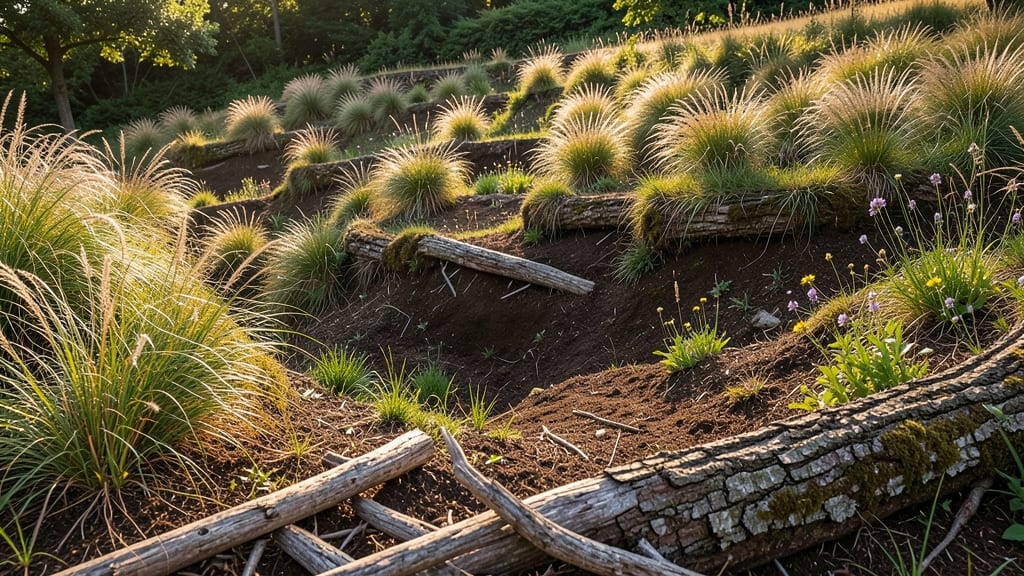
Turn your sloped yard into a self-sustaining ecosystem with hugelkultur mounds—a permaculture technique that transforms buried logs and branches into moisture-retaining mounds perfect for ornamental grasses. This method not only stabilizes soil but also creates a thriving microclimate for drought-resistant plants like miscanthus and pampas grass, which sway dramatically in the breeze while preventing erosion.
Start by layering fallen branches, logs, and leaf litter in a trench on your slope, then cover with soil and top with your chosen ornamental grasses. The decaying wood slowly releases nutrients, reducing the need for fertilizers while retaining moisture for years. These mounds work especially well on dry or sunny slopes, where grasses like maiden grass or feather reed grass will thrive with minimal watering.
Perfect for gardeners who want a low-maintenance, eco-friendly solution that blends seamlessly into natural landscapes, hugelkultur mounds also create stunning visual contrast with their textured layers. 🌿
Vine-Covered Gabion Baskets with Climbing Roses

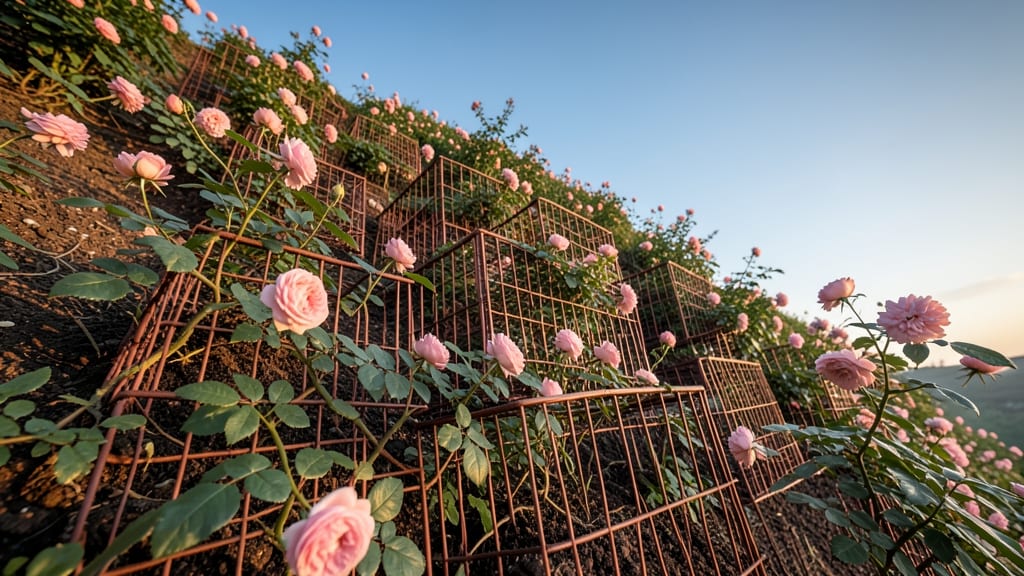
Turn your steep slope into a romantic vertical garden with gabion baskets and climbing roses—a striking solution that softens erosion while adding drama. These wire mesh baskets, filled with soil and roses like ‘New Dawn’, create natural terraces that hug the slope, preventing soil runoff while their vines spill gracefully over the edges.
Start by stacking gabion baskets along the slope, securing them with landscape staples or rocks to prevent shifting. Plant climbing roses at the base, training their canes to weave through the wire mesh for maximum coverage. Choose drought-tolerant varieties like ‘Blaze’ or ‘Zephirine Drouhin’ for slopes with limited water access, and mulch the soil to retain moisture. Prune in late winter to encourage dense growth and control the vine’s spread.
This method is perfect for gardeners who love industrial-meets-romantic aesthetics and want a low-maintenance way to transform a problem slope into a year-round focal point. The vertical growth also adds depth to small spaces, making it ideal for urban gardens or steep backyards. ✨