
Landscaping
Struggling to keep your shade garden vibrant? These zero-fuss flower bed ideas bloom beautifully in low light while requiring minimal maintenance—perfect for busy gardeners who still want year-round color.
Hostas with Fern Fronds and Bleeding Hearts
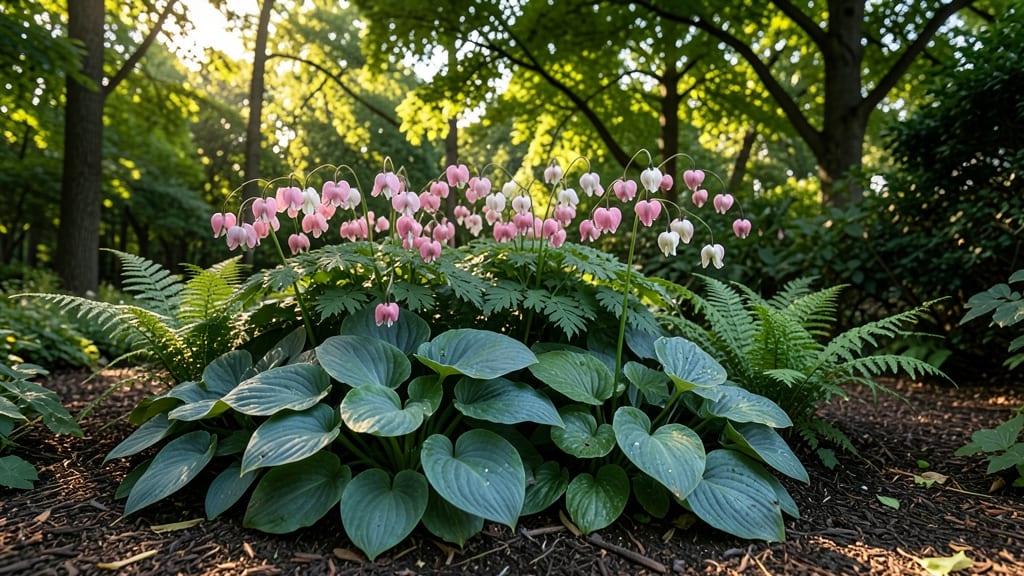
Turn your darkest garden corners into a lush, thriving retreat with this three-layered shade combo that works where sunlight barely reaches. The secret? Combining hostas for bold foliage, bleeding hearts for romantic blooms, and ferns for airy texture—all thriving in full to partial shade.
Start with hostas as your star player—their broad, glossy leaves create instant drama in deep shade. Pair them with bleeding hearts (Dicentra spectabilis), which bloom in early spring with heart-shaped flowers before fading into attractive foliage. Tuck in Japanese painted ferns (Athyrium niponicum) or maidenhair ferns for delicate, feathery contrast that sways gently in the breeze.
This trio is perfect for gardeners who want low-maintenance beauty without sacrificing visual interest. The ferns and hostas provide year-round structure, while bleeding hearts deliver seasonal color—ideal for woodland gardens, foundation plantings, or shady patios. 🌿
Impatiens and Begonias in Containers
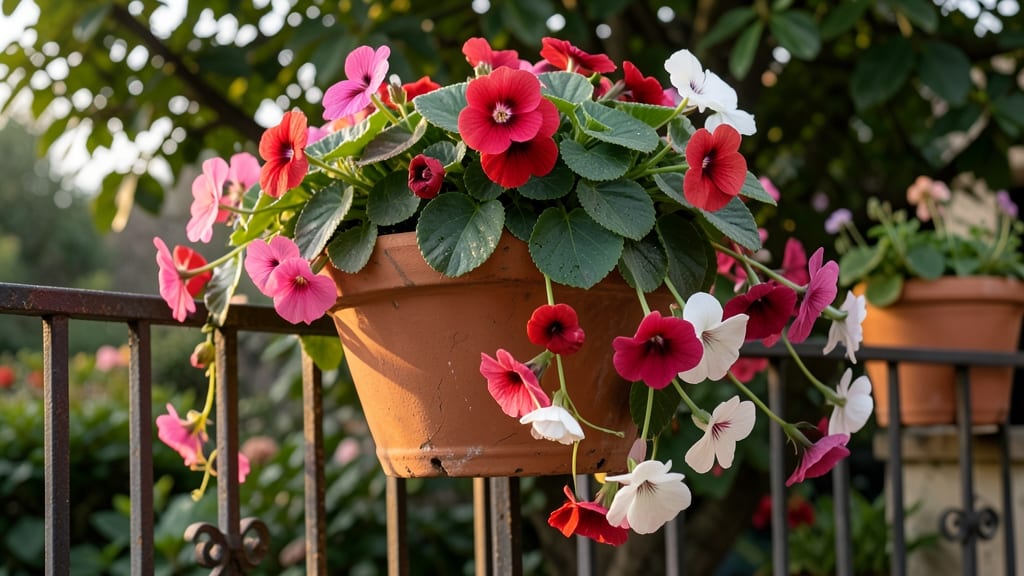
If you’re dreaming of vibrant color but only have partial shade and limited space, impatiens and begonias are your secret weapons. These cheerful annuals thrive in containers, making them ideal for balconies, patios, or even windowsills—no garden bed required!
Start with impatiens, which spill over pot edges in shades of pink, red, and white, and pair them with begonias for glossy foliage in deep greens or burgundy. Both love morning sun and afternoon shade, and their bright blooms last all summer with minimal care—just keep soil moist and deadhead spent flowers. Use lightweight pots with drainage holes to prevent root rot.
This combo is perfect for renters, urban gardeners, or anyone who wants instant curb appeal. Swap out pots seasonally for a fresh look year after year! 🌻
Heuchera and Coral Bells Pairings
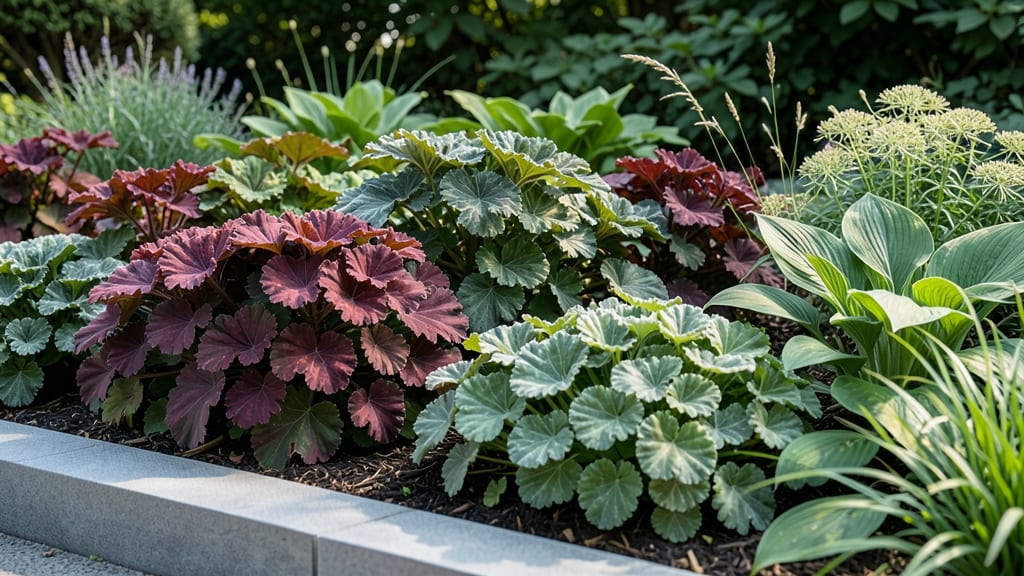
Skip the fuss of seasonal color changes—heuchera (also called coral bells) and its foliage-focused cousins deliver year-round visual interest with minimal effort. These plants thrive in shade while offering vibrant hues that rival any flower bed, making them perfect for modern gardens where form and texture take center stage.
Pair heuchera varieties like 'Palace Purple' or 'Lime Rickey' with coral bells (Heuchera varieties with delicate flowers) for a mix of bold leaves and airy blooms. Both love partial to full shade and well-draining soil, making them ideal for urban courtyards or understory plantings. Their compact size (12-18 inches tall) ensures they won’t overwhelm smaller spaces.
This combo is ideal for gardeners who prioritize low-maintenance beauty without sacrificing style. The foliage’s rich colors—from deep purples to chartreuse—create striking contrast, while the occasional blooms add unexpected pops of color. 💚
Astilbe with Asters and Japanese Painted Ferns
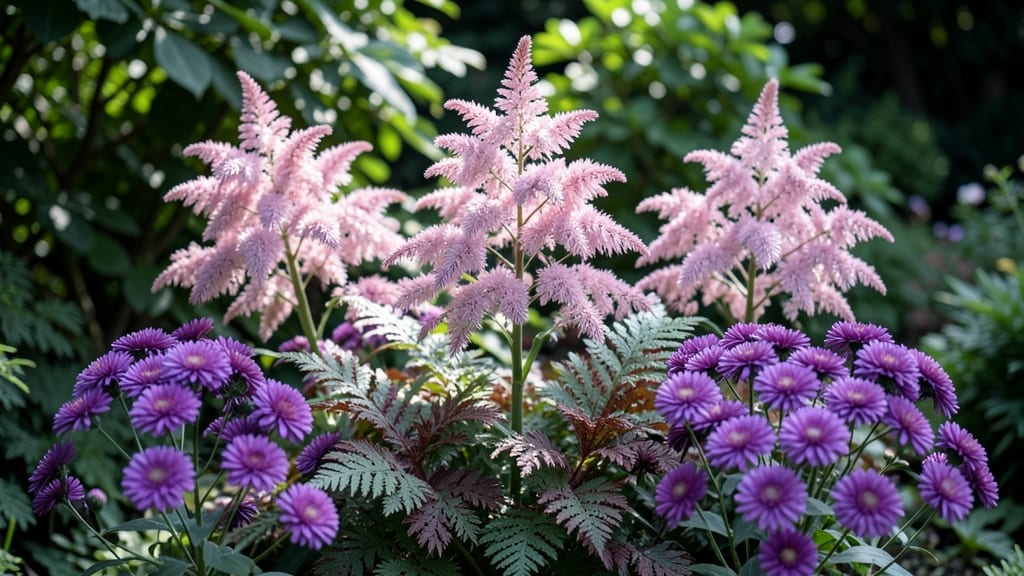
If your shade garden feels flat or too dense, this trio of airy, textured plants will transform it into a dynamic, layered display. Astilbe lifts the scene with its feathery plumes, while asters extend blooms into fall, and Japanese painted ferns weave delicate lacework through the gaps—all while thriving in dappled light.
Plant astilbe in clusters at the back (2-3 feet tall) for dramatic height, then tuck asters (1-2 feet) behind ferns to create depth. All three prefer moist, well-draining soil—mulch with shredded bark to retain humidity. The ferns’ silvery foliage contrasts beautifully with astilbe’s pink or white plumes and asters’ purple blooms, ensuring interest from spring through frost.
This combination is perfect for gardeners who love romantic cottage-style gardens but want low-maintenance plants. The ferns suppress weeds naturally, while the asters attract pollinators—making it both beautiful and functional. 🌷
Lungwort and Sweet Woodruff Ground Cover
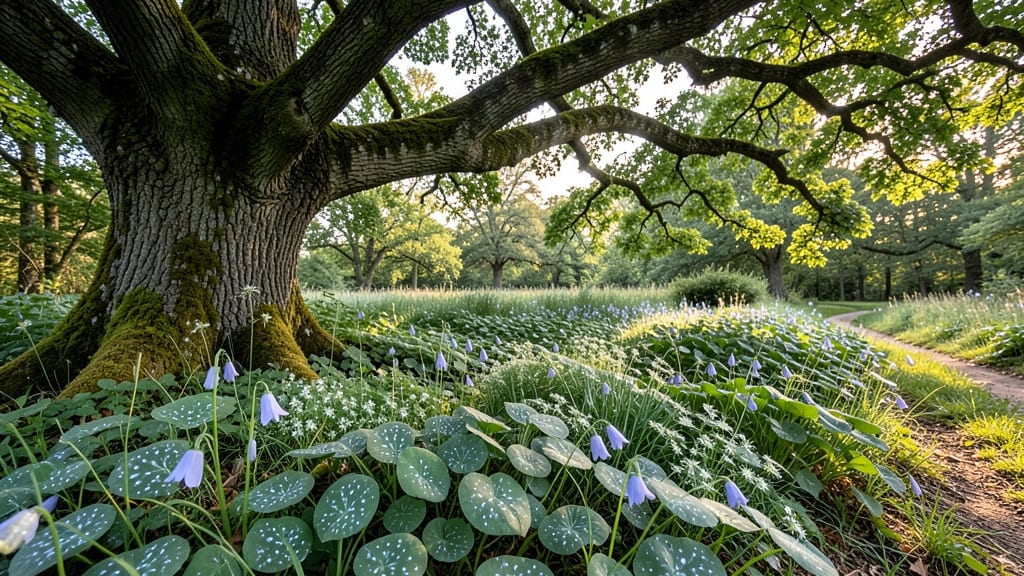
Tired of battling weeds under your trees or along shady paths? Lungwort and sweet woodruff are the ultimate understory duo—spreading naturally to crowd out weeds while adding delicate charm. These perennial ground covers thrive in dappled shade where most plants struggle, with lungwort's silver-spotted foliage and sweet woodruff's fragrant, heart-shaped leaves creating a lush carpet.
Both plants prefer moist, well-draining soil and bloom in early spring with lungwort's blue flowers and sweet woodruff's tiny white blossoms. They're deer-resistant and handle foot traffic better than many alternatives, making them ideal for walkways. Simply divide clumps every 3-4 years to keep them vigorous—no pruning required!
Perfect for woodland gardens or urban courtyards, these plants turn neglected shade spots into living tapestries with minimal effort. 🌿
Daffodils and Snowdrops with Hellebores
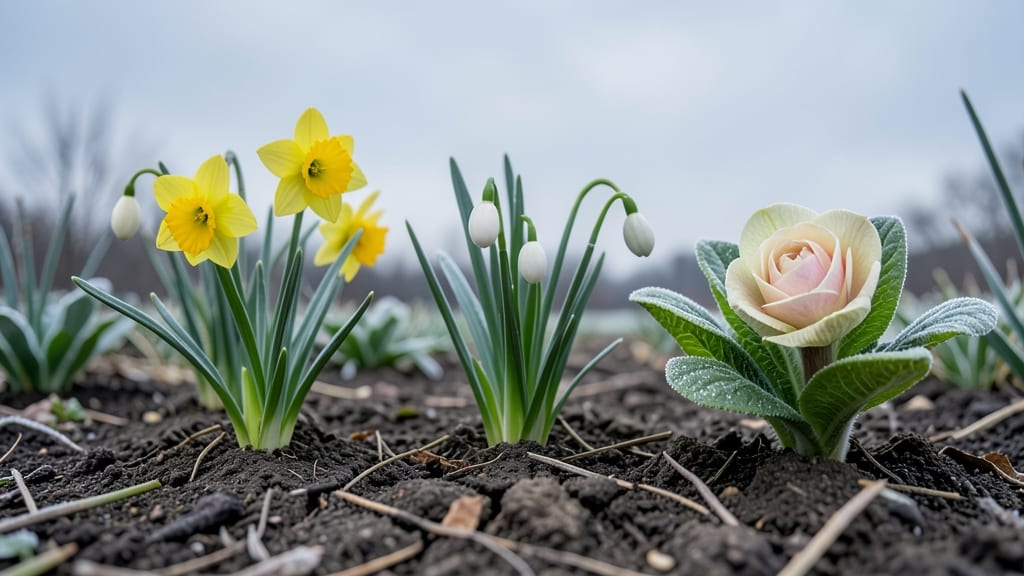
When spring seems like it’ll never arrive, these early bloomers prove winter isn’t the end of your garden’s story. Daffodils and snowdrops burst through cold soil as soon as temperatures rise, while hellebores (Lenten roses) nod their delicate blooms in late winter—often before snow melts. This trio creates a cascading effect of color that lifts even the gloomiest shade garden.
Plant snowdrops in fall for early blooms, then add hellebores in spring—their deep green foliage stays attractive all season. Daffodils should go in autumn too, but choose varieties like ‘Tête-à-Tête’ for compact growth in shaded spots. All three thrive in partial shade and are deer-resistant, making them perfect for problem areas. Mulch with leaf mold to protect roots during winter’s last cold snaps.
This combination is ideal for gardeners who want instant impact with minimal effort—just plant once and enjoy years of cheerful returns. Perfect for cottage-style gardens or woodland edges where early color is a welcome surprise. ✨
Caladiums and Coleus for Tropical Shade
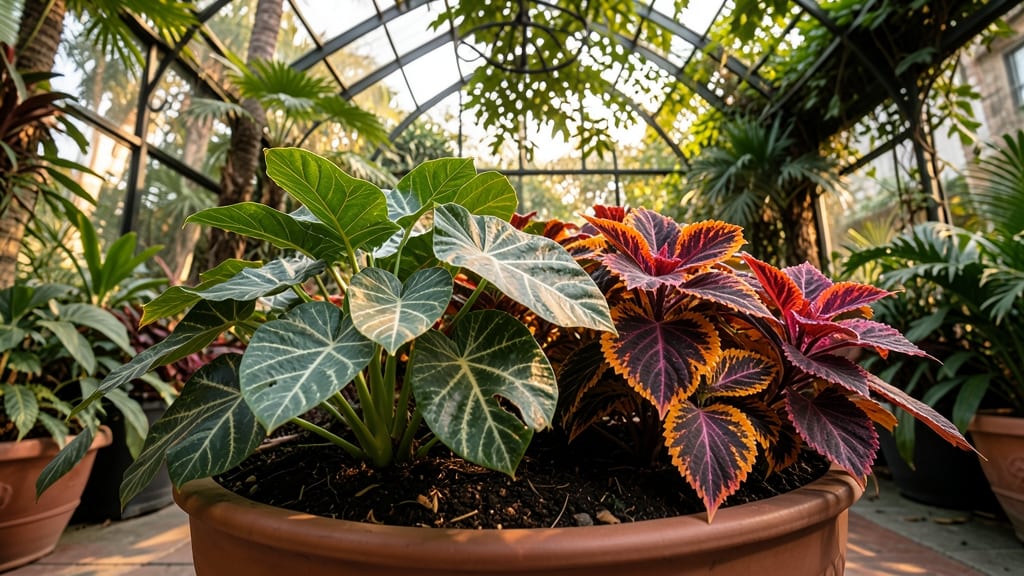
Transform your hot, shady patio or conservatory into a tropical oasis with caladiums and coleus—two showstopping plants that thrive where others falter. Their bold, patterned leaves create instant drama, making them perfect for containers or shaded garden beds where sunlight barely reaches.
Caladiums love humidity and indirect light, flourishing in spots that get 4-6 hours of bright, filtered sun—think dappled shade under trees or near east-facing windows. Coleus, meanwhile, offers endless color variations (from deep purples to fiery oranges) and grows quickly, letting you rotate varieties seasonally. Keep soil consistently moist but well-draining, and pinch back leggy stems to encourage bushier growth.
These plants are ideal for urban gardeners with limited space or those craving a low-maintenance tropical escape. Pair them with fern fronds or bromeliads for extra lushness, and watch your shade garden become the envy of the neighborhood. 🌿
Foxgloves and Columbines with Lamium
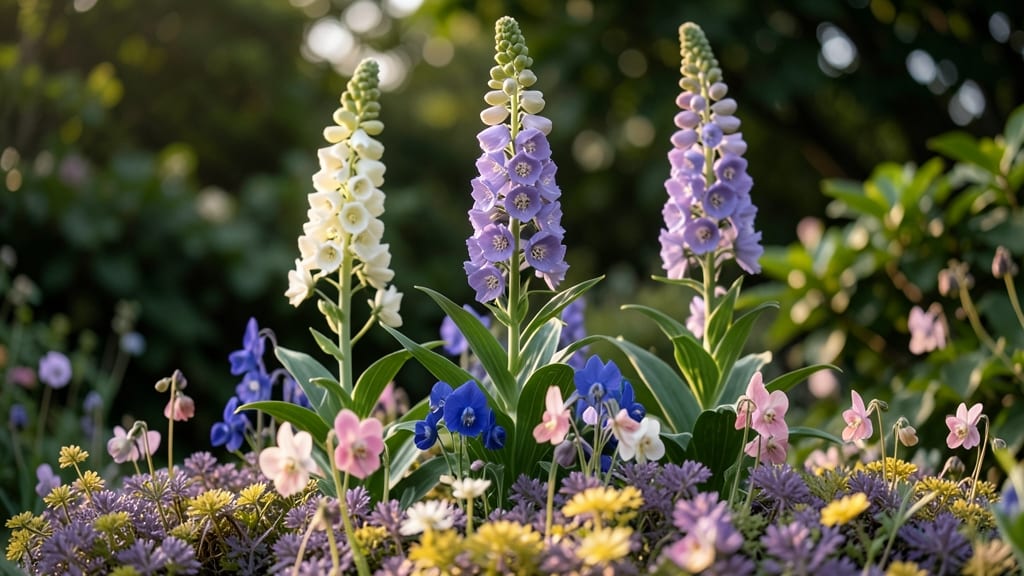
Create a vertical garden statement in your shade bed with this trio of pollinator magnets that bring both height and movement. Foxgloves (Digitalis) and columbines (Aquilegia) reach skyward with their spiky blooms, while lamium (dead nettle) sprawls beneath them like a living carpet of purple or gold.
Plant foxgloves (2-5 feet tall) at the back for dramatic vertical lines, then add columbines (1-3 feet) in front—their nodding flowers will sway in the breeze. Tuck lamium around the base, where its trailing stems will spill over edges, creating a soft contrast to the upright stems. All three thrive in partial shade and well-draining soil, making them perfect for woodland gardens or understory plantings. Their combined height and texture create a natural focal point that draws the eye upward.
This combination is ideal for cottage-style gardens or pollinator-friendly spaces, as both foxgloves and columbines are beloved by bees and hummingbirds. The lamium’s dense foliage also helps suppress weeds, reducing maintenance while keeping your shade bed looking intentional. 🌷
Japanese Anemones and Toad Lilies
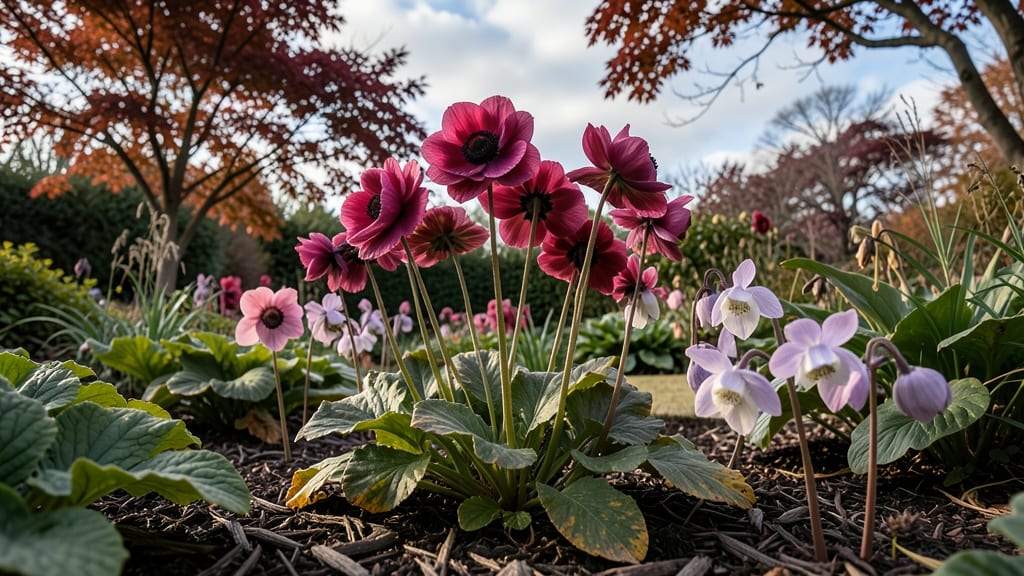
When summer’s peak has passed and most gardens fade into dormancy, Japanese anemones and toad lilies step in to steal the show. These late-season stars thrive in shade, offering dramatic blooms when other plants are winding down—perfect for extending your garden’s life into crisp autumn days.
Start with Japanese anemones (Anemone × hybrida), which produce pink or white, cup-shaped blooms on tall stems (3-5 feet) from late summer through fall. Their dark, glossy foliage adds structure even after flowers fade. Pair them with toad lilies (Tricyrtis), whose spider-like, orchid-like flowers in shades of purple, white, or yellow appear in late summer to early fall. Both love partial to full shade and moist, well-draining soil—ideal for woodland gardens or understory plantings.
This duo is ideal for gardeners who want autumn drama without the fuss. The anemones’ bold flowers contrast beautifully with toad lilies’ delicate blooms, while their deep green foliage provides year-round interest. Plant them together for a romantic, slightly wild look that thrives in shade. 🌷
Moss Gardens with Miniature Hostas

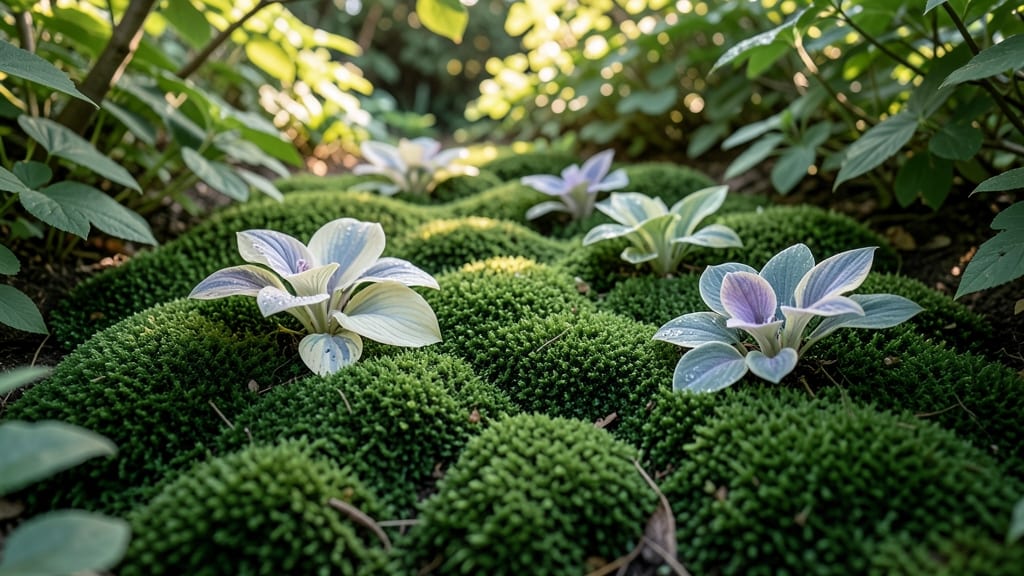
Skip the high-maintenance ground covers—this serene duo of moss and miniature hostas creates a living carpet that thrives where most plants fail. The secret? Moss acts as a natural weed suppressor, while tiny hosta varieties like 'Pandora' or 'Blue Mouse Ears' add delicate variegation and subtle color without overwhelming the space.
Start by selecting a shady, moist spot with indirect light—think under trees, along north-facing walls, or in rock gardens. Spread a thin layer of acidic, well-draining soil over the area, then scatter sheet moss (Hypnum) seeds or plugs. Once established, tuck in miniature hostas (6-12 inches tall) at 12-inch intervals for a dotted effect. Water gently to avoid disturbing the moss, and mulch with pine needles to maintain moisture and acidity.
This combo is perfect for urban gardeners with limited space or anyone craving a low-fuss, woodland-inspired look. The moss stays lush year-round, while hostas provide seasonal interest—ideal for shaded patios, fairy gardens, or even as a living border. 💚