
Tools
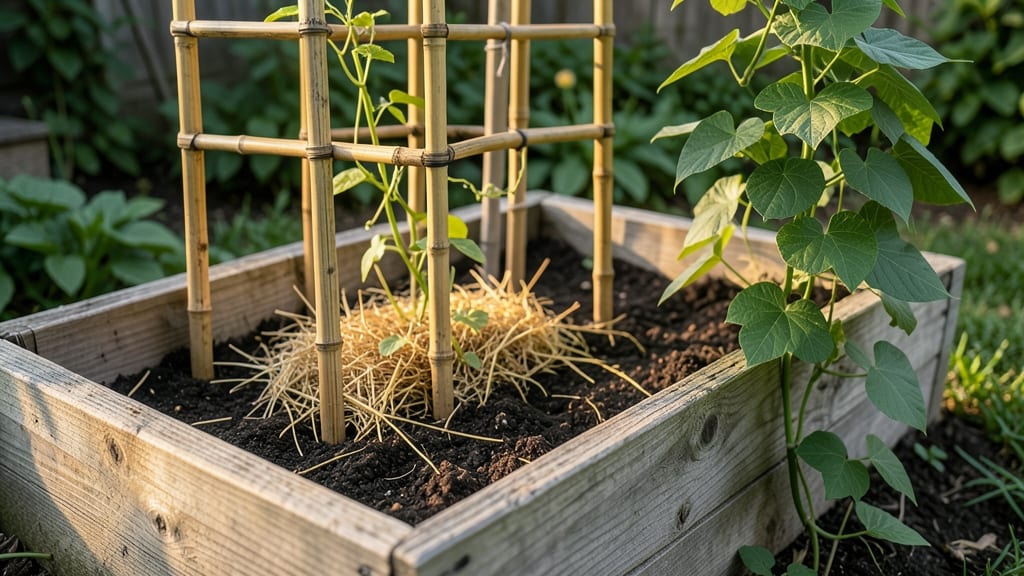
A raised bed green bean trellis turns sprawling vines into a compact, productive vertical garden. 🌱 I used to struggle with tangled beans taking over my beds—until I built a simple A-frame trellis that doubled my harvest in the same space.
The right trellis keeps beans off the ground where they rot, improves airflow to prevent disease, and makes harvesting a breeze. You can use bamboo stakes, metal grids, or even repurposed fencing—just ensure it’s sturdy enough to support 6-foot vines without bending.
Start with 2-foot spacing between supports and place them at the bed’s center for even growth. Bush beans need less support, but pole varieties will climb eagerly, producing straighter, cleaner pods. This setup works for any raised bed size and pairs perfectly with companion plants like radishes or lettuce.
Let’s get those beans growing sky-high!
📚 In This Guide
- What you need
- Instructions
- Tips and common mistakes
- Wrapping up and next steps
What you need
- ● Trellis Material: 1–2 rolls of 1/4"–1/2" galvanized wire mesh (4'–6' wide, 20'–50' long) OR
- ● 4–6 bamboo stakes (3/8"–1/2" diameter, 6'–8' tall) OR
- ● 2–4 wooden stakes (2x2 or 2x4, 6'–8' tall)
- ● Fasteners: Z-ties, zip ties, or galvanized staples (if using wire mesh)
- ● Twine or jute twine (1/4"–1/2" thick) (if using bamboo/wood)
- ● Raised Bed: A 4'x8' raised bed (minimum 12" deep) or custom-sized bed
- ● Green Beans: Bush bean seeds or seedlings (e.g., Blue Lake, Kentucky Wonder, or Provider varieties)
- ● Scissors or wire cutters (for mesh)
- ● Hammer or mallet (if using wooden stakes)
- ● Measuring tape
- ● Gloves (for handling wire or twine)
- ● Decorative lattice panels (for aesthetic appeal)
- ● Plant clips or soft ties (to secure vines gently)
- ● PVC pipes or rebar (for extra stability)
- ● Drip irrigation kit (to keep beans hydrated)
How to build a sturdy raised bed green bean trellis
Here's the simple, space-saving system I use to grow bush beans vertically—no more sprawling vines or wasted garden space.
🪴 Step 1: Gather Materials for a Simple Trellis Frame
For a 4-foot by 8-foot raised bed, you'll need two 6-foot tall bamboo stakes (or sturdy wooden posts) and 4-6 feet of heavy-gauge wire (16-18 gauge). I like bamboo because it's lightweight, affordable, and strong enough to support green beans without bending. If you prefer wood, use 2x2 lumber instead—just make sure it's treated to resist rot.
Position the stakes at opposite corners of the bed, about 12 inches from each end. Drive them 6 inches deep into the soil or bed's bottom layer. This depth keeps the trellis stable even when beans get heavy with pods. For extra support, add a third stake in the center if your bed is wider than 4 feet.
💧 Step 2: Attach Horizontal Rungs for Vine Support
Wrap the wire around each stake at heights of 12, 24, and 36 inches from the base. Secure it tightly with a few tight twists or use small zip ties for extra hold. The goal is to create three horizontal "rungs" where the bean vines can twine naturally. I space mine 12 inches apart—this gives the plants enough support without overcrowding.
For a stronger setup, you can also use wooden slats (1x2 boards) instead of wire. Screw them horizontally between the stakes at the same heights. Whichever you choose, make sure the supports are level—uneven rungs will cause vines to grow crooked.
☀️ Step 3: Plant Beans Near the Trellis for Easy Climbing
Sow your green bean seeds 2 inches from the trellis and 4-6 inches apart in rows. Plant them 1 inch deep and water gently to settle the soil. I like to plant two rows on either side of the trellis—this ensures even coverage and makes harvesting easier. Use the 4-foot length of the bed for planting, leaving the remaining space for other crops if needed.
As the beans sprout, watch for the first true leaves (they'll look like small, rounded leaflets). Once they appear, gently guide the main stems toward the trellis. You don’t need to tie them—green beans naturally twine around supports. If a vine strays too far, just tuck it back onto a rung. Over time, the vines will climb upward, filling the trellis with lush foliage and pods.
✂️ Step 4: Maintain and Harvest for Maximum Yield
Water the base of the trellis deeply 1-2 times per week, especially during dry spells. The goal is to keep the soil moist but not soggy—green beans hate wet roots. I water in the morning so the leaves dry quickly, which helps prevent fungal diseases. Fertilize lightly with a balanced 10-10-10 mix when flowers appear to encourage more pods.
Harvest begins when pods reach 4-6 inches long and are firm to the touch. Pick them every 2-3 days to keep the plants producing. I always harvest in the morning when the pods are crispest. To reach the higher pods, use a small stool or kneel—just avoid stepping on the bed to keep the soil stable.
🌿 Step 5: Extend the Season with Simple Adjustments
If your growing season is short, cover the trellis with frost cloth when nighttime temperatures drop below 50°F. This protects the plants and extends harvest time by 2-3 weeks. Remove the cloth during the day so the beans still get sunlight. I also add a layer of straw mulch around the base to insulate roots and retain moisture.
When the season ends, remove the trellis and compost any remaining plant debris. Clean the stakes or wire with a 10% bleach solution to prevent disease buildup for next year. Store the trellis in a dry place—it’ll be ready to reuse for another season of vertical growing.
Tips & tricks for perfect raised bed green bean trellis
Took me a while to figure these out, so here goes—these simple tricks will help you maximize your vertical growing space and keep those green beans thriving.
Stability is Key: When driving those 6-inch deep stakes, use a mallet to avoid rocking them. I learned this the hard way—shallow stakes wobble when beans get heavy, and you don't want your trellis toppling mid-harvest. For extra security, add a third stake in the center if your bed is wider than 4 feet, as mentioned in Step 1. This creates a triangle of support that won't budge even when pods are plentiful.
Rung Placement Matters: The 12-inch spacing between rungs at heights of 12, 24, and 36 inches is perfect for green beans, but here's what nobody tells you—leave a 1-inch gap between the wire and the stake. This prevents the wire from cutting into the vines as they climb. If using wooden slats, round the edges slightly with sandpaper to avoid scraping delicate stems. Uneven rungs will cause vines to grow crooked, so use a level to check your work during Step 2.
Planting Precision: Those 2 inches from the trellis and 4-6 inches apart measurements in Step 3 are ideal, but here's my secret: plant seeds slightly closer to the trellis on the side where morning sun hits first. This gives vines a head start toward the support. Also, if you're using larger bean varieties, you can stretch the spacing to 6-8 inches apart—just make sure you have enough rungs to support the extra height. The goal is to have vines reach the first rung by the time they're 6 inches tall.
Harvesting Hack: When pods reach 4-6 inches long, harvest every 2-3 days to keep production going. Here's what I do to make it easier: place a small cutting board or tray directly under the trellis before you start picking. This catches any pods that slip and prevents them from rolling into the soil. For the higher pods, I use a lightweight folding stool I keep stored nearby—no need to strain your back reaching up! And always harvest in the morning when pods are crispest and full of flavor.
Pro Tips for Raised Bed Green Bean Trellis
- Took me a while to figure these out, so here goes—these simple tricks will help you maximize your vertical growing space and keep those green beans thriving.
- Stability is Key: When driving those 6-inch deep stakes, use a mallet to avoid rocking them.
- Rung Placement Matters: The 12-inch spacing between rungs at heights of 12, 24, and 36 inches is perfect for green beans, but here's what nobody tells you—leave a 1-inch gap between the wire and the stake.
Frequently asked questions
Got questions about setting up a raised bed green bean trellis? You’re not alone! Here are answers to the most common queries to help you grow like a pro:
What’s the best material for a DIY trellis in a raised bed?
A sturdy trellis can be made from bamboo stakes, metal cages, or wooden dowels. For durability, opt for powder-coated wire mesh or galvanized metal—they resist rust and last seasons. Avoid untreated wood, as it can rot over time.
When should I install the trellis for green beans?
Set up your trellis right before planting (or 1–2 weeks ahead) to give vines instant support. For pole beans, plant seeds 1 inch deep, 4–6 inches apart, and train vines as they grow. Bush beans don’t need trellises, but adding one can still boost yield!
Can I reuse a trellis from last year?
Yes, but sanitize it first! Soak metal or wood in a 1:10 bleach-water solution (or 70% alcohol) to kill pests/diseases. Check for rust or splinters—replace damaged parts to keep your beans thriving.
What if my green beans aren’t climbing the trellis?
Try these fixes:
- Gently tie vines with soft twine or cloth strips to guide them upward.
- Ensure the trellis is stable and tall enough (5–6 feet for pole beans).
- Check for overcrowding—thin plants if needed for better airflow.
Are there alternatives to traditional trellises?
Try:
- Tepee supports (5–6 stakes tied at the top for bush beans).
- Hanging baskets (for dwarf varieties in small spaces).
- A-frame trellises (great for corners or against walls).
Wrapping up and next steps
Building a raised bed green bean trellis is a game-changer for small gardens—maximizing space while ensuring your beans thrive! 🌱 With the right materials and a little creativity, you’ll enjoy a bountiful harvest without sacrificing square footage.
Whether you’re a beginner or a seasoned gardener, this vertical solution makes growing green beans effortless and rewarding.
Now that you’re ready to grow upward, why not take it a step further? Try experimenting with different trellis designs or companion plants to enhance your garden’s productivity. Happy growing—your future harvest awaits! 🌿