
Fertilization
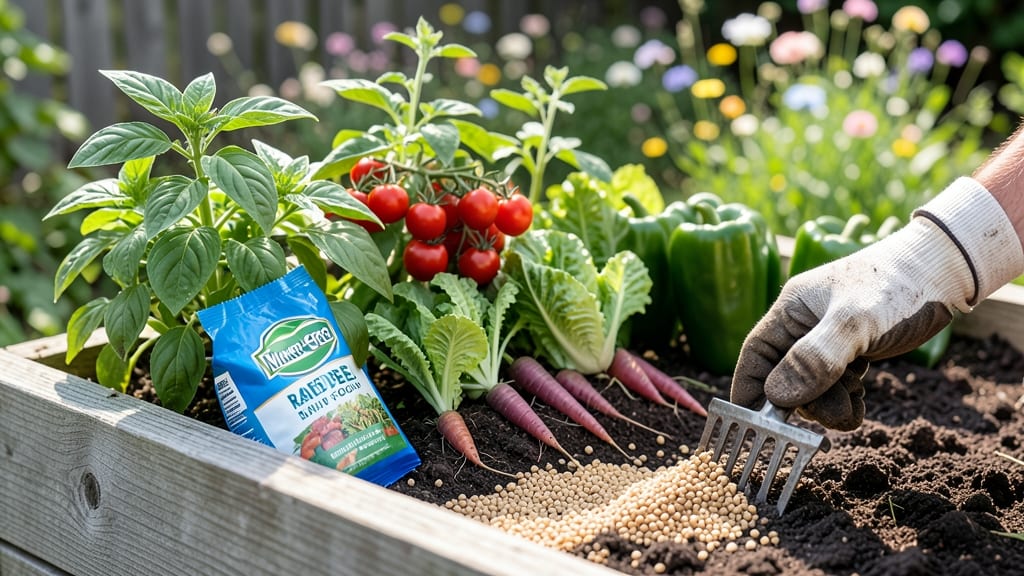
Miracle Gro raised bed plant food: key nutrients and how they boost growth
Raised beds demand a special approach to fertilization because plants grow faster in contained soil, depleting nutrients quicker than in-ground gardens. Miracle Gro Raised Bed Plant Food is engineered to address this challenge with a balanced nutrient blend and slow-release technology, ensuring steady growth without the risk of over-fertilization.
Unlike traditional fertilizers, this formula is designed to work seamlessly in container environments, where drainage and nutrient retention differ significantly from open soil.
The secret to its effectiveness lies in its NPK ratio (15-10-10) combined with micronutrients and controlled-release polymers. This combination delivers immediate and sustained nutrition, perfect for vegetables, herbs, and flowers that thrive in raised beds.
Let’s break down how each component works together to supercharge your plants’ growth and yield.
NPK Ratio (15-10-10): The numbers represent nitrogen (N), phosphorus (P), and potassium (K), respectively. This balanced ratio supports all growth stages—nitrogen fuels leafy growth, phosphorus strengthens roots and flowers, and potassium enhances disease resistance and overall vigor. Unlike high-nitrogen fertilizers that can burn plants, this blend ensures steady, healthy development without spikes in nutrient availability.
Micronutrients: Beyond NPK, Miracle Gro includes iron, manganese, zinc, and copper, which are critical for chlorophyll production, enzyme function, and cell wall strength. Raised beds often lack these trace minerals due to limited soil volume, making supplementation essential for preventing deficiencies like yellowing leaves (iron deficiency) or stunted growth (zinc deficiency). These micronutrients work quietly but powerfully to keep your plants thriving.
The slow-release technology in Miracle Gro Raised Bed Plant Food is a game-changer for container gardens. Unlike quick-release fertilizers that wash out with watering, this formula uses water-soluble granules that dissolve gradually over 8-12 weeks.
This ensures consistent nutrient availability, reducing the risk of burn or salt buildup that can occur with over-fertilization in small raised bed volumes.
For leafy greens like lettuce or spinach, the higher nitrogen content promotes rapid foliage growth, while tomatoes and peppers benefit from the phosphorus and potassium blend, which enhances fruit production and plant strength.
Even herbs like basil and parsley thrive because the micronutrients prevent deficiencies that can stunt their delicate growth. The formula’s versatility makes it ideal for mixed raised beds where multiple plant types share the same space.
One of the biggest advantages of this fertilizer is its pH-balancing properties. Raised beds can become too acidic or alkaline over time, especially if you’re using amended soil.
Miracle Gro includes lime and sulfur buffers to maintain an optimal pH range of 6.0-7.0, where most vegetables and herbs absorb nutrients most efficiently. This means fewer adjustments and healthier plants from seedling to harvest.
Unlike traditional soil-based fertilizers, which require frequent applications, Miracle Gro Raised Bed Plant Food reduces the need for mid-season feeding. A single application at planting can last up to 3 months, making it perfect for busy gardeners.
However, for heavy feeders like tomatoes or peppers, a second application mid-season can further boost yields. Always follow the 1 tablespoon per plant or 1 cup per 10 square feet guideline to avoid overdoing it.
If you’re growing flowers in your raised beds, this fertilizer is equally effective. The balanced NPK ratio supports both foliage and bloom production, while the micronutrients enhance petal vibrancy. Plants like marigolds, zinnias, and petunias will produce larger, more abundant flowers when fed consistently.
For herbs, the slow-release formula prevents the bitter flavors that can develop when plants are stressed by nutrient spikes.
To maximize results, always water your raised beds thoroughly after applying Miracle Gro. This helps the granules dissolve and distribute evenly. Avoid applying fertilizer during extreme heat, as it can cause **nutrient
How to use Miracle Gro raised bed plant food for maximum results: step-by-step guide
Raised beds demand extra care because nutrients wash out faster than in-ground soil. Miracle Gro Raised Bed Plant Food solves this with its slow-release formula, designed to feed plants for up to 8 weeks per application.
Unlike traditional fertilizers, this product is formulated to prevent nutrient burn while delivering balanced NPK (10-10-10) plus micronutrients like calcium and magnesium—critical for container gardens.
Before applying, test your soil's pH (ideal range: 6.0-7.0 for most veggies). Raised beds often start with sterile or poor soil, so mix 2 cups of Miracle Gro per 10 square feet into the top 6 inches of soil before planting.
For heavy feeders like tomatoes or peppers, double the rate to 4 cups per 10 sq ft. This pre-planting boost ensures roots establish quickly in nutrient-poor containers.
Step-by-Step Application Guide
- 1 Pre-Planting Prep: Mix 2–4 cups per 10 sq ft into top 6" of soil. For herbs like basil, use the lower end (2 cups); for heavy feeders like tomatoes, use 4 cups.
- 2 First Feeding: Apply 1 tbsp per plant (or 1 cup per 10 sq ft) 2 weeks after transplanting. Water thoroughly to activate slow-release nutrients.
- 3 Ongoing Schedule: Feed every 4–6 weeks during active growth (April–September). Reduce to every 8 weeks in fall for perennials like rosemary.
-
4
Plant-Specific Tips:
- Tomatoes: Feed every 3 weeks; add calcium (like crushed eggshells) to prevent blossom end rot.
- Peppers: Reduce feeding in hot weather (>90°F) to avoid nutrient burn.
- Leafy Greens: Use half the dose (0.5 tbsp per plant) to prevent leafy growth overload.
-
5
Troubleshooting:
- Yellowing leaves? Flush soil with water to leach excess salts; reduce feeding frequency.
- Slow growth? Test soil pH—Miracle Gro works best in 6.0–7.0 range.
- Brown leaf tips? Over-fertilization; water deeply to dilute salts.
Timing matters just as much as quantity. Always apply Miracle Gro in the early morning when plants are actively absorbing nutrients. Avoid feeding during hot afternoons or when plants are stressed (e.g., wilting or recovering from transplant shock).
Pro tip: Pair feeding with deep watering (1–2 inches) to help nutrients reach roots efficiently in raised beds.
For container-specific challenges, like roots circling the edges of pots, mix a handful of Miracle Gro into the bottom 2 inches of soil during repotting. This creates a "nutrient reservoir" that roots tap into as they grow.
If you notice white crust on soil surface after feeding, it’s excess salts—rinse the bed lightly to prevent root damage.
Remember, raised beds are self-contained ecosystems. Unlike in-ground gardens, you can’t rely on natural soil replenishment. By sticking to this schedule and adjusting for your plants’ needs, you’ll see 30–50% faster growth in your raised bed crops compared to unfertilized containers. Happy growing! 🌱