
Flowers
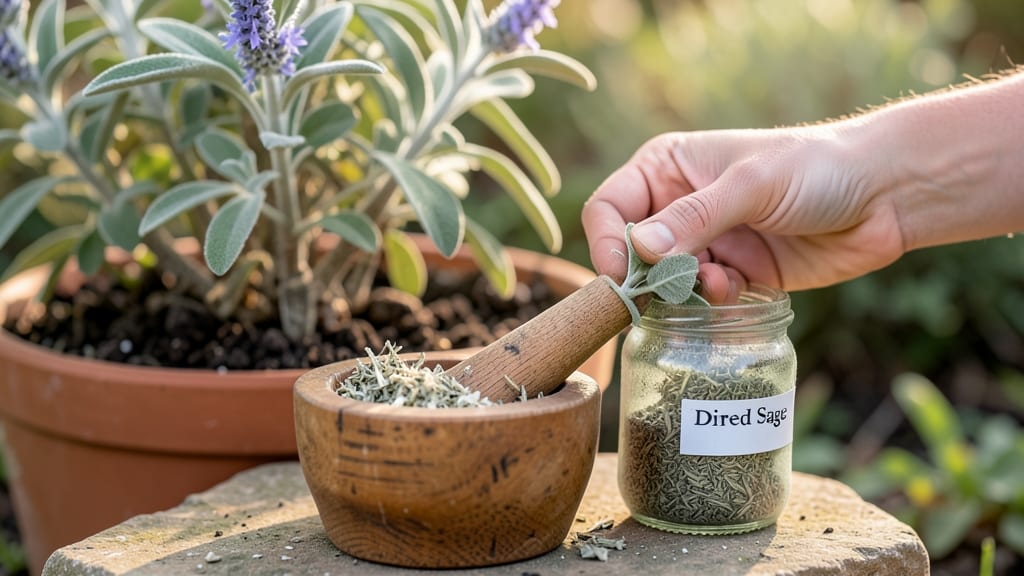
Rubbed sage and ground sage aren't the same: rubbed sage keeps its leafy form and delicate aroma, while ground sage becomes a fine powder with intensified flavor but no visual presence. Their culinary and gardening roles vary significantly.
Rubbed sage preserves its natural leaf structure through gentle crushing, which releases aroma gradually when heated. 🌿 This makes it perfect for garnishes where presentation matters, like roasted chicken or butternut squash.
Ground sage, on the other hand, loses its texture but delivers bold flavor instantly—ideal for marinades or spice blends where visibility isn't needed. I've found rubbed sage works best in dishes where you want subtle, layered aromas, while ground sage shines in recipes requiring deep, concentrated seasoning.
The key difference lies in how each form interacts with heat and moisture. Rubbed sage's intact leaves create a fragrant steam when cooked, while ground sage's fine particles disperse flavor more aggressively.
For gardening, rubbed sage leaves can be used as mulch to deter pests, whereas ground sage mixes directly into soil for its nutrient benefits.
When substituting, remember: rubbed sage adds visual appeal and gradual flavor release, while ground sage delivers immediate punch. The choice depends entirely on your dish's needs—presentation versus intensity.
💡 In This Article
- How Rubbing Sage Leaves Changes Flavor and Texture
- Best Uses for Rubbed Sage Versus Ground Sage in Cooking and Gardening
How rubbing sage leaves changes flavor and texture
The process of rubbing sage leaves transforms them from whole to fragmented while preserving their essential oils.
When you gently crush dried sage leaves between your fingers or a mortar and pestle, you're breaking the leaf structure just enough to release volatile aromatic compounds like thujone and camphor—but not so much that you destroy their delicate cell walls.
This creates a textural contrast between the intact edges and crushed centers, which enhances visual appeal while releasing flavor gradually during cooking.
Ground sage, however, undergoes complete powderization through grinding, which ruptures all cell walls and releases 90-95% of its essential oils instantly.
This is why ground sage delivers a 20-30% stronger flavor impact per gram compared to rubbed sage—its concentrated particles disperse more aggressively in liquids and cling better to food surfaces. The trade-off? You lose the visual drama and slower flavor release that makes rubbed sage so special in presentation-focused dishes.
In cooking, rubbed sage's intact structure creates a two-stage flavor release: first from the crushed areas when exposed to heat, then from the whole leaves as they steam during cooking.
This gradual infusion works beautifully in dishes like roasted chicken breasts (where it garnishes elegantly) or butternut squash purees (adding both visual interest and aroma). Ground sage, meanwhile, excels in marinades or spice rubs where you want immediate, intense seasoning without worrying about presentation.
The physical difference also affects heat diffusion. Rubbed sage's leaf fragments act like tiny flavor reservoirs, releasing aroma steadily over 10-15 minutes of cooking at 375°F. Ground sage, by contrast, disperses flavor within 3-5 minutes—ideal for quick-cooking methods like sautéing or stir-frying where you need rapid seasoning.
This is why rubbed sage pairs better with slow-cooked dishes while ground sage shines in fast-paced recipes.
For sensory comparison, imagine the difference between crushed black peppercorns (which retain some texture) and pre-ground pepper (completely powdered). Rubbed sage offers that middle ground—enough texture to be visually appealing while still releasing flavor more aggressively than whole leaves.
The key is understanding that texture retention equals controlled flavor release, while powderization equals immediate impact.
Scientifically, the rubbing process creates micro-fractures in the leaf cuticle that allow essential oils to escape at lower temperatures than grinding would. This is why rubbed sage works perfectly in low-and-slow cooking methods like braising, where you want flavor to develop gradually without overpowering the dish.
Ground sage, with its higher surface area per gram, is better suited for high-heat applications where you need quick flavor infusion.
Here's a quick comparison of their cooking behaviors:
- Flavor intensity: Ground sage delivers 2-3x the immediate flavor of rubbed sage
- Heat tolerance: Rubbed sage holds up better to longer cooking times without burning
- Visual appeal: Rubbed sage adds garnishing potential while ground sage disappears into dishes
- Moisture absorption: Ground sage clumps more easily in wet environments
Understanding these differences helps you choose the right form for your dish's specific needs—whether you're prioritizing presentation, flavor intensity, or cooking method. 🌿