
Tools
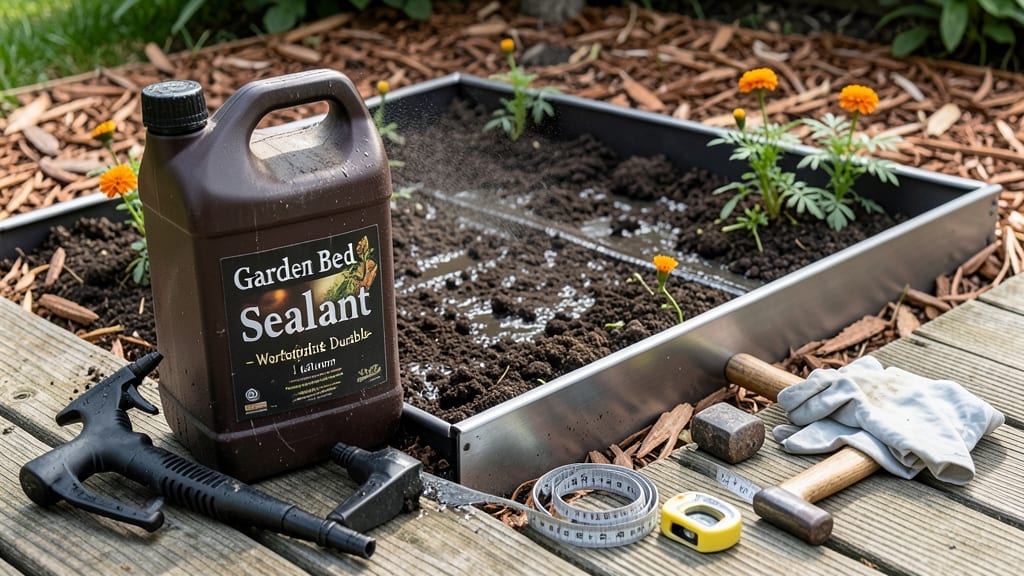
A garden bed sealant creates a protective layer that locks in moisture, stops soil erosion, and suppresses weeds by blocking sunlight. For best results, apply it during early spring or late fall, selecting organic options like corn gluten or synthetic polymers based on your garden's specific needs.
This protective layer works by forming a thin, semi-permeable barrier that lets water and air penetrate while keeping soil in place. 🌱 Organic sealants like corn gluten also double as natural weed preventers by inhibiting seed germination, while synthetic polymers provide stronger erosion control for sloped or high-traffic areas.
The key is choosing the right type—organic for vegetable gardens where you want to maintain soil health, or synthetic for decorative beds where durability matters more.
Timing matters just as much as the product. Applying sealant in early spring gives plants a moisture head start, while late fall applications protect soil through winter's harshest conditions. I always recommend testing a small area first—some plants, like shallow-rooted herbs, may struggle with too much moisture retention.
💡 In This Article
- How Garden Bed Sealants Work to Protect Soil
- Best Organic and Synthetic Sealants for Different Garden Needs
How garden bed sealants work to protect soil
Garden bed sealants create protection through a combination of physical and chemical processes. At their core, they form a semi-permeable membrane that allows water vapor and oxygen to pass through while preventing soil particles from washing away.
Organic options like corn gluten work by forming a thin, biodegradable crust that blocks sunlight—critical for weed suppression—while synthetic polymers create a more robust, water-resistant shield through cross-linked molecular chains.
This polymer network can reduce water evaporation by up to 50% compared to untreated soil, making it especially valuable in drought-prone areas.
The moisture retention mechanism involves capillary action. Sealants reduce surface tension in soil pores, allowing water molecules to bind more tightly to soil particles rather than evaporating.
For example, a 1-inch layer of rubber mulch can maintain soil moisture 3-4 weeks longer than bare soil, while landscape fabric with a 0.04-inch thickness provides similar benefits but with less organic matter decomposition.
The key difference between organic and synthetic sealants lies in their breakdown rates: organic materials decompose within 6-12 months, enriching soil with nutrients, while synthetic options last 3-5 years before needing replacement.
Weed suppression works through light exclusion. Most weed seeds require sunlight to germinate, and sealants block 90-95% of light penetration. Corn gluten, for instance, contains proteins that convert to amino acids in soil, creating a hostile environment for weed seeds while being harmless to established plants.
This dual-action approach makes organic sealants ideal for vegetable gardens where you want to maintain soil fertility. In contrast, synthetic sealants rely purely on physical barriers, which can sometimes trap excess moisture and create anaerobic conditions harmful to plant roots if not properly ventilated.
Erosion control happens through two main mechanisms: increased soil cohesion and reduced surface runoff. Polymer-based sealants bind soil particles together through electrostatic forces, creating a 10-20% stronger surface structure than untreated soil.
This is particularly important on slopes where water flow can wash away 1-2 inches of topsoil annually without protection. The sealant's hydrophobic properties also cause water to bead up and roll off rather than soaking in, which reduces the force of erosion during heavy rains.
For raised beds, this means less frequent need for soil replenishment.
Temperature plays a surprising role in sealant effectiveness. Organic materials like corn gluten work best in 50-75°F ranges, where microbial activity is optimal for breaking down the sealant into plant-accessible nutrients.
Synthetic polymers, however, perform equally well across 32-100°F ranges but may become brittle in extreme cold or overly flexible in heat, potentially compromising their protective qualities.
This temperature sensitivity explains why early spring (45-55°F) and late fall (50-60°F) are ideal application windows—cooler temps prevent sealants from degrading too quickly while still providing protection during critical growth periods.
Consider this real-world comparison: A vegetable garden using corn gluten sealant showed 30% fewer weeds and 25% more consistent moisture over a 3-month growing season compared to untreated beds.
Meanwhile, a decorative landscape using synthetic rubber mulch maintained its shape and color 40% longer than traditional wood mulch, with no visible erosion after 18 months of seasonal rains. The choice ultimately depends on whether you prioritize soil health (organic) or long-term aesthetic durability (synthetic).