
Planting
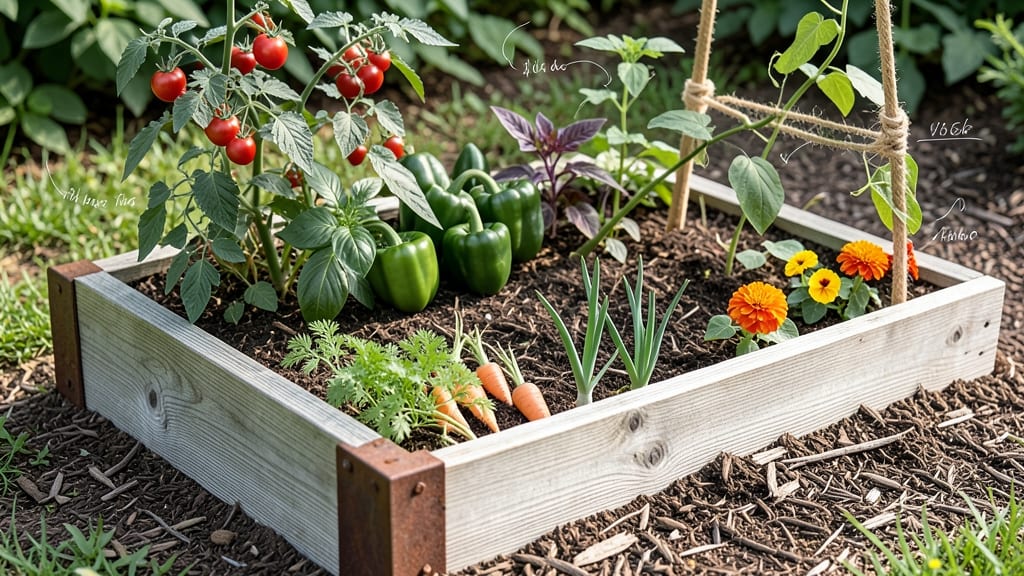
A companion planting raised bed layout optimizes garden space by pairing beneficial plants like basil with tomatoes, marigolds with cucumbers, and onions with carrots to naturally repel pests and boost yields. Arrange taller varieties along the north edge while placing shorter crops toward the south for balanced sunlight distribution.
A well-planned companion planting raised bed layout leverages nature's symbiotic relationships to create a thriving ecosystem. 🌱 For example, marigolds release compounds that deter nematodes while attracting beneficial insects, while basil's strong scent masks tomato odors that attract pests.
This strategic arrangement not only saves space but also reduces the need for chemical interventions, making it ideal for organic gardeners.
Designing your bed starts with understanding each plant's needs—taller varieties like corn or sunflowers should face north to avoid shading shorter plants, while ground covers like squash can spread between rows.
I recommend sketching your layout first, considering both vertical and horizontal spacing to ensure proper airflow and sunlight penetration throughout the growing season.
💡 In This Article
- Science-Backed Plant Pairings for Pest Control
- Step-by-Step Raised Bed Design for Maximum Yield
Science-backed plant pairings for pest control
Companion planting works through a fascinating web of ecological interactions. Take marigolds, for instance—they release a compound called alpha-terthienyl, which repels nematodes and other soil-dwelling pests. Studies show marigolds can reduce nematode populations by up to 90% when planted near vulnerable crops like tomatoes or cucumbers.
Meanwhile, basil emits a scent that disrupts the mating signals of whiteflies and thrips, effectively confusing these pests into leaving your plants alone.
The classic "three sisters" combination—corn, beans, and squash—demonstrates another brilliant natural system. Corn provides vertical support for beans to climb, while the beans fix nitrogen in the soil, enriching it for the corn's deep roots. Squash spreads along the ground, blocking weeds and retaining moisture.
This trio creates a self-sustaining ecosystem where each plant contributes to the others' success. 🌱 The squash's broad leaves also cast shade, keeping the soil cool and reducing evaporation, which is especially valuable in raised beds where soil dries out faster.
Scent masking is another powerful mechanism. Herbs like dill and parsley release aromatic oils that overwhelm the natural scents plants use to attract pests. For example, planting dill near cabbage can deter cabbage moths, which are drawn to the plant's specific chemical signature.
This is why many gardeners place strong-scented herbs like rosemary or thyme at the edges of raised beds—their fragrance creates a protective barrier around more vulnerable crops.
Some pairings work through nutrient competition reduction. Carrots and onions, for example, both thrive when planted together because they deter the same pests (like carrot flies) and share similar growing conditions. However, planting them with leeks can actually inhibit carrot growth due to allelopathic chemicals released by the leeks.
Understanding these subtle interactions helps you create a bed where every plant supports its neighbors rather than competing against them.
Color contrast also plays a role in pest deterrence. Brightly colored flowers like nasturtiums attract predatory wasps that hunt garden pests, while their vibrant blooms can distract pests from your vegetables.
The key is diversity—mixing plants with different colors, textures, and growth habits creates an environment where pests have no clear target. This is why a well-designed raised bed might include 10-15 different plant varieties in a single 4'x8' space, maximizing both yield and pest control.
For organic gardeners, these natural relationships reduce the need for chemical interventions. The result is healthier plants with stronger immune systems, able to fend off pests without synthetic help.
What's particularly satisfying is watching these systems work in real time—like noticing fewer aphids on your roses when you've planted garlic nearby, or seeing your tomatoes thrive because the basil next to them is keeping flies away. 🌿