
Light Requirements
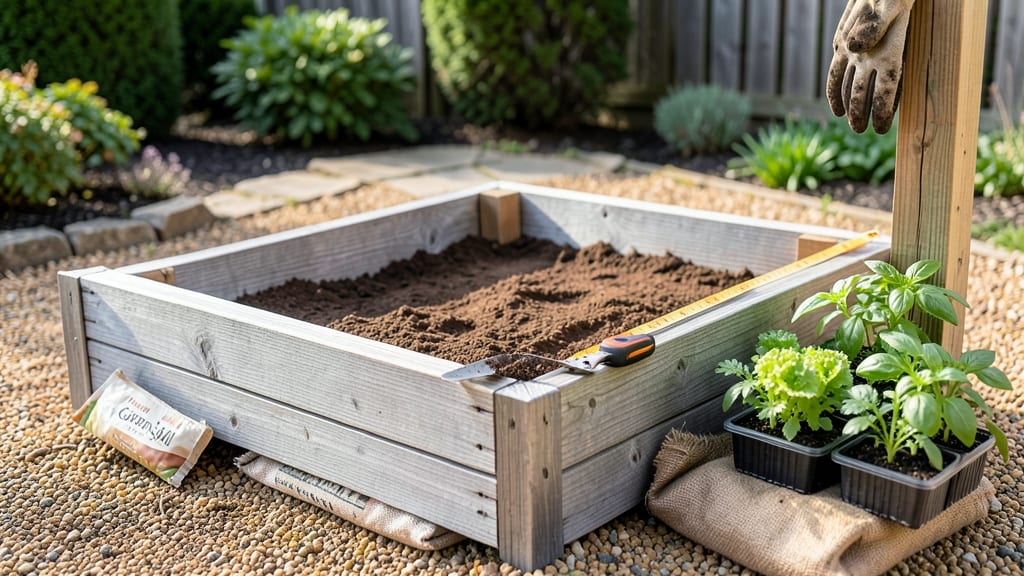
For an 8x4x2 raised garden bed, you'll need 12.8 cubic feet of soil (1.5 cubic yards) to fill it completely, calculated by multiplying the bed's length, width, and depth (8 × 4 × 2). Opt for a nutrient-rich blend like high-quality garden soil or a 60/40 mix of topsoil and compost for optimal plant growth.
Understanding this calculation helps avoid buying too much or too little soil. 🌱 The standard depth of 2 feet is ideal for most vegetables and herbs, allowing ample root space while preventing waterlogging.
If you're planning layered planting, you might reduce the depth slightly for each tier, but always ensure at least 6 inches of soil for healthy growth. I recommend measuring twice and purchasing just over your calculated amount to account for settling—most soil blends compact slightly after watering.
For cost efficiency, consider bulk purchasing from local suppliers or creating your own mix. A 60/40 ratio of topsoil to compost is budget-friendly and provides excellent drainage while retaining moisture.
Adding perlite or vermiculite can further improve aeration without breaking the bank. Always test your soil's pH before planting—most vegetables thrive in a slightly acidic to neutral range (6.0-7.0).
💡 In This Article
- Calculating Soil Volume for Raised Garden Beds
- Cost-Saving Soil Mixes for 8x4x2 Raised Beds
Calculating soil volume for raised garden beds
The volume of soil needed for your raised garden bed is determined by a simple but critical multiplication formula: length × width × height. For an 8x4x2 bed, this means 8 feet × 4 feet × 2 feet = 64 cubic feet of total space.
However, soil doesn't fill the entire volume—wooden frames take up space too. A typical 2-foot-tall raised bed frame occupies about 20-25% of the internal volume, leaving you with roughly 12.8 cubic feet of usable soil space (or 1.5 cubic yards
Depth plays a surprisingly large role in plant health. A 2-foot depth is ideal because it accommodates deep-rooted vegetables like tomatoes and carrots while preventing waterlogging at the bottom. Shallower beds (6-12 inches) work for herbs and greens but limit root growth. The science here involves aeration: deeper soil allows oxygen to reach roots, while shallower layers can become compacted and anaerobic. 🌱 For layered planting (e.g., strawberries on top, lettuce below), reduce each layer's depth by 6-8 inches to maintain drainage between tiers. Here's where most gardeners go wrong: they don't account for soil settling. Fresh soil can compact by 10-15% after watering, so always purchase 10-15% more soil than calculated. For our 8x4x2 bed, that means buying 14.4 cubic feet (1.65 cubic yards) instead of 12.8. Pro tip: Use a tape measure to check depth in multiple spots—uneven frames can create pockets where soil settles unevenly, leaving air gaps that roots can't utilize. For those using cedar or untreated wood, another factor emerges: the frame itself absorbs moisture over time, slightly reducing the internal volume. Cedar, known for its natural rot resistance, swells slightly when wet, which can cut usable soil space by another 3-5%. This is why pre-drilling screw holes prevents wood splitting and maintains structural integrity—keeping the frame's dimensions stable so your soil calculations stay accurate. Visualize this: imagine filling your bed with 12.8 cubic feet of loose soil. When you water it for the first time, the particles shift and pack down, creating a denser medium. This is why professional gardeners recommend "fluffing" soil before planting—gentle aeration with a rake or hands helps maintain pore space for roots. The goal is to achieve a texture similar to a well-worn sponge: firm enough to support plants but porous enough to allow water and air movement. What about drainage? A 2-foot depth provides enough space for a 4-6 inch gravel layer at the bottom if needed, though many gardeners skip this for lightweight soils. The key is ensuring the bottom of your bed has drainage holes (typically 1/4-inch diameter spaced every 6-12 inches). Without them, excess water pools at the bottom, creating anaerobic conditions that suffocate roots—even in well-draining soil mixes. For precision, use this quick conversion: 1 cubic yard ≈ 27 cubic feet. So 1.5 cubic yards equals exactly 40.5 cubic feet of raw volume, minus the 20% frame space and 10% settling factor, landing you at that 12.8 cubic feet of usable planting medium. 💫 This math ensures you neither overbuy expensive soil nor underfill your garden, leaving plants struggling for space.