
Plants
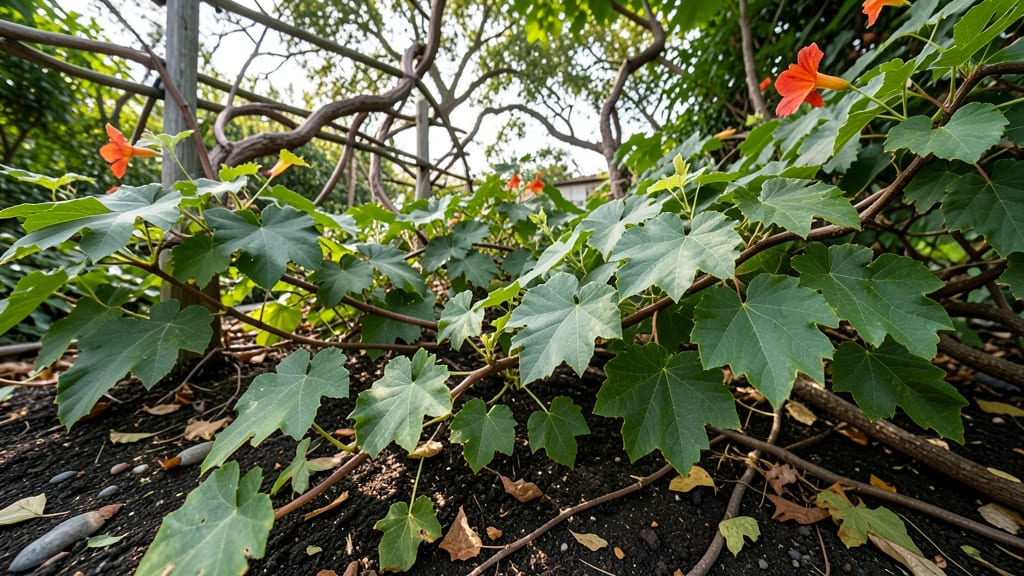
That 5-lobed leaf vine with its dramatic, glossy foliage is the kind of plant that makes neighbors stop and ask questions. 🌿 I first fell for Cobaea scandens (Cup-and-Saucer Vine) when its heart-shaped leaves unfurled in my garden, and I’ve been hooked on its tropical charm ever since.
This vine thrives year-round in warm climates and adds vertical drama to trellises, fences, or arbors.
The secret to growing one successfully is simple: bright, indirect light and well-draining soil. It’s surprisingly low-maintenance—water when the top inch of soil feels dry, and you’ll reward yourself with lush, velvety leaves and occasional trumpet-shaped blooms.
Even in containers, it climbs with ease, making it perfect for small spaces or urban gardens.
By summer’s end, you’ll have a towering green curtain that hums with pollinators and casts dappled shade. The best part? It’s disease-resistant and rarely bothered by pests, so once established, it practically takes care of itself.
Prune lightly in early spring to encourage bushier growth, and watch it rebound with vigor.
Whether you’re growing Cobaea for its striking foliage or Passiflora for its exotic flowers, this vine delivers year-round interest with minimal effort. Let’s dive into the details—from soil prep to propagation tricks that’ll have you sharing cuttings with friends.
Root Causes Of Leaf Shape Shifts
If your vine isn’t producing the classic five-lobed leaves you expect, don’t panic—there’s usually a scientific reason behind it. Understanding these triggers helps you correct the issue and restore that lush, glossy foliage. Below, we break down the most common culprits, from environmental stressors to plant health red flags.
Vines like the 5-lobed leaf variety (often Parthenocissus quinquefolia or similar) are sensitive to extreme temperature fluctuations. When exposed to:
- Cold snaps: Sudden drops below 20°F (-6°C) can shock the plant, causing leaves to emerge smaller, malformed, or even lobeless. This happens because cold disrupts cell division in meristem tissue (the growth zones at leaf tips).
- Heat stress: Temperatures above 90°F (32°C) for prolonged periods force the vine to conserve water, leading to compensatory growth—leaves may develop fewer lobes or appear crinkled to reduce surface area and water loss.
- Late frosts: New growth emerging after a frost often results in stunted, irregular lobes. The plant’s phytohormones (like auxin) get thrown off balance, prioritizing survival over ideal leaf structure.
Actionable fix: Use row covers in early spring or mulch heavily in winter to stabilize soil temps. For heat stress, provide afternoon shade during peak summer months.
Water—too much or too little—is a top offender for lobeless leaves. Here’s how it plays out:
| Problem | Why It Happens | Leaf Reaction |
|---|---|---|
| Underwatering | Drought triggers abscisic acid (ABA) production, a stress hormone that signals the plant to reduce leaf complexity to save energy. | Leaves shrink, lobes become indistinct, or edges scorch. |
| Overwatering | Waterlogged soil cuts off oxygen, leading to root asphyxiation. The vine can’t absorb nutrients like nitrogen or iron, which are critical for leaf development. | Yellowing between veins (chlorosis) and simplified leaf shapes. |
| Poor drainage | Compacted or clay-heavy soil traps excess moisture, mimicking overwatering. The vine’s roots suffocate, starving leaves of photosynthetic pigments. | Stunted growth with fewer, paler lobes. |
Actionable fix:
- Test soil moisture with your finger—water when the top 2 inches are dry.
- Amend heavy soil with perlite or compost to improve drainage.
- Use drip irrigation to deliver water directly to roots, avoiding foliar stress.
Light isn’t just about photosynthesis—it dictates leaf shape through a process called photomorphogenesis. Too much or too little light throws off the vine’s internal clock:
- Low light: The vine stretches toward light (etiolation), producing large but simplified leaves with fewer lobes. This is a survival tactic to maximize light capture with minimal energy.
- Direct harsh sun: Intense UV rays can bleach chlorophyll, causing leaves to develop irregular lobes or scorch marks. The vine may also produce smaller leaves to reduce sun exposure.
- Sudden light changes: Moving a vine from shade to full sun (or vice versa) confuses its circadian rhythm, leading to erratic leaf growth.
Actionable fix:
- Gradually acclimate vines to new light conditions over 2–3 weeks.
- Use sheer curtains to filter harsh afternoon sun.
- For indoor vines, supplement with a grow light 12–14 hours/day.
Leaves are the vine’s nutrient factories, and without the right inputs, they’ll prioritize basic structure over intricate designs. Key deficiencies to watch for:
- Nitrogen (N) deficiency: Leaves turn pale green or yellow (chlorosis) and may develop fewer, smaller lobes because nitrogen is essential for protein synthesis in growing tissues.
- Magnesium (Mg) deficiency: Causes interveinal chlorosis (yellowing between veins) and can lead to cupped or distorted lobes, as magnesium is central to chlorophyll production.
- Phosphorus (P) deficiency: Leaves may darken or develop purple hues, and growth slows, resulting in underdeveloped lobes.
- Potassium (K) deficiency: Weakens cell walls, causing leaves to curl or develop irregular edges, mimicking poor lobe formation.
Actionable fix:
- Test soil with a home kit or send a sample to a lab for precise analysis.
- Apply a balanced fertilizer (e.g., 10-10-10) in spring, then switch to a low-nitrogen, high-potassium blend (e.g., 5-10-10) in summer.
- For quick fixes, use Epsom salt (magnesium sulfate) or fish emulsion (nitrogen).
Hidden invaders can silently sabotage your vine’s leaf development. Common culprits include:
- Spider mites: These tiny pests pierce leaf cells, sucking out sap and triggering abnormal growth patterns, including lobeless or stunted leaves.
- Scale insects: They excrete honeydew, which fosters sooty mold—a black fungus that blocks sunlight and stresses the vine, leading to simplified foliage.
- Root rot (from fungi like Phytophthora): Rotting roots can’t absorb water or nutrients, causing the vine to produce emergency leaves with minimal lobes to conserve energy.
- Viral infections (e.g., Tobacco Mosaic Virus): Viruses disrupt cell division, leading to mosaic patterns or leaves with fused lobes.
Actionable fix:
- Inspect undersides of leaves for webbing (mites) or bumps (scale). Treat with neem oil or insecticidal soap.
- Prune infected branches 1 inch below damage and disinfect tools with rubbing
Reviving Your Glossy Climber
Got a struggling five-lobed leaf vine? Don’t panic—most issues have simple fixes! Below, we’ll tackle common problems with practical solutions and prevention tips to keep your vine thriving year-round. Whether it’s yellowing leaves, slow growth, or pests, we’ve got you covered.
Cause: Overwatering, underwatering, or nutrient deficiencies (like iron or nitrogen) can turn those lush, five-lobed leaves dull or yellow.
Fix It: ✅ Check the soil moisture – Stick your finger 1-2 inches deep. If it’s soggy, reduce watering and ensure the pot has drainage holes. If it’s bone-dry, water thoroughly and mulch to retain moisture. ✅ Flush the soil – Over time, salts and minerals build up. Run water through the pot for 5-10 minutes to cleanse the roots. ✅ Fertilize smartly – Use a balanced, water-soluble fertilizer (like 10-10-10) every 4-6 weeks during growing season (spring-fall). For yellowing between veins (iron deficiency), try a chelated iron supplement. ✅ Boost humidity – If leaves crisp at the edges, place the pot on a pebble tray with water or use a humidifier nearby.
Prevent It: 💡 Water only when the top inch of soil is dry—never on a schedule. 💡 Use well-draining soil (mix potting soil with perlite or orchid bark). 💡 Avoid cold drafts—this vine dislikes temperature swings.
Cause: Mealybugs, spider mites, or aphids love the sap of five-lobed leaf vines, sucking nutrients and leaving sticky residue.
Fix It: 🔥 Isolate the plant – Move it away from others to prevent spread. 🍳 Wipe down leaves – Use a soapy water solution (1 tsp mild dish soap per quart of water) and a soft cloth to remove visible pests. 👨🍳 Spray neem oil – Mix 1 tsp neem oil + 1 tsp mild soap per quart of water, spray every 5-7 days until pests vanish. 🥘 Introduce beneficial insects – Ladybugs or lacewings devour aphids and mites naturally. 🔪 Prune heavily infested areas – Cut off and dispose of (not compost) damaged leaves.
Prevent It: ✨ Inspect new plants before bringing them home—quarantine for a week. ✨ Encourage airflow – Avoid overcrowding; pests thrive in stagnant air. ✨ Keep leaves dry – Water at the base, not overhead, to deter fungus gnats (which attract pests).
Cause: Insufficient light, root-bound pots, or lack of pruning can make your vine stretch weakly or grow sluggishly.
Fix It: 🌞 Move to brighter light – Place near east or west windows (avoid harsh midday sun). If indoors, use a grow light 12-14 hours/day. 🌱 Repot if root-bound – Gently remove the vine from its pot—if roots circle the bottom, upgrade to a 1-2 inch larger container with fresh soil. 🎯 Prune for bushiness – Trim back overly long vines to encourage branching. Use clean scissors and cut just above a leaf node. ⏰ Fertilize in spring – A low-nitrogen, high-phosphorus fertilizer (like 5-10-5) boosts blooms and growth.
Prevent It: 💡 Rotate the pot every few weeks for even light exposure. 💡 Train vines early – Use a trellis or support to guide growth and prevent sprawl.
Cause: Low humidity or fluoride/chlorine in tap water can scorch leaf edges.
Fix It: 💧 Switch to filtered or rainwater – Let tap water sit 24 hours before using to off-gas chlorine. 🌡️ Increase humidity – Group plants together, use a humidifier, or place a wet towel near the vine. 🎯 Trim damaged leaves – Snip off brown tips with clean scissors to redirect energy to healthy growth.
Prevent It: 🔥 Mist leaves lightly in dry climates (but avoid soggy soil). 🔥 Avoid cold windowsills – Drafts dry out leaves quickly.
Final Pro Tip: 🌟 Observe your vine daily—catching issues early makes fixes easier and more effective! With these solutions, your five-lobed leaf vine will be back to its glossy, climbing glory in no time. 🌿✨
Frequently asked questions
What are the most common types of vines with five-lobed leaves?
The most popular varieties include Cobaea scandens (Cup-and-Saucer Vine), known for its heart-shaped leaves and trumpet flowers, and Parthenocissus quinquefolia (Virginia Creeper), which thrives in cooler climates. Passiflora species (Passionflowers) also feature distinctive five-lobed foliage, though their leaves often have additional serrations.
Can I grow a five-lobed leaf vine indoors?
Many varieties like Cobaea scandens thrive indoors with proper care. Place it near a bright, east-facing window or under grow lights for 12-14 hours/day. Use a well-draining potting mix and a trellis to encourage vertical growth. Just watch for signs of legginess—rotate the pot occasionally for even light exposure.
Why are my vine’s leaves developing fewer lobes than usual?
This often signals stress from temperature swings, poor drainage, or nutrient deficiencies. For example, cold snaps below 20°F (-6°C) disrupt cell growth, while overwatering can cause root asphyxiation, leading to simplified leaves. Test your soil and adjust care—most issues resolve with proper moisture control and balanced fertilization.
How do I prune a five-lobed leaf vine for bushier growth?
Prune in early spring before new growth begins. Cut back overly long vines to just above a leaf node, and remove any dead or weak stems. For container-grown vines, trim 1/3 of the plant to encourage branching. Always use sterilized scissors to prevent disease spread.
Are five-lobed leaf vines toxic to pets?
Most common varieties like Cobaea scandens and Parthenocissus quinquefolia are non-toxic to cats and dogs. However, Passiflora species (Passionflowers) can be mildly toxic if ingested in large quantities, causing stomach upset. When in doubt, keep pets away from chewing vines and consult your vet if ingestion occurs.